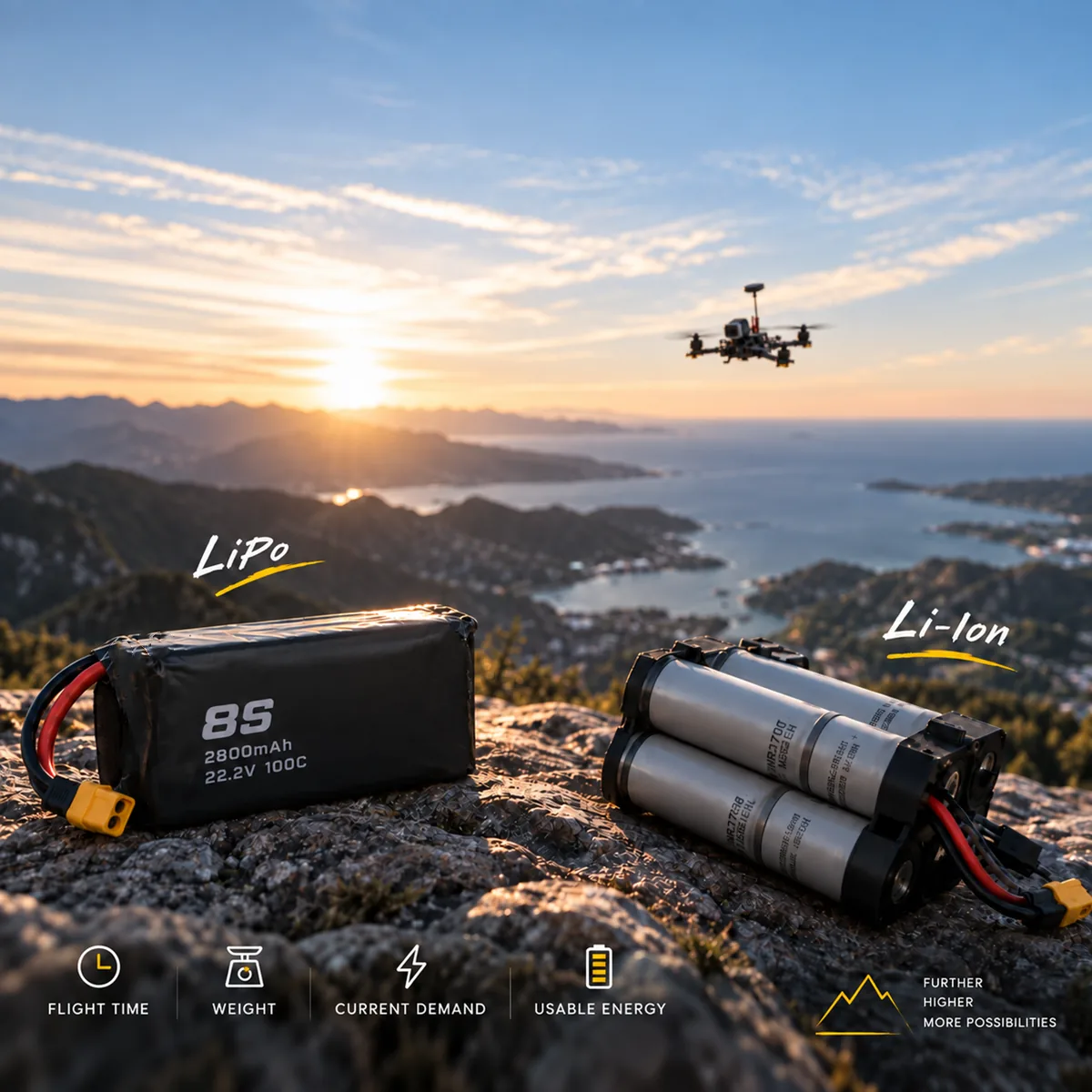
For long-range FPV, Li-ion does not automatically mean longer flight time,
and LiPo does not automatically mean better performance. On lightweight FPV drones that cruise efficiently at relatively low
current, Li-ion packs can often extend flight time because they
store more energy for a given battery weight. As the aircraft becomes larger,
heavier, faster, or more heavily loaded, however, current demand rises and the
battery must maintain voltage during climbs, acceleration, wind correction, and
other high-power events.
In those conditions, a LiPo pack may provide more usable energy in flight
even when its nominal energy density is lower. The useful question is therefore not simply "LiPo or Li-ion?" It is:
How much usable energy can the battery deliver at the drone's actual
current demand without adding excessive weight, voltage sag, or heat?
That is the comparison that matters when selecting a battery for long-range
FPV.
What Actually Determines Long-Range FPV Flight Time?
Battery capacity in mAh is useful, but it does not tell you how much energy
the battery stores. A better starting point is watt-hours:
Battery Energy (Wh) = Nominal Voltage (V) × Capacity (Ah)
For example, a 6S 3000mAh LiPo with a nominal voltage of 22.2V contains
approximately:
22.2V × 3Ah = 66.6Wh
Flight time can then be estimated from average power consumption:
Estimated Flight Time (minutes) ≈ Usable Battery Energy (Wh) ÷ Average
Flight Power (W) × 60
If a drone uses an average of 180W and can deliver 80Wh of usable battery
energy under its normal flight conditions, the theoretical estimate is about
26.7 minutes.
Real-world flight time will still vary because an FPV drone does not
operate at constant power. Wind, flight speed, climbing, descending, payload,
propeller efficiency and pilot input continually change the current demand.
The major variables include:
· total battery energy in Wh;
· finished battery-pack weight;
· aircraft weight without the battery;
· propeller and motor efficiency;
· cruising speed and throttle;
· average current during normal flight;
· peak current during climbing or acceleration;
· battery internal resistance;
· voltage sag under load;
· payload;
· wind and temperature.
This also explains why installing the largest possible battery does not
necessarily produce the longest flight.
More capacity adds energy, but it also adds mass. More mass requires more
thrust, and more thrust increases the power needed to keep the aircraft in the
air. At some point, the additional battery energy is partly offset by the power
required to carry the larger battery.
For long-range FPV, battery sizing is therefore an optimization problem
rather than a simple search for maximum mAh.
LiPo vs. Li-Ion: What Is Actually Different?
The terminology used in FPV can sometimes create unnecessary confusion.
LiPo and Li-ion are not completely separate battery technologies. In practical FPV discussions, the terms usually describe two different cell formats and performance directions.
LiPo normally means a pouch-cell battery.
Li-ion normally means a cylindrical-cell battery. Common cylindrical formats include 18650 and 21700, although many different cell designs and specifications exist within those formats.
For FPV users, the most important distinction is not the name itself, but how the battery has been designed.
| Factor | LiPo | Li-Ion |
| Common FPV cell format | Pouch | Cylindrical |
| Typical design priority | Power and low resistance | Energy and endurance |
| Gravimetric energy density | Moderate to high | Usually higher |
| High-current capability | Usually stronger | Cell-dependent |
| Loaded voltage stability | Usually stronger | More current-sensitive |
| Best suited to | Higher-power FPV | Efficient cruising |
| Main advantage | Power-to-weight balance | Energy-to-weight balance |
These are general tendencies, not fixed rules. Modern high-power cylindrical cells can support much greater current than
older Li-ion designs. At the same time, different LiPo batteries can have very
different internal resistance, voltage stability and usable capacity even when
their printed specifications appear similar. The final performance depends on factors such as:
· cathode and anode materials;
· electrode formulation;
· conductive additives;
· electrolyte system;
· separator design;
· electrode thickness;
· cell construction;
· manufacturing consistency;
· quality control.
This is why battery labels alone do not determine performance. The same principle applies to advertised C-rating. A high printed C-rating
does not automatically mean that a battery will maintain higher voltage
throughout a demanding flight. Loaded voltage, internal resistance, temperature
rise and usable capacity are more meaningful when comparing real FPV
performance.
Why Li-Ion Can Deliver Longer Flight Time on Efficient FPV Builds
The strongest argument for Li-ion packs is energy per unit
weight.
If two completed batteries have similar weights but one stores
significantly more usable watt-hours, the higher-energy pack has an obvious
endurance advantage—as long as the aircraft can operate within its current
capability. This is why Li-ion has become popular on efficient long-range FPV
platforms. A lightweight 4-inch or 5-inch cruiser may spend most of its flight at
relatively low throttle. It does not need the large current bursts expected from
an aggressive freestyle quad. In this operating window, a properly selected
cylindrical Li-ion pack can use its higher energy density to extend cruise
time.
Long-range FPV testing and community documentation have repeatedly
demonstrated this approach on efficient aircraft. Li-ion packs are commonly used where the priority is extended cruising rather
than repeated high-current maneuvers.
But energy density only helps when that energy remains accessible during
flight. Consider a battery that has excellent nominal Wh/kg but experiences
substantial voltage drop whenever the aircraft needs more thrust. The pilot may
need to land with energy technically remaining in the cells because loaded
voltage has fallen too far for comfortable operation.
That leads to an important distinction:
Nominal energy is not the same as usable energy under load.
A long-range battery therefore needs enough current headroom for both the
drone's average cruise condition and the short periods where power demand
rises.
Those events can include:
· takeoff;
· steep climbing;
· rapid acceleration;
· flying into headwind;
· recovering from a descent;
· carrying additional camera equipment;
· emergency return at higher speed.
Li-ion's energy-density advantage translates into longer flight time only
when the battery can support these conditions without excessive voltage sag or
heat.
When LiPo Becomes More Relevant for Long-Range FPV
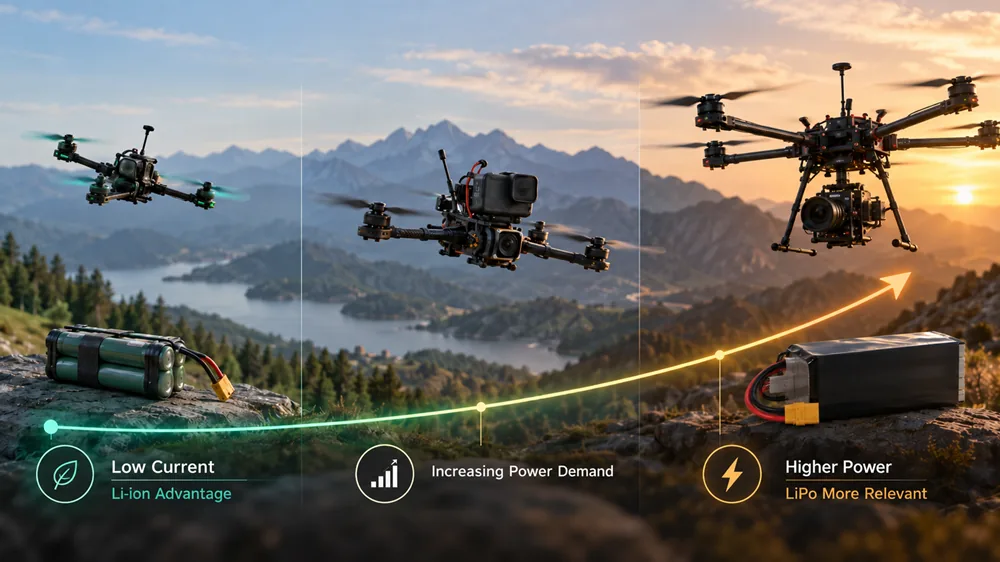
"Long-range" is often associated with slow cruising, but not every
long-range FPV aircraft is a low-current platform.
A 4-inch mountain cruiser, a 7-inch cinematic quad and a 15-inch heavy FPV
drone can all be described as long-range aircraft, yet their battery
requirements are very different. As propeller diameter, all-up weight and payload increase, maintaining
flight generally requires more power. Larger aircraft may also carry action
cameras, cinema equipment, larger video transmitters or other payloads. In these applications, LiPo's power capability becomes more important.
Voltage Sag Changes Usable Energy
A useful first approximation for resistive voltage drop is:
Vdrop ≈ I × R
where: I is battery current; R is the effective resistance of the battery and power path.
As current increases, voltage loss increases.
Suppose two batteries contain similar nominal energy. If one maintains a
substantially higher loaded voltage during demanding flight, the propulsion
system receives more usable electrical power at that moment. This is why a battery with lower nominal Wh/kg can sometimes work better on
a high-power long-range aircraft. The objective is not simply to carry the greatest number of watt-hours. It
is to carry watt-hours that the aircraft can actually use across its expected
power range.
Peak Current Still Matters on an Endurance Drone
A long-range FPV drone may spend most of its flight at moderate current but
still experience short periods of much higher demand.
Examples include:
· takeoff;
· steep climbing;
· rapid acceleration;
· flying into strong wind;
· high-speed return;
· recovering from a descent;
· carrying additional payload.
Average current determines much of the endurance calculation. Peak current determines whether the battery has enough power reserve when
conditions become demanding. Both matter.
This becomes increasingly important as long-range FPV moves toward:
· 7-inch and larger airframes;
· heavier cameras;
· 8–10 inch propellers;
· 13–15 inch platforms;
· higher takeoff weights;
· high-speed long-range operation.
For these aircraft, battery selection gradually shifts from maximizing
energy density toward balancing four factors:
Energy Density + Usable Power + Voltage Stability + Battery Mass
This is where LiPo becomes increasingly relevant.
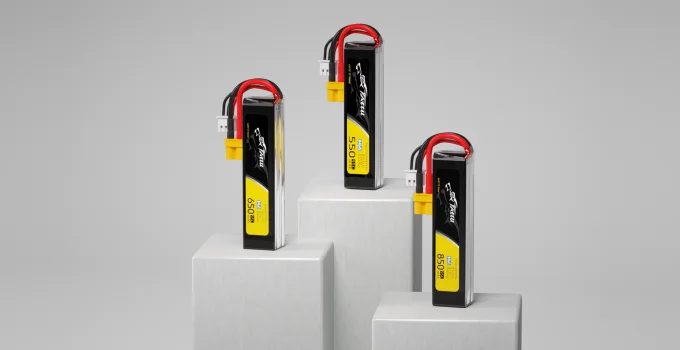
Tattu's 8S FPV platform, for example, is designed for large FPV aircraft
where high continuous power, larger propellers, cinematic payloads and heavier
takeoff weights place greater demands on the battery.
Why Higher Voltage Can Help Large Long-range FPV?
System voltage is another important part of battery selection. Electrical power is:
P = V × I
For approximately the same required power, increasing voltage reduces current.
A 3,000W system would theoretically draw about:
· 135A at 22.2V (6S nominal)
· 101A at 29.6V (8S nominal)
That is roughly 25% less current at 8S for the same theoretical power.
Lower current can reduce resistive voltage loss and I²R heating when the
complete propulsion system is designed for the higher voltage. Tattu's 6S vs. 8S
technical guide discusses this relationship in more detail. Moving from 6S to 8S is not simply a battery change, however. Motors, KV,
ESCs, capacitors, BECs, flight electronics and other components must all be
compatible with the selected voltage.
LiPo vs. Li-ion by FPV Platform
Frame size alone cannot determine the correct battery, but it provides a
useful starting point because aircraft size usually changes propeller size,
weight and power demand.
| FPV Platform | Battery Types Worth Evaluating First | Main Selection Question |
| 4-inch micro long range | Li-ion / lightweight LiPo | Can the aircraft stay light enough to benefit from additional energy? |
| 5-inch cruiser | Li-ion / lightweight LiPo | What are average and peak currents in the intended flight style? |
| 6–7 inch long range | Li-ion / LiPo | Is the priority maximum cruise endurance or greater power reserve? |
| 8–10 inch long range | High-power Li-ion / high-capacity LiPo | How much payload and transient power must the battery support? |
| 13–15 inch long range | High-capacity LiPo | Can the pack maintain voltage at the aircraft's sustained and peak load? |
| Heavy cinematic long range | LiPo / higher-voltage LiPo system | How much current headroom is required with the real camera payload? |
These categories should not be treated as fixed rules.
A highly efficient 7-inch build may work very well with cylindrical Li-ion,
while another 7-inch aircraft carrying substantial payload and flown
aggressively may require a LiPo pack.
The correct comparison should therefore use the finished battery pack, not
only the individual cell.
For each candidate battery, compare:
Usable Wh / Completed Pack Weight
and then verify that the pack satisfies both: Average Current Requirement and Peak Current Requirement
This approach is more useful than selecting a battery based only on mAh,
cell format or advertised C-rating.
How to Calculate Whether Li-Ion Will Actually Increase Flight Time
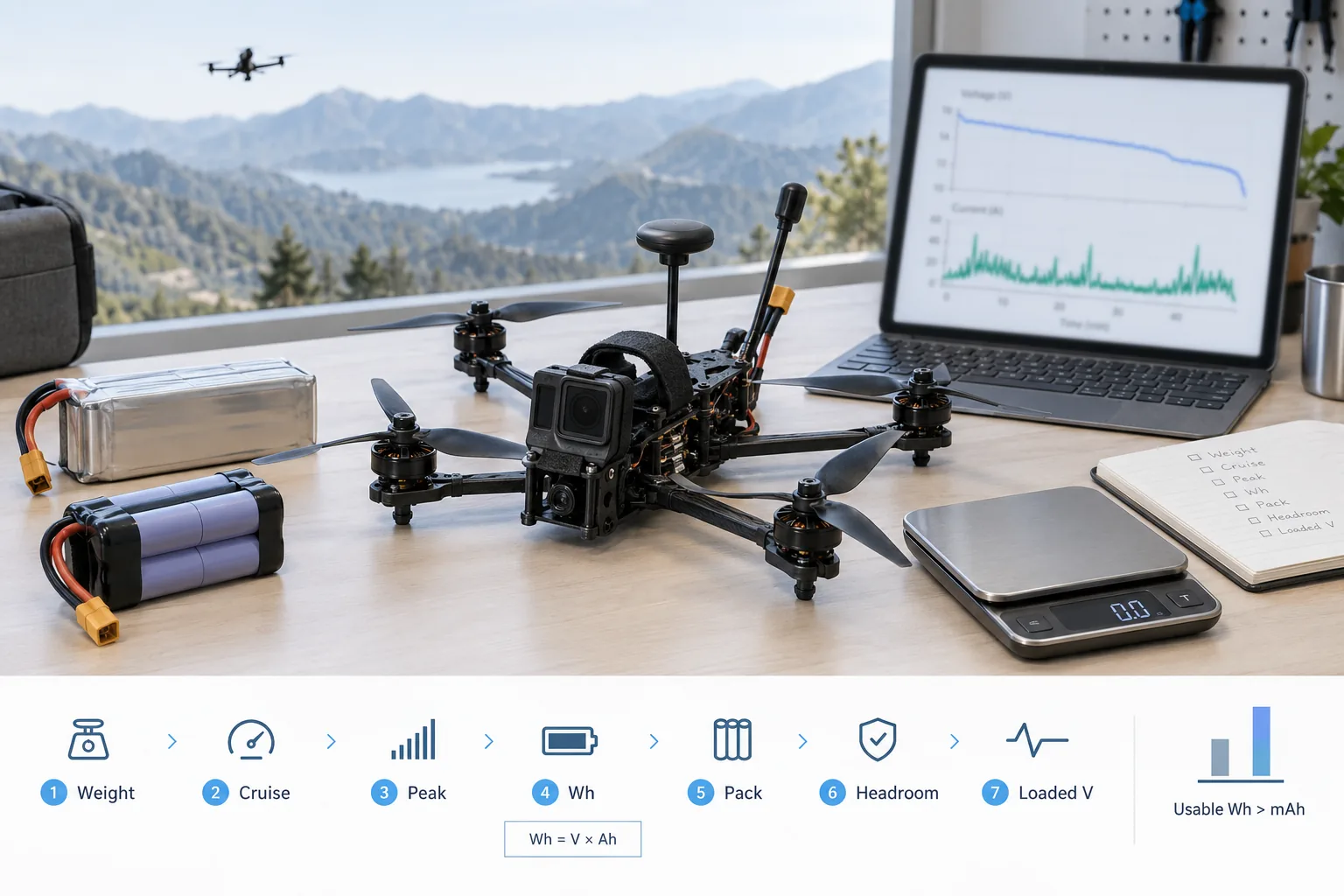
Before changing from LiPo to Li-ion, collect data from the
aircraft you already have.
Step 1: Record the Aircraft Weight Without the Battery
Start with dry weight.
Then add the actual equipment used during long-range flights: camera; GPS; antennas; video transmitter; mounts; payload or accessories.
This gives a realistic starting point for comparing battery mass.
Step 2: Measure Average Cruise Current or Power
Use OSD data, current-sensor logs or Blackbox data from representative
flights.
Do not use hover current alone if the aircraft normally cruises forward at
a different power level.
What matters is the power profile of the mission you actually fly.
Step 3: Measure Peak Current
Look at demanding conditions such as:
· takeoff;
· maximum climb;
· rapid acceleration;
· high-speed return;
· wind correction.
Average current tells you about endurance. Peak current tells you whether
the battery has enough power reserve. Both are necessary.
Step 4: Compare Watt-Hours Instead of mAh
A 3000mAh battery is not directly comparable with another 3000mAh battery
if their voltages are different.
Convert both to Wh first. For example:
6S 3000mAh LiPo
22.2V × 3Ah = 66.6Wh
This provides a much more meaningful energy comparison.
Step 5: Compare Finished Pack Weight
Calculate:
Pack-level energy density = Battery Wh ÷ Battery Weight
Use the weight of the completed battery with wires and connector—not the
manufacturer's cell-level energy-density figure.
Step 6: Check Current Headroom
Suppose the aircraft cruises at 18A but occasionally reaches 55A.
A candidate Li-ion battery must be evaluated against both conditions.
If the cells perform efficiently at 18A but experience excessive voltage
sag or temperature rise at 55A, the higher nominal energy density may not
produce the expected real-world flight-time gain.
Parallel cell configurations can increase current capability, but they also
increase battery mass.
Step 7: Compare Loaded Voltage and Usable Energy
Two batteries should ideally be tested at similar:
· aircraft weight;
· payload;
· route;
· wind conditions;
· battery temperature;
· flight speed.
Look beyond maximum flight time.
Compare:
· average current;
· loaded voltage;
· voltage sag during climbs;
· battery temperature after landing;
· consumed capacity;
· remaining energy;
· handling and throttle response.
The most useful question is not: "Which battery has more mAh?"
It is: "Which battery delivers more usable watt-hours at the current profile this
aircraft actually flies?"
A Practical LiPo vs. Li-Ion Decision Checklist
Start with Li-ion if your aircraft is designed primarily around efficient
cruising.
Li-ion is worth evaluating when:
· maximum cruise endurance is the main objective;
· average current draw is relatively low;
· peak current remains within the battery's capability;
· the aircraft carries a light payload;
· flight style is smooth;
· high-energy-density cells can reduce battery mass for the required Wh.
Start with LiPo when the aircraft requires more electrical headroom.
LiPo is worth evaluating when:
· all-up weight is high;
· the aircraft carries a larger camera or payload;
· climbing current is significant;
· strong wind is part of the expected mission;
· acceleration and recovery power matter;
· voltage sag is limiting performance;
· the aircraft uses large propellers;
· the platform is moving toward 8–15 inch FPV.
For larger long-range aircraft, battery selection therefore becomes less
about choosing the cell type with the highest theoretical energy density and
more about finding the right energy-power balance.
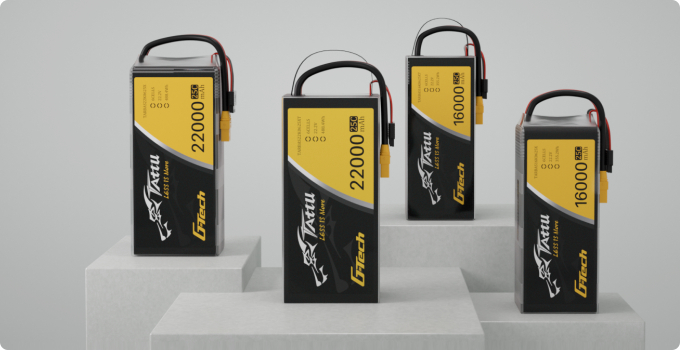
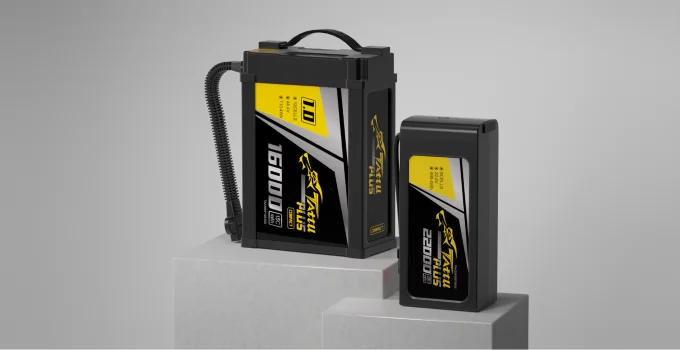
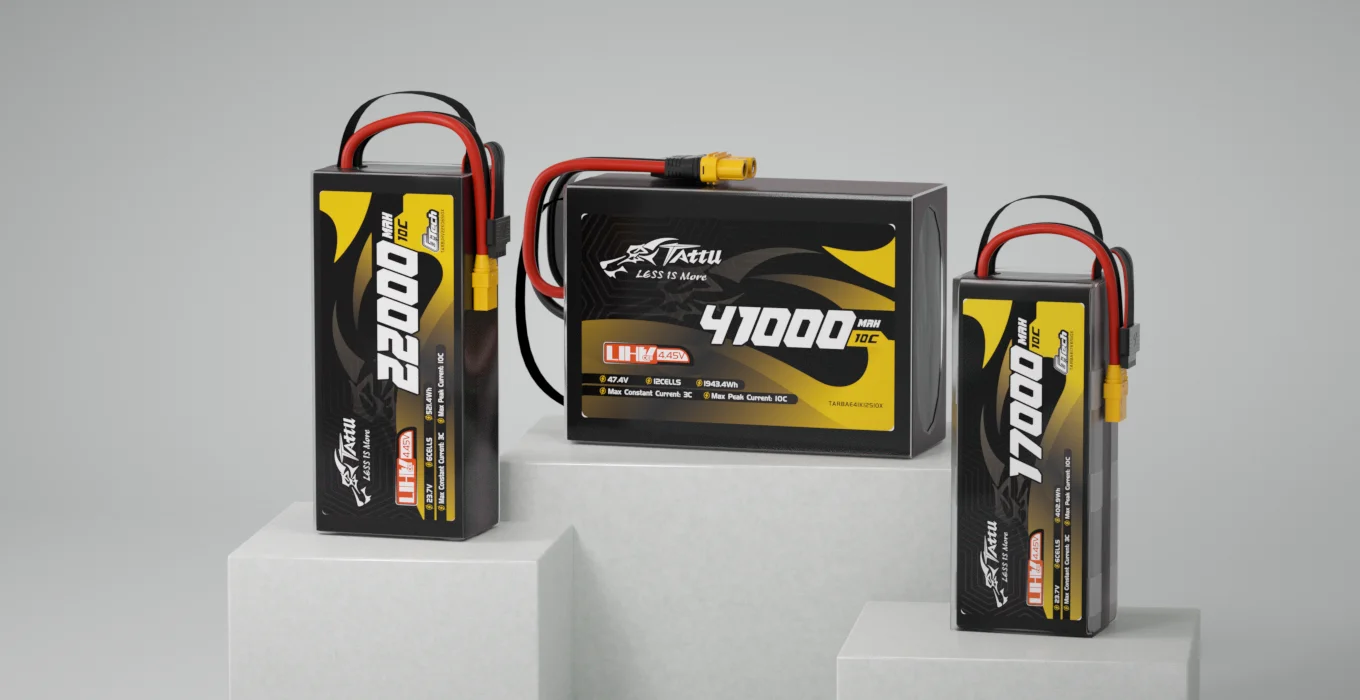
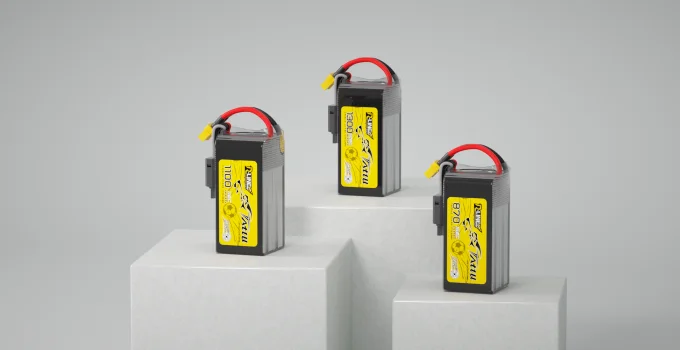
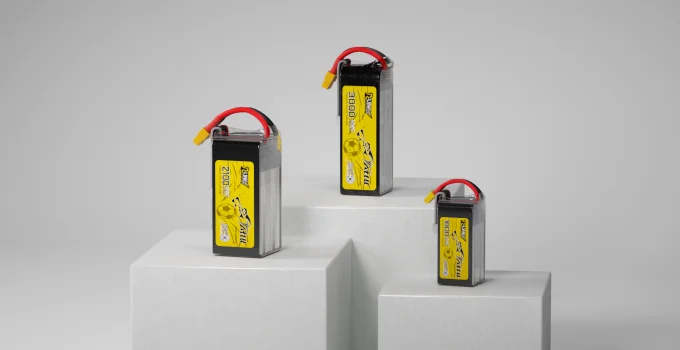
That is where high-capacity LiPo systems remain relevant. Tattu offers 6S and higher-voltage FPV battery platforms for different
aircraft sizes, while its 8S LiPo range includes high-capacity configurations
developed for large 13–15 inch FPV, cinematic and heavy-load applications. The
current 8S lineup includes 16,000mAh and 22,000mAh packs at 29.6V nominal
voltage, providing 473.6Wh and 651.2Wh respectively.
For high-power long-range aircraft, the selection process should still
begin with aircraft data rather than a product number: all-up weight, cruise
current, peak current, target flight time, voltage platform and maximum
acceptable battery mass.
For additional technical reference, see Tattu's guides on 6S vs. 8S FPV
batteries, real FPV battery C-rate, and voltage sag on heavy-payload
cinelifters. The latter explains in more detail how cell resistance, wiring,
connectors, temperature and system voltage affect loaded battery voltage.
Frequently Asked Questions
Does Li-ion give longer flight time than LiPo for FPV drones?
It can. On lightweight, efficient FPV drones with relatively low average and peak current, Li-ion packs can provide more energy for a given battery weight and therefore longer cruise time.
As aircraft power demand increases, however, voltage sag and current capability become more important. A higher-power LiPo may then provide more usable energy during the actual flight.
Are LiPo and Li-ion completely different battery chemistries?
Not in the way the names are often used in FPV.
Both belong to the rechargeable lithium-ion battery family. In FPV discussions, LiPo normally refers to pouch-cell batteries, while Li-ion generally refers to cylindrical-cell packs. Their performance differences depend on cell construction, material formulation, internal resistance, manufacturing design and whether the battery has been optimized toward energy or power.
Can I use a Li-ion battery on a 7-inch FPV drone?
Yes, many efficient 7-inch long-range builds can use Li-ion batteries.
Before selecting one, measure the drone's normal cruise current and peak current with the intended payload. A lightweight cruising build and a heavily loaded 7-inch cinematic aircraft may require very different batteries even though both use the same propeller diameter.
Why does my Li-ion FPV battery sag at full throttle?
Battery voltage falls under load partly because current flows through the effective resistance of the cells, pack connections, wiring and connectors.
A useful approximation is:
Voltage Drop = Current × Resistance
Higher current therefore produces greater voltage drop. Battery temperature, state of charge, cell design and aging also affect loaded voltage.
Is LiPo more suitable for large long-range FPV drones?
LiPo becomes increasingly relevant as aircraft weight, payload and power demand rise because high-power pouch packs can provide substantial current while maintaining voltage.
This does not mean every large FPV drone must use LiPo. The correct choice still depends on measured cruise power, peak power, battery weight and required endurance.
Conclusion: Compare Usable Energy, Not Battery Labels
There is no universal flight-time winner between LiPo and cylindrical
Li-ion.
For lightweight FPV aircraft designed around low-current cruising, Li-ion packs can make excellent use of their high energy density and
may substantially extend endurance. As FPV aircraft become larger and heavier, the battery problem changes. The
aircraft must still carry enough energy for a long flight, but it also needs
that energy to remain accessible during climbing, acceleration, strong wind and
other higher-current conditions. That leads to a more useful way to compare long-range FPV batteries:
Long-range battery performance = usable energy under load relative to
installed battery weight, within the aircraft's average and peak current
requirements.
Use nominal Wh to understand how much energy a battery stores. Use
completed pack weight to understand what the aircraft must carry. Then measure
current, loaded voltage and temperature to determine how much of that energy is
actually usable in flight. For an efficient cruiser, the result may favor Li-ion. For a larger 8–15 inch aircraft, heavy cinematic platform or other
high-power long-range build, the balance may shift toward LiPo.
The battery should follow the aircraft's real power profile—not the label
on the cell.








 Blog
Blog
 Blog
Blog


