In the FPV (First-Person View) community, the evolution of power systems
never stops. Around 2015, 4S replaced 3S as the standard; by 2018, 6S had
completely taken over the 5-inch quadcopter market. Today, discussions about "8S
FPV" are becoming increasingly frequent on platforms like Reddit's r/fpv and
various social media groups. Does higher voltage automatically equal a better
flight experience? Let's break down the actual differences between 6S and 8S
LiPo batteries, combining pure physics with real-world feedback from frontline
pilots.
What is a 6s lipo battery for fpv drones?
A 6S LiPo battery consists of 6 lithium polymer cells connected in series,
delivering a nominal voltage of 22.2V (25.2V when fully charged). Each cell
contributes 3.7V nominally and 4.2V at peak charge.
In the current FPV landscape, 6S is the absolute gold standard for 5-inch
freestyle and racing drones. It offers the perfect sweet spot: providing ample
power output while maintaining an optimal balance between battery weight and
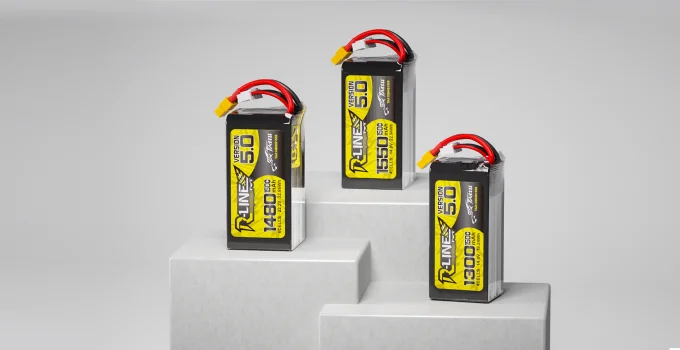
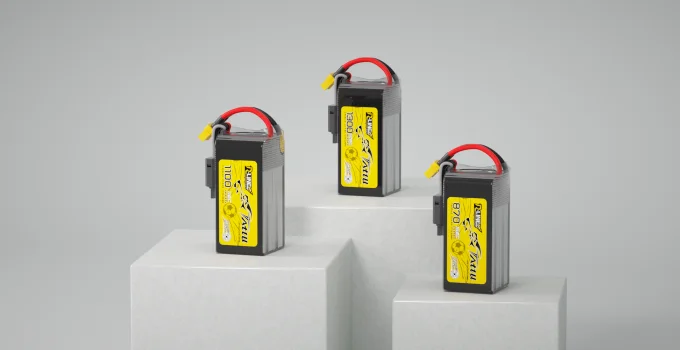
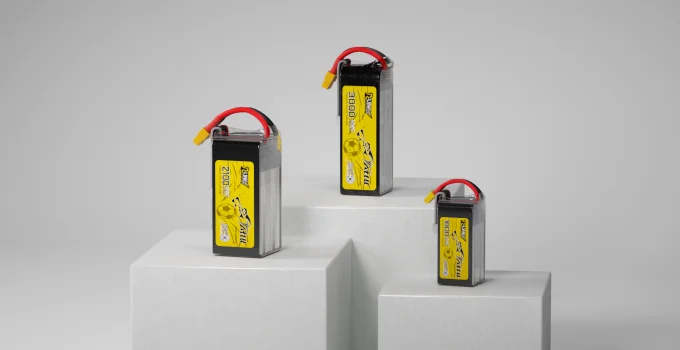
drone agility. Industry-standard equipment—such as Tattu fpv battery packs—and
the surrounding ecosystem of motors, ESCs (Electronic Speed Controllers), and
flight controllers are almost entirely optimized for 6S. This means hardware
maturity is at its peak, and replacement parts are universally accessible.
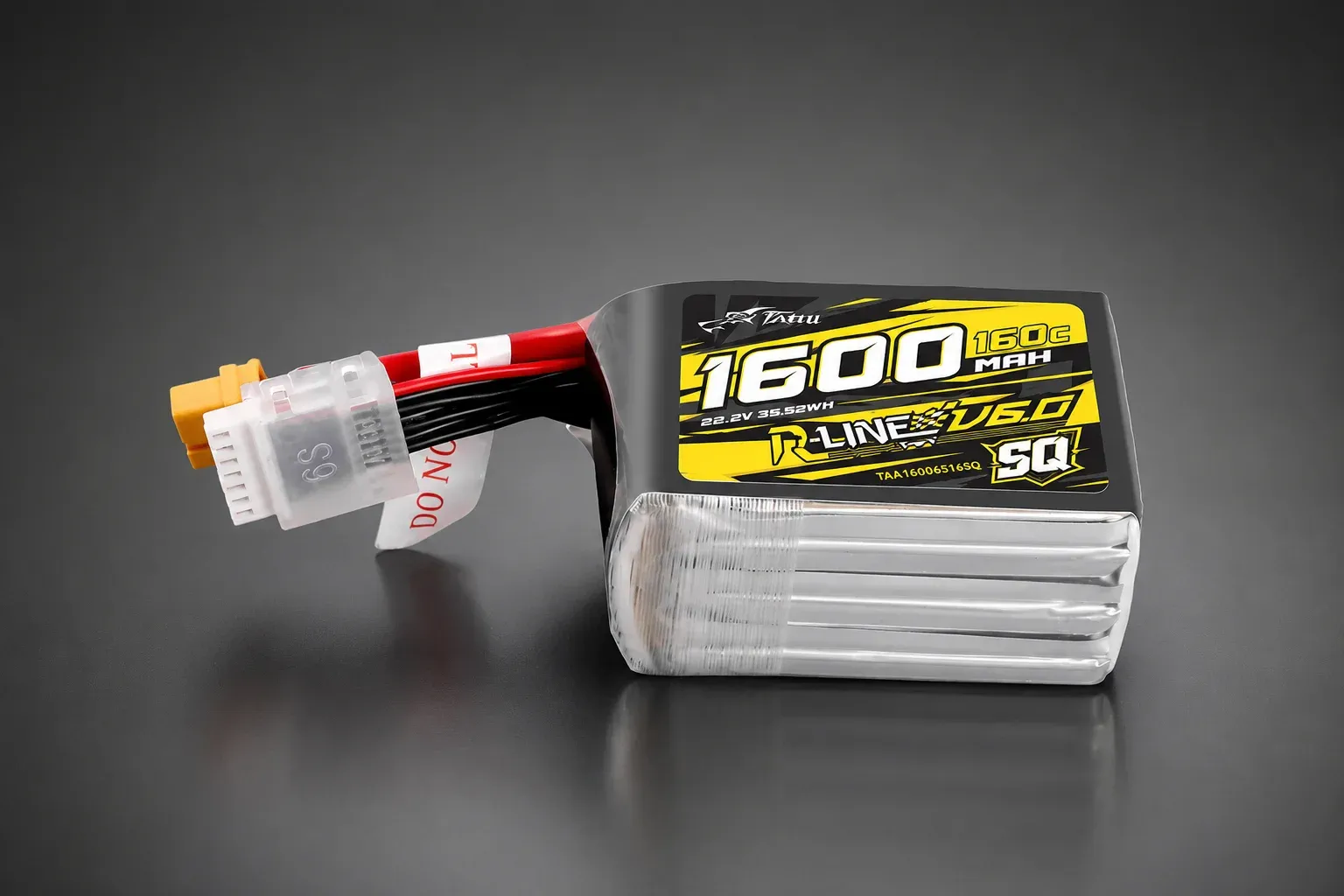
Typical 5-inch 6S packs are often around 1100mAh to 1550mAh, usually with
an XT60 connector. For 7-inch long-range or cinematic builds, larger 6S packs
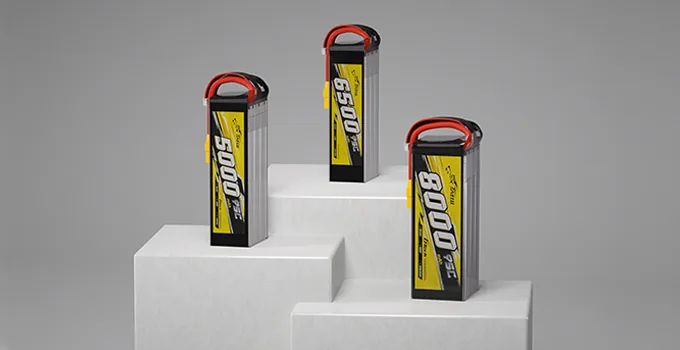
such as 3000mAh, 4000mAh, 5000mAh, or even higher-capacity packs are common.
What is a 8s lipo battery for fpv drones?
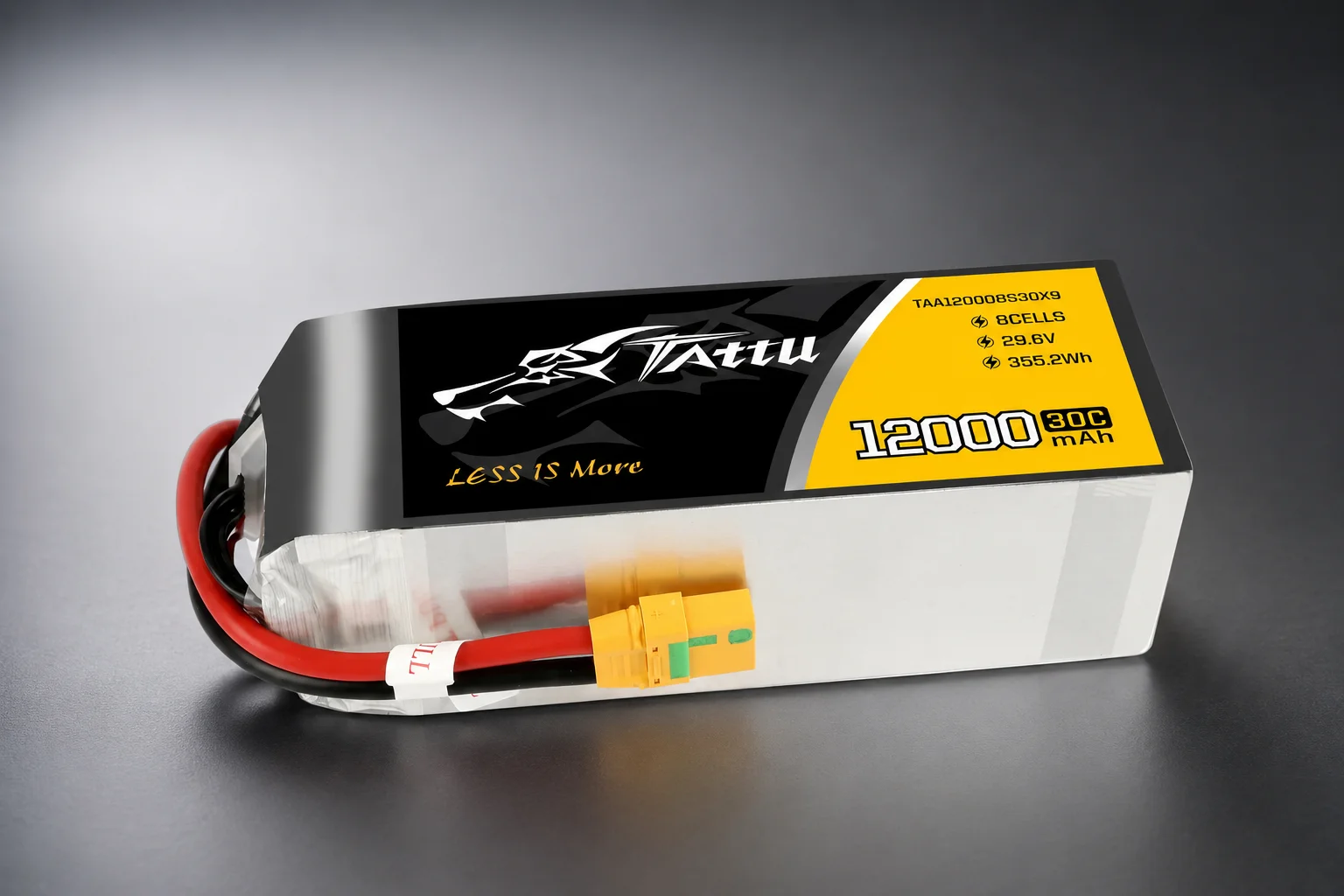
An 8S LiPo battery stacks eight cells in series, producing a nominal
voltage of 29.6V (33.6V at full charge). This represents a 33% voltage increase
over 6S and a massive 125% jump over 4S. That extra voltage lets a properly
matched drone draw less current for the same power, which can reduce heat and
voltage drop under load.
Historically, 8S was the exclusive domain of large cinematic heavy-lifters
(cinelifters, like X8 rigs carrying RED or ARRI cinema cameras), where massive
payloads demand exceptional power support. However, an increasing number of
hardcore FPV pilots are now cramming 8S systems into 5-inch or 7-inch long-range
and aggressive freestyle builds, pushing their motors to their absolute
performance limits.
An 8S LiPo battery stacks eight cells in series, producing a nominal
voltage of 29.6V (33.6V at full charge). This represents a 33% voltage increase
over 6S and a massive 125% jump over 4S. That extra voltage lets a properly
matched drone draw less current for the same power, which can reduce heat and
voltage drop under load.
6s vs 8s lipo fpv battery: what’s the difference?
There is often a gap between theoretical specs and actual stick feel.
Combining objective physics with real-world feedback from the FPV community, the
core differences boil down to four distinct areas:
1. Physics and Current Thermal Loss
The core formula for FPV power dynamics is P = V x I (Power = Voltage ×
Current).To output the exact same target thrust (power), an 8S (higher voltage)
system requires significantly less current (A) than a 6S setup. Since heat
generation in wires and motors is proportional to the square of the current
(thermal loss I²R), an 8S system drastically reduces heat loss, resulting in
much higher overall energy efficiency.
2. Voltage Sag Under Extreme Load
When flying 6S, aggressive, full-throttle maneuvers (punch-outs) cause a
massive spike in current draw, which temporarily pulls the battery voltage down.
This "voltage sag" makes the throttle feel noticeably "softer" toward the end of
the flight.With an 8S system, because it draws less current for the same punch,
voltage sag is virtually eliminated. The consensus among pilots is that 8S power
delivery feels brutal yet incredibly linear; even when the battery is down to
20% capacity, the lock-in and explosive power feel exactly the same as a fresh
pack.
3. Motor KV Matching
You cannot simply plug an 8S battery into a 6S drone. Motor RPM is dictated
by voltage and its KV rating.6S Standard: Typically paired with 1700KV - 1900KV
motors.8S Standard: Requires a much lower KV motor (e.g., 1000KV - 1300KV).
Forcing an 8S battery onto a 6S motor will result in insanely high RPMs that
will instantly fry the motor or ESC.
4. Weight Penalty and Cost
This isn't just theory; it's a painful reality for drone builders. An 8S
pack has two extra cells, adding significant weight. A standard 6S 5-inch quad
usually has an All-Up Weight (AUW) between 650g and 700g, while an 8S 5-inch
build often balloons to 800g - 900g.Pilots experimenting with 8S 5-inch builds
often complain on forums that "it flies like a flying brick." While that heavy
inertia is great for smooth cinematic shots, it ruins the snappy, nimble stick
feel needed for bando bashing (flying through tight, abandoned spaces).
Furthermore, 8S-capable ESCs and high-voltage capacitors are more expensive, and
the brand selection is much narrower.
6s vs 8s lipo fpv battery: which one should I choose?
Choose 6S If:
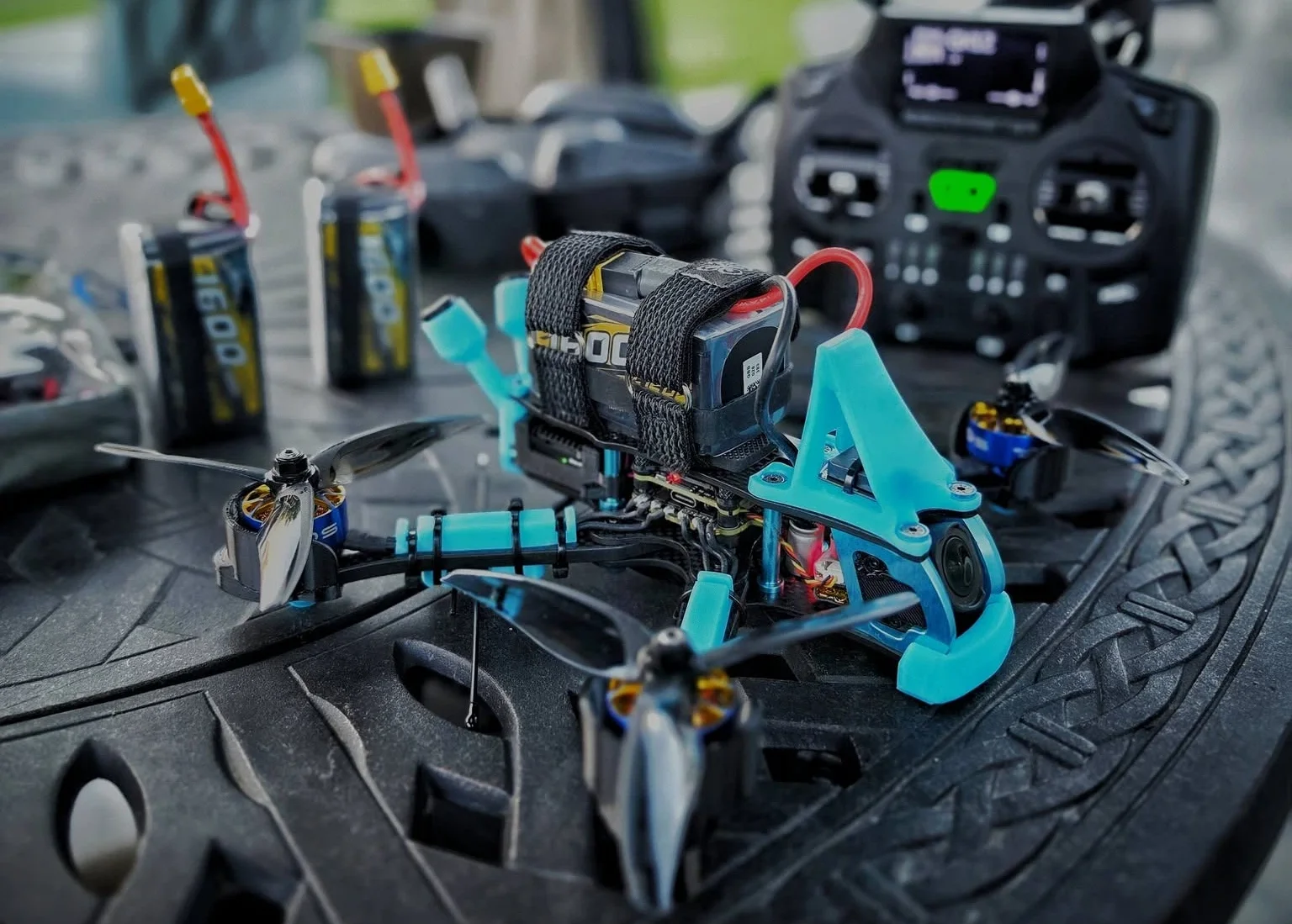
•You're building a 5-inch freestyle or racing quad — this is the
established sweet spot with the best component availability
•You want proven reliability — the 6S ecosystem is mature, with countless
flight hours validating every component combination
•You're budget-conscious — 6S batteries, ESCs, motors, and chargers are
significantly cheaper and more available
•You want minimal tuning headaches — plug-and-play compatibility with
Betaflight defaults and minimal capacitor drama
•You're racing competitively — virtually all professional racers use 6S;
it's the standard that tracks and gates are designed around
•You're building 7–10 inch long-range — 6S 3000–6000mAh packs offer
excellent flight times with proven reliability
Choose 8S If:
•You're building a 13–15 inch cinematic or heavy-lift platform — 8S
provides the voltage headroom for large props, heavy payloads, and sustained
power delivery
•You need maximum power density for a specific mission — when every amp of
current reduction matters for thermal management
•You're an experienced builder comfortable with high-voltage systems — 8S
requires meticulous attention to component ratings, capacitor sizing, and
voltage monitoring
•You have access to 8S-compatible components — including chargers, ESCs
rated for 8S+, and voltage regulators for sensitive electronics
•You're pushing the absolute bleeding edge — and accept the trade-offs of
higher cost, limited parts availability, and more complex builds
The Honest Truth for Most Pilots:
If you're reading this article to decide what to buy for your next build,
the answer is almost certainly 6S. The performance gains of 8S on a 5-inch quad
are incremental for freestyle and racing, while the ecosystem drawbacks are
substantial. As Oscar Liang summarized after his 8S build: "Building the
ultimate 8S freestyle FPV drone is challenging yet immensely rewarding... This
build isn't for the faint of heart or beginner pilots."
Will 8S LiPo batteries become the mainstream choice for FPV drones in the
future?
The verdict: 8S will absolutely dominate specific niches, but it is
unlikely to completely replace 6S in the standard 5-inch category.
Looking back, 6S overtook 4S because the power increase came with a weight
penalty that 5-inch frames could easily handle. Moving from 6S to 8S, however,
introduces severe diminishing returns regarding weight. For 5-inch freestyle,
where "agility is life," current LiPo energy density isn't quite there yet to
make 8S universally viable.
However, in the realms of commercial cinematography, X8 heavy-lifters, and
endurance flying, 8S (and even 12S) is already showing an irreversible trend
toward becoming the standard. Unless there is a revolutionary breakthrough in
solid-state or higher-energy-density battery technologies—allowing 8S voltage at
a 6S weight footprint—6S and 8S will continue to coexist long-term, each ruling
their respective domains of "agility" and "heavy payload."
FAQs
1. Does an 8S LiPo battery provide longer flight time than a 6S LiPo
battery?
Not necessarily. Flight time depends on the battery’s total energy
capacity, drone weight, motor efficiency, propeller selection, and flying style.
Although an 8S FPV battery can reduce current draw and improve efficiency under
heavy loads, its two additional cells also increase weight. On a standard 5-inch
FPV drone, this extra weight may offset potential efficiency gains.
2. How can I fairly compare the capacity of 6S and 8S FPV batteries?
Compare their watt-hours rather than looking only at the milliamp-hour
rating. Watt-hours are calculated by multiplying nominal voltage by capacity in
amp-hours. For example, a 6S 1500mAh battery stores approximately 33.3Wh, while
an 8S 1100mAh battery stores approximately 32.6Wh. These packs have similar
energy capacity despite their different voltages and mAh ratings.
3. Can I install an 8S LiPo battery on a drone designed for 6S?
You should not connect an 8S LiPo battery to a standard 6S FPV drone
without confirming the voltage rating of every component. The motors, ESC,
flight controller, capacitors, voltage regulators, video transmitter, and other
electronics must support up to 33.6V. An 8S build also normally requires
lower-KV motors to prevent excessive motor speed and component failure.
4. What components must be upgraded for an 8S FPV setup?
A reliable 8S FPV drone generally requires 8S-rated ESCs, lower-KV motors,
correctly rated capacitors, compatible voltage regulators, and a charger that
supports eight-cell LiPo batteries. Builders should also verify that the flight
controller and connected accessories can tolerate the higher input voltage or
receive power through an appropriate regulator.
5. Does an 8S FPV battery reduce voltage sag?
Yes, a properly matched 8S system can experience less voltage sag because
it draws less current than a 6S system when producing the same amount of power.
This can help maintain more consistent throttle response during punch-outs,
sustained high-load maneuvers, and the later stages of a flight. Battery
quality, capacity, condition, and discharge performance still affect the final
result.
6. Is an 8S LiPo battery better for 5-inch FPV freestyle or racing?
For most pilots, 6S remains the more practical choice for 5-inch freestyle
and racing drones. A 6S LiPo battery offers a mature component ecosystem, lower
build costs, easier tuning, broad replacement-part availability, and a better
balance between power and agility. An 8S setup may deliver strong and consistent
power, but the additional battery and component weight can make a 5-inch drone
feel less responsive.
7. When is an 8S FPV battery worth choosing?
An 8S FPV battery is most useful for large cinematic drones, heavy-lift
platforms, endurance aircraft, and other applications that require sustained
power with lower current draw. It can be especially valuable on 13-inch,
15-inch, or larger FPV drones carrying cameras or other payloads. For
conventional 5-inch builds and many 7-inch long-range drones, a 6S battery is
usually simpler, lighter, and more cost-effective.
Conclusion
For 95% of FPV pilots in 2026, 6S is the right choice. It offers the best
balance of performance, cost, availability, and proven reliability. Build your
quad around 6S 1300–1550mAh packs with 1700–1950KV motors, and you'll have a
setup that handles freestyle, racing, and moderate long-range flying with
confidence.
8S is a specialist tool — powerful, exciting, and genuinely useful for
large-platform builds, but overkill and unnecessarily complex for standard
5-inch applications. If you're curious about 8S, start with a purpose-built 13+
inch fpv drone where the voltage headroom solves real problems, not creates new
ones. Tattu provides a comprehensive range of FPV batteries tailored for
diverse application scenarios. Whether you are powering a high-speed rocket FPV
exceeding 400km/h or a heavy-lift, long-range 13-inch, 15-inch, or 17-inch
setup, Tattu has you covered. Our versatile lineup spans from 6S to 12S
configurations and capacities ranging from 1,200mAh to 12,000mAh. For more
information, please feel free to contact us at [email protected].







 Blog
Blog
 Blog
Blog
 Blog
Blog


