For many FPV beginners, choosing a LiPo battery seems simple: compare the
C-rating, and pick the battery with the bigger number. A 200C battery should be
stronger than a 180C battery, and a 180C battery should outperform a 160C
battery. At least, that is what the labels appear to suggest. Real battery
performance is more complicated.
The C-rate is a useful way to describe discharge current relative to
battery capacity. For example, 1C on a 1.5 Ah battery means 1.5 A, while 10C
means 15 A. This is the standard mathematical meaning of C-rate. But the number
printed on an FPV battery does not tell you everything that happens when that
battery is connected to a motor and asked to deliver high power.
It does not directly tell you how much the voltage will sag, how much
usable capacity remains at high current, how much energy can actually be
delivered before cutoff, or how the pack behaves during a sudden throttle punch.
That is why a battery with a lower nominal C-rating can sometimes outperform one
with a much higher number.
In this article, we will use four different discharge tests to answer that
question step by step: a 1C discharge test, a 45C constant-current discharge
test, a progressive burst discharge test, and a constant-power discharge test.
Together, these tests help show the difference between the C-rating printed on a
battery label and the battery's actual performance under different loads. The
batteries tested are approximately 6S 22.2 V packs in the 1450-1500 mAh range,
making the comparison relatively consistent in terms of voltage and
capacity.
What Does a C-Rating Actually Mean?
The basic calculation is straightforward:
Discharge current = Battery capacity in Ah x C-rate
For example, a 1500 mAh battery is 1.5 Ah.
At 45C: 1.5 Ah x 45 = 67.5 A
If the same battery is marked 200C, the label mathematically corresponds
to: 1.5 Ah x 200 = 300 A
A 1480 mAh 160C battery corresponds to: 1.48 Ah x 160 = 236.8 A
This is where many beginners make the first mistake. They see 300 A versus 236.8 A and assume that the 200C battery must be much
more powerful. But the calculation only converts capacity and C-rate into current. It does
not tell us what voltage the battery can maintain at that current, for how long
it can sustain the load, what temperature it reaches, or how much useful energy
remains before the voltage becomes too low.
For UAV endurance calculations, researchers have found that relying only on
manufacturer datasheet information introduces uncertainty, while experimentally
measured discharge profiles provide much more useful information about actual
battery behavior. So before comparing "160C versus 180C versus 200C", we should
begin with something much simpler.
Does the Battery Actually Deliver Its Rated Capacity?
The easiest place to start is a low-rate discharge test. At 1C, these
approximately 1.5 Ah batteries are only being discharged at around 1.5 A. This
is a very light load compared with what an FPV drone may demand. The purpose
here is not to test "punch". It is to establish a baseline.
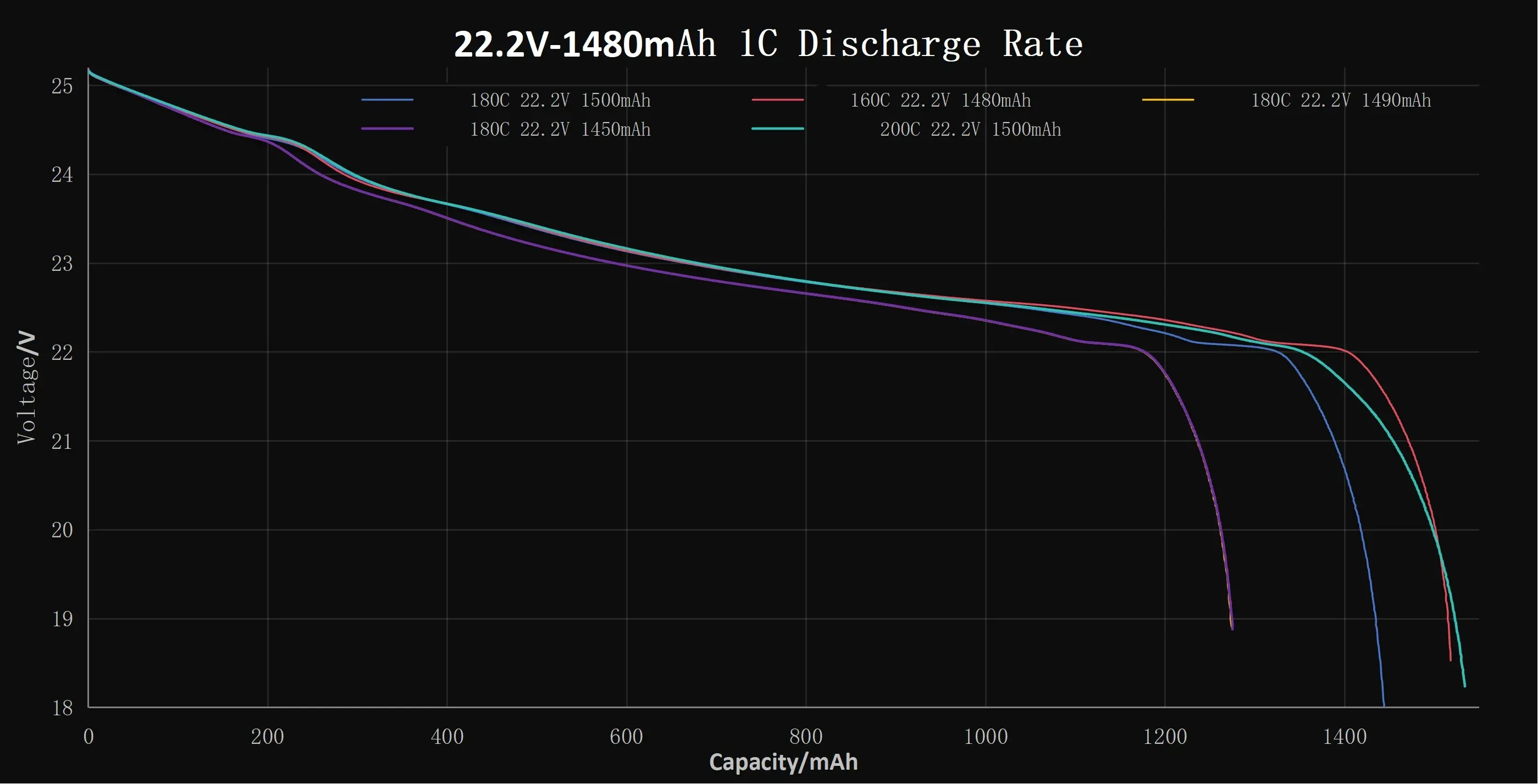
Figure 1. 1C discharge curves of several 6S FPV LiPo batteries.
Look at the horizontal axis. It shows discharged capacity in mAh. A battery
that claims 1500 mAh should ideally deliver close to that amount under this
relatively easy test condition.
The chart immediately shows that nominal C-rating and usable capacity are
two different things. The red 160C 1480 mAh pack reaches roughly 1500 mAh before
the voltage falls sharply. The cyan 200C 1500 mAh pack also delivers
approximately its rated capacity. Some of the 180C packs, however, reach their
voltage knee significantly earlier.
This gives us our first lesson: Before asking how many C a battery can
deliver, first ask whether it can deliver the capacity printed on the label. A
very high C-rating is not especially useful if the battery cannot provide enough
usable energy. But 1C testing still tells us very little about real FPV
performance. Almost any healthy high-rate LiPo should look reasonably
comfortable at such a light load. So the next step is to increase the current
dramatically.
What Happens When All Batteries Face the Same High Current?
Now consider a 45C constant-current discharge. For a roughly 1.5 Ah
battery, 45C means approximately 67 A. This is where the curves begin to tell us
much more about real high-rate capability. Instead of looking only at how far
the curves extend to the right, pay attention to their vertical position. The
vertical axis is voltage. At the same discharged capacity and approximately the
same current, a battery that maintains a higher voltage is delivering more
electrical power to the load.
For example: Power = Voltage x Current
If two batteries are both supplying around 67 A, but one remains at 21.5 V
while another falls to 21.0 V, the first battery is delivering more power at
that moment. This difference is what FPV pilots experience as stronger throttle
response and less voltage sag.
Higher discharge rates generally increase voltage loss through ohmic
resistance and electrochemical polarization, while also increasing thermal
stress. Experimental high-C-rate battery studies show that terminal voltage
falls more sharply as discharge rate increases.
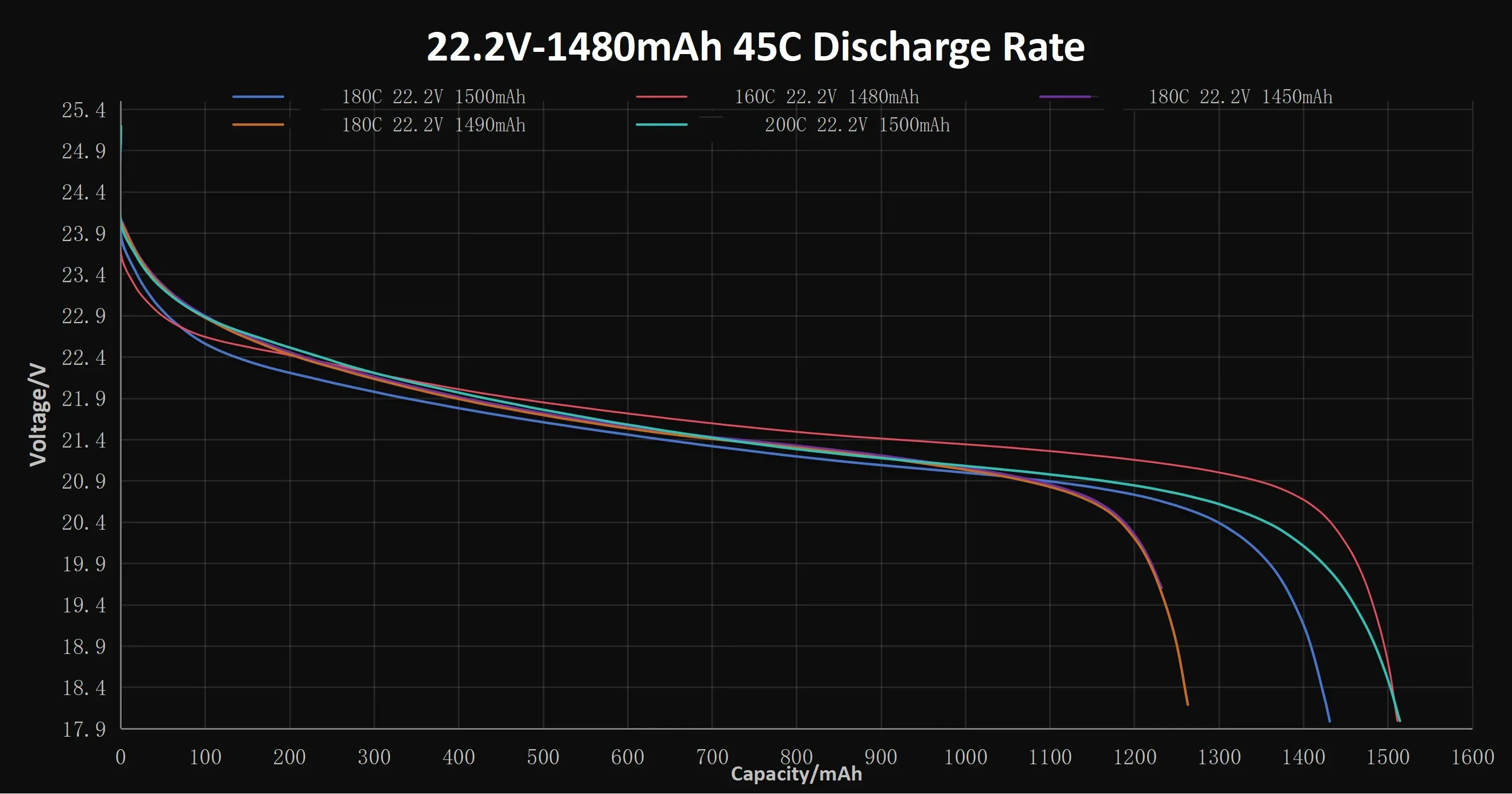
Figure 2. 45C constant-current discharge curves.
The red curve belongs to the 160C 1480 mAh battery. Several competing packs
are labeled 180C, while the cyan battery is labeled 200C. Yet through much of
the middle and later part of the 45C discharge, the red 160C battery maintains
the highest voltage. It also reaches approximately its full rated capacity
before entering the steep end-of-discharge voltage drop.
This is the first strong evidence that: A higher printed C-rating does not automatically mean lower voltage sag or
better sustained high-current performance. The 200C pack performs well and
releases a similar amount of capacity, but its voltage platform is generally
below the red 160C pack through an important part of the high-load discharge.
The difference becomes even clearer when we stop using a fixed load and start
increasing the current.
What Happens During a Real "Punch"?
FPV batteries do not normally experience perfectly steady current. A pilot
may cruise at moderate throttle and then suddenly demand a much larger amount of
power during acceleration, recovery, climbing, or aggressive freestyle
maneuvers. That is why a progressive high-current test is useful.
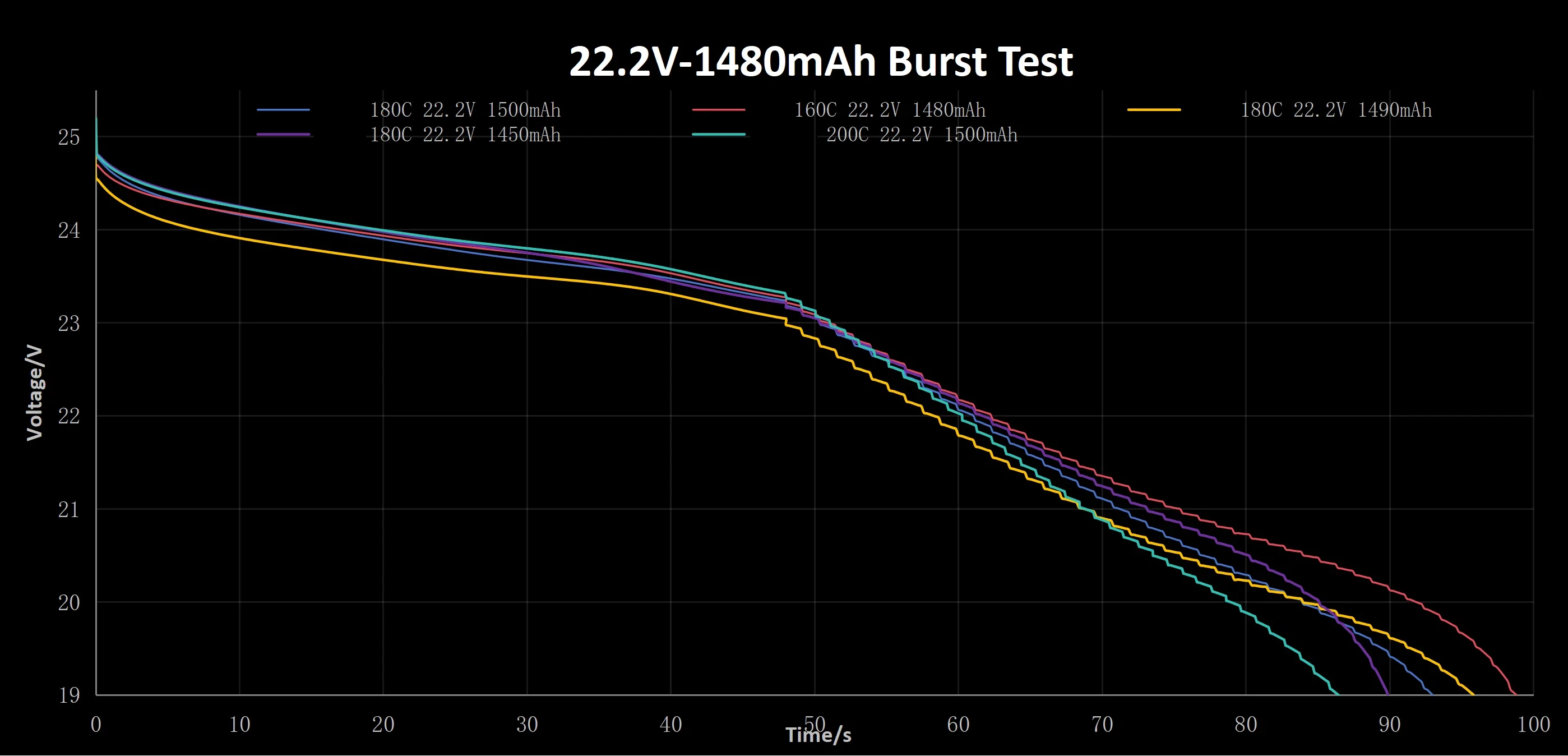
Figure 3. Progressive burst test. The test begins at 15C for 48 seconds,
then the current is increased by 2C every second until the pack reaches the 19 V
cutoff.
This test asks a different question: How far can the battery continue
increasing its output before the voltage can no longer stay above the
cutoff?
During the first part of the test, the curves are relatively close
together. This is important. At a moderate load, several batteries can look
almost equally good. The real separation occurs after the current begins
climbing. As the load becomes increasingly severe, some batteries begin losing
voltage much faster than others.
The cyan 200C pack initially shows a good voltage platform, but its voltage
eventually falls more rapidly and it reaches the cutoff earlier. Some 180C packs
also reach the cutoff before the red curve. The red 160C pack continues the
longest. That means that under this particular progressive-load test, the
battery carrying the lower nominal C number actually demonstrates the strongest
ability to maintain usable voltage as current demand increases.
This leads to the second major lesson: Real discharge capability is not
simply "how much current a battery can theoretically survive". It is how well
the battery maintains useful voltage while delivering that current. For an FPV
pilot, that distinction matters. A battery may technically supply a large
current for a short moment, but if the voltage collapses badly while doing so,
the motors do not receive the performance that the C-rating seems to
promise.
Constant Power Gets Even Closer to How a Drone Uses a Battery
The final test is especially useful because it changes the way we think
about the battery. Instead of asking the battery to provide a fixed current, the
test asks it to provide approximately the same power as its voltage
decreases. This test is particularly relevant to electric aircraft. Because a
propulsion system ultimately needs power to produce thrust.
Imagine that the system requires approximately 500 W.
When battery voltage is high: 500 W / 24 V = about 20.8 A
Later in the discharge, if battery voltage falls to 20 V: 500 W / 20 V = 25
A
The battery now has to supply more current to maintain the same power. This
creates an important feedback effect. As battery voltage drops, the current
required for the same power increases. Higher current then creates more
resistive loss and additional voltage drop.
Aircraft battery research using constant-power LiPo discharge models
describes this same behavior: as battery voltage decreases during discharge,
progressively higher current is required to maintain the same propulsion power.
This is why the last part of a flight can be much harder on the battery than
beginners expect.
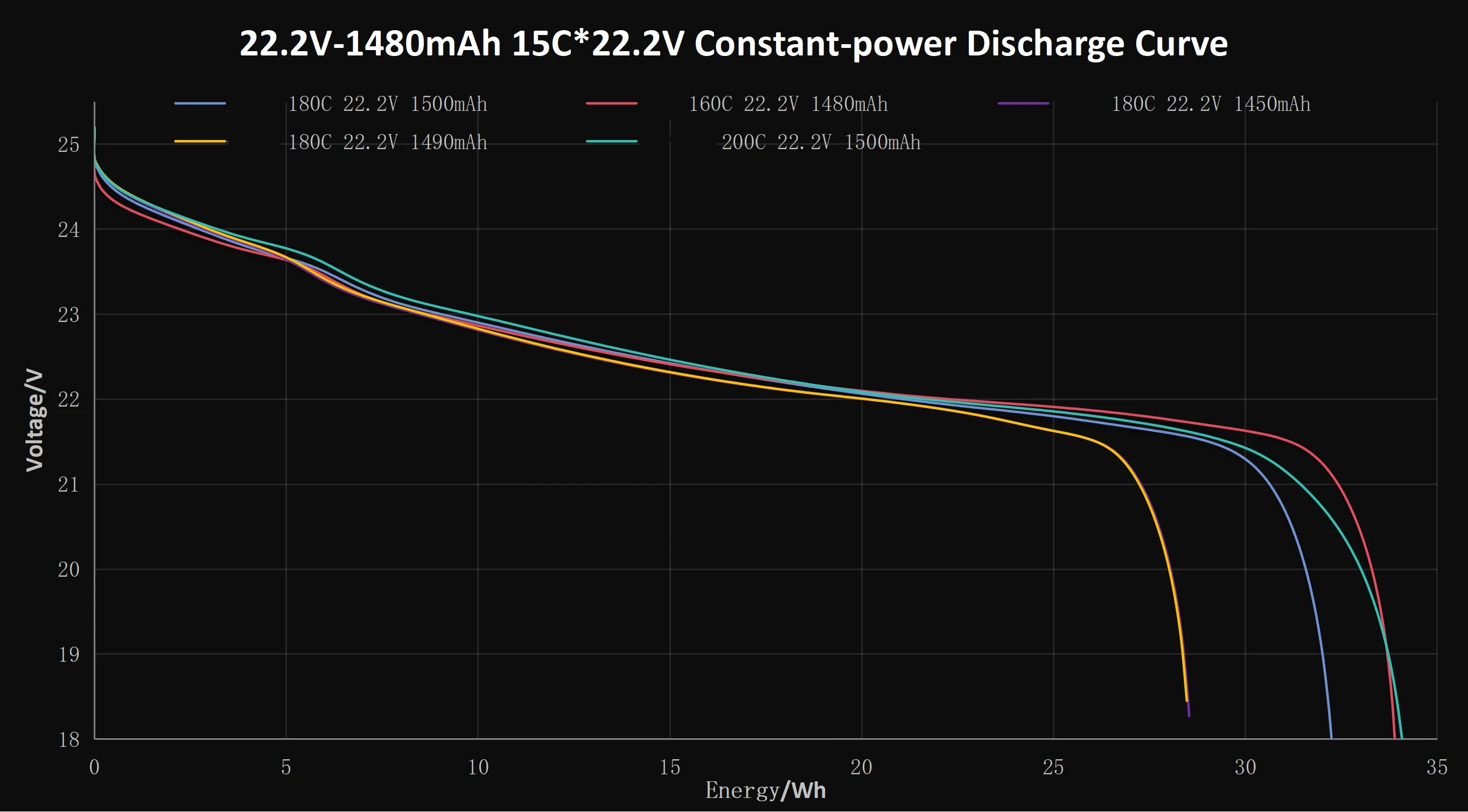
Figure 4. Constant-power discharge curves at approximately 15C x 22.2 V
reference power. The horizontal axis is delivered energy in Wh rather than
capacity in mAh.
The red 160C battery maintains one of the highest voltage platforms
throughout the middle and later stages of the test. It also delivers close to 34
Wh of energy, approximately matching the best 1500 mAh pack despite having a
nominal capacity of only 1480 mAh. Meanwhile, two of the nominal 180C batteries
enter their steep voltage-collapse region much earlier, at around 28 Wh.
This tells us something that a C-rating alone cannot show: What really
matters to the aircraft is how much usable energy the battery can deliver while
maintaining enough voltage to satisfy the propulsion system. A battery that
retains higher voltage requires less current to deliver the same power. That can
reduce electrical losses and help the propulsion system maintain performance
deeper into the discharge.
What Is the "Real" C-Rating of an FPV Battery?
There is no single curve in these four tests that magically converts a
battery into one definitive "true C" number. That is actually the point. A
battery's real-world high-power performance is multidimensional. The 1C test
tells us whether the rated capacity is basically there. The 45C test tells us
how well the battery maintains voltage under sustained high current. The
progressive burst test tells us how the battery behaves as current demand rises
toward an extreme condition. The constant-power test tells us how much useful
energy the battery can provide when the propulsion system continues demanding
power as voltage declines. Together, these tests provide a much more complete
performance picture than the C number printed on the shrink wrap.
Why Can a 160C Battery Beat a 200C Battery?
This test set provides a useful example. The red battery is rated at 160C.
Other packs are labeled 180C and 200C. If we judged only by the number on the
label, the red battery should not be the strongest high-current performer. But
the measurements show something different.
•At 1C, it provides approximately its rated capacity.
•At 45C, it maintains the strongest or near-strongest voltage
platform.
•During the progressive burst test, it remains above the cutoff longer
than the higher-rated competitors.
•During the constant-power test, it maintains a higher working voltage
while delivering nearly the maximum usable energy in the group.
That does not mean that every 160C battery is better than every 200C
battery. It means something more useful: Nominal C-rating should not be used as
a universal cross-battery performance ranking. The label should be treated as
one specification. The discharge curve tells you what the battery actually
does.
What Should FPV Pilots Look at Instead of C-Rating Alone?
For a beginner, there is no need to completely ignore C-rating. It is still
useful as a first reference when selecting a battery designed for a high-power
application. The mistake is treating it as the final answer. A better way to
evaluate an FPV battery is to ask four questions: Does the pack deliver close to
its rated capacity? How much voltage sag appears at high current? Can it
maintain voltage during short high-power bursts? How much usable Wh can it
deliver under a realistic power demand?
For more serious comparison, temperature rise, DC internal resistance, pack
weight, connector resistance, cell balance and repeated-cycle performance should
also be measured. A battery that produces spectacular output once but becomes
extremely hot or degrades rapidly would not necessarily be the best FPV
battery.
Likewise, an extremely heavy battery may perform well on a bench but reduce
the thrust-to-weight ratio and flight characteristics of the aircraft. Real FPV
battery selection is therefore a balance between: power, usable energy, voltage
stability, weight and durability. C-rating describes only part of that
picture.
Conclusion
In short, C-rating is useful as a reference, but it should never be treated
as a complete measure of FPV battery performance. Real discharge capability is
better judged by how well a battery maintains voltage, delivers usable capacity
and energy, and responds under sustained and sudden high-power loads. For pilots
and engineers, the discharge curve tells far more about real-world performance
than the number printed on the label. As the world's leading FPV battery
manufacturer, Tattu is proud to engineer the premier power solutions for
high-speed drones. With top-tier champions exclusively relying on the TATTU
R-LINE series for their competitive edge, our high-discharge batteries are
definitively the best choice for your high-performance needs. For further
inquiries, technical support, or bulk order requests, please reach out to us at
[email protected].












 Blog
Blog
 Blog
Blog
 Blog
Blog


