Selecting a battery for a UAV is not simply a matter of choosing the
correct voltage and then buying the largest capacity that the aircraft can
physically carry. A larger battery stores more energy, but it also increases
takeoff weight. That additional weight requires more thrust, which increases
power consumption and can offset part of the endurance gained from the larger
battery.
A scientifically sound battery-selection process therefore has to solve
several questions together: Is the voltage compatible with the propulsion
system? How much energy does the mission require? Can the battery deliver the
required continuous and peak current? And, most importantly, can the battery
provide all of this without pushing the aircraft beyond its maximum takeoff
weight?
The most reliable way to answer these questions is to begin with the
propulsion-system manufacturer’s test data. When thrust, current, power,
recommended propeller, ESC, and operating voltage are already provided by the
propulsion manufacturer, the user does not need to estimate motor current or
propeller efficiency. The battery can be selected by following a clear
engineering sequence.For the following example, the original brand and model names have been
intentionally generalized.
1. Start with the Propulsion System, Not the Battery
Assume a heavy-lift propulsion manufacturer recommends the following
combination for a large multirotor platform:
| Item | Recommended Specification |
|---|
| Motor | Heavy-lift motor, approximately 40 KV |
| ESC | Industrial 24S ESC |
| Propeller | Approximately 52 × 20 in |
| Battery voltage | 24S LiPo |
| Recommended thrust per rotor | Approximately 35–38 kg |
| Recommended quadcopter MTOW | Approximately 140 kg |
| Maximum thrust per motor | Approximately 75 kg |
There is no need to calculate whether the aircraft should use 18S, 20S, or
24S lipo battery. The propulsion manufacturer has already matched the motor, ESC, propeller,
and operating voltage as a system. The user’s task is to select a battery within
that defined voltage platform.
For a conventional LiPo battery with a nominal cell voltage of 3.7 V, a 24S
pack has a nominal voltage of:24 *3.7 = 88.8V. The propulsion manufacturer may
conduct its bench tests at an actual operating voltage around 92 V. This does
not mean the correct battery specification is “92 V.” The system is still
defined as 24S; 92 V is simply the voltage observed under the manufacturer’s
particular test condition.
Once the voltage platform has been established, the real battery-selection
problem becomes much more focused: how much capacity is required, how much
current must the battery deliver, and how heavy can the battery be?
2. Define Maximum Takeoff Weight Before Calculating Capacity
The most important design rule is to define the aircraft’s total takeoff
weight before selecting battery capacity.
For this example, assume the aircraft is designed as a quadcopter with:Maximum takeoff weight: 140 kg
That 140 kg must include the entire aircraft:
•airframe and structure;
•motors and ESCs;
•propellers;
•flight controller and avionics;
•wiring and power distribution;
•landing gear;
•payload;
•battery.
The battery is not added after the 140 kg figure has been calculated. It is
already part of the 140 kg weight budget.
This distinction prevents a common design error. If an aircraft is first
designed at 140 kg without the battery, and then a large battery is added to
achieve the desired flight time, total weight increases. That additional weight
increases thrust demand, which increases current and may appear to require an
even larger battery. The calculation then becomes circular.
By fixing MTOW from the beginning, the design has a clear boundary: the
battery must satisfy the mission within the existing weight budget.
3. Convert Aircraft Weight into Required Hover Thrust
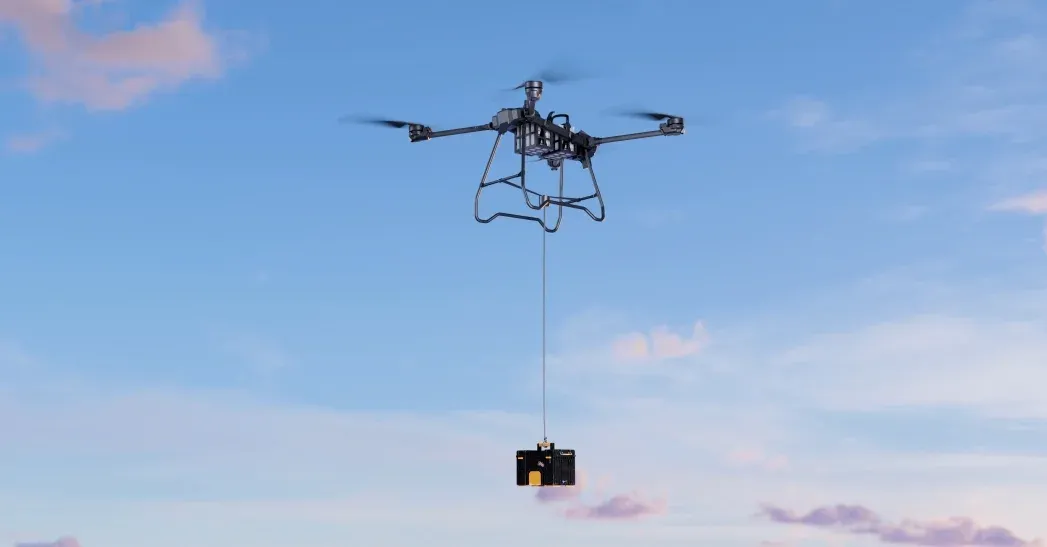
The aircraft uses four propulsion units, so a 140 kg quadcopter requires
approximately 35kg (140 \4) of thrust per rotor in hover.
The next step is not to estimate the current theoretically. Instead, the
propulsion manufacturer’s test table can be used directly.
Near the required 35 kg thrust point, the published data is
approximately:
The required 35 kg hover thrust is almost exactly represented by the 62%
test point. Therefore, for a 140 kg aircraft, a reasonable
manufacturer-data-based hover reference is:
•Current per motor: approximately 53.9 A
•Input power per motor: approximately 4.96 kW
This is one of the most important points in the entire selection process.
The hover current is not guessed by the customer and does not need to be
measured by the customer. It is derived from the propulsion manufacturer’s
thrust-current test data for the specified motor, ESC, propeller, and voltage
combination.
For four motors, total hover current becomes: 53.92×4 = 215.68A and total hover power becomes: 4.962× 4 = 19.85kW
The aircraft therefore has an approximate hover operating point of: 24S, 216 A, and 19.85 kW.
This operating point becomes the basis for estimating energy
consumption.
4. Calculate Battery Capacity from Mission Duration
Battery capacity should be calculated from the aircraft’s average mission
current, not from the maximum current capability of the motor or ESC.
For this example, assume the aircraft is a pure multirotor and spends most
of the mission near a hover-class operating condition. Also assume the battery
supplier allows approximately 80% of nominal capacity to be used for mission
planning, leaving the remainder as operational reserve.
The required nominal capacity can therefore be estimated as:
Required battery capacity = average current × flight time ÷ usable capacity
percentage
Using 215.68 A as the hover-current reference:
These values represent near-hover energy requirements based on the manufacturer’s 35.52 kg-per-rotor operating point and an assumed 80% usable capacity.
For a 15-minute target, the theoretical requirement is approximately: 215.68×15÷60÷0.8≈67.4Ah
| Target Flight Time | Approximate 24S Capacity |
|---|
| 5 minutes | 23 Ah |
| 10 minutes | 45 Ah |
| 15 minutes | 67 Ah |
| 20 minutes | 90 Ah |
| 30 minutes | 135 Ah |
A practical commercial candidate would therefore be a battery in the:24S
70Ah class
At this stage, however, 24S 70Ah is only an energy candidate. It is not yet
the final battery selection.
5. Validate the Battery Against the Aircraft Weight Budget
The next question is whether a 24S 70Ah battery can physically fit within
the aircraft’s 140 kg MTOW.
Assume the entire aircraft excluding the battery weighs: 110 kg
The maximum available battery weight is therefore: 140 - 110 = 30kg
This 30 kg becomes a hard battery-system weight limit.
If a 24S 70Ah battery weighs 27 kg, total takeoff weight becomes: 110 + 27 = 137kg
The design remains within the 140 kg limit.
If another 24S 70Ah battery weighs 35 kg, takeoff weight becomes: 110 + 35
= 145kg
The aircraft exceeds its MTOW. Even though the battery has the correct
voltage and capacity, it is not a valid solution.
This is the point where the selection process stops being a simple Ah
calculation.
The battery must satisfy both: Energy requirement ≤ available battery energy and Battery weight ≤
available battery weight budget
If both conditions cannot be satisfied simultaneously, the correct response
is not to continue increasing battery capacity. The aircraft design must
change—through lower payload, lower structural weight, shorter endurance, a
different propulsion architecture, or a battery technology with higher specific
energy.
6. Use Specific Energy to Judge Whether the Mission Is Physically
Feasible
Specific energy, expressed in Wh/kg, is one of the most important
parameters for heavy-lift UAV battery systems because it connects energy
directly to aircraft weight.
For a 24S 70Ah battery, nominal energy is: 88.8V x70Ah = 6,216Wh
If the complete battery system weighs 30 kg: 6,216Wh/30kg ≈207Wh/kg
Therefore, its system-level specific energy is approximately: 207 Wh/kg
This value is much more informative than capacity alone.
For example, the 20-minute version of the same mission requires
approximately 24S 90Ah. Its nominal energy is: 88.8x 90 = 7,992Wh or approximately: 8.0 kWh
If the battery still cannot exceed 30 kg, then the required system-level
specific energy becomes: 7,992 /30≈ 266Wh/kg
A battery system capable of only 200 Wh/kg would require approximately 40
kg to store 8 kWh, which would exceed the available weight budget. A battery
system capable of approximately 280 Wh/kg would require only about 28.6 kg,
which could potentially fit within the design.
This illustrates an important principle: for large UAVs, Ah determines how
much charge is stored, but Wh/kg often determines whether the endurance target
is actually achievable.
7. Capacity and Discharge Capability Must Be Treated Separately
A battery can contain enough energy for the required flight time and still
be unsuitable if it cannot deliver enough current.
The 140 kg aircraft requires approximately: 216 A during hover
For a 70Ah battery:216÷70≈3.1C
This means the battery is already operating at approximately 3.1C during
hover.
However, hover is not the highest continuous power condition. The aircraft
also needs additional thrust during climbing, forward acceleration, gust
rejection, attitude correction, and other high-load conditions. The ESC therefore provides another important system boundary.
Assume the selected industrial ESC is specified for:
•100 A continuous current per ESC with adequate cooling
•220 A peak current per ESC for 3 seconds with adequate cooling
With four ESCs, the theoretical combined continuous-current envelope
becomes: 100 ×4 = 400A
The system should therefore be designed so that the battery can support the
aircraft’s defined maximum continuous operating current up to approximately this
range, subject to the actual aircraft control strategy and thermal design.
For a 70Ah battery: 400 ÷70≈5.7C
Therefore, a 70Ah candidate battery should provide approximately:
400 A of real continuous current capability, equivalent to about 5.7C for
this battery size. The source material identifies approximately 400 A as the
ESC-side theoretical continuous boundary for the four-motor configuration.
In practice, it is more useful to verify the battery manufacturer’s actual
continuous-current capability directly than to rely only on a headline
C-rating.
8. Peak Current Is a Separate Design Requirement
Peak current should not be confused with continuous current.
At the propulsion manufacturer’s 100% test point, each motor draws
approximately: 177 A. With four motors: 177 ×4 ≈708A
The four ESCs, meanwhile, have a theoretical combined 3-second peak
capability of: 220 × 4 = 880A
Since the motor-propeller combination requires approximately 177 A per
motor at the 100% test point—below the ESC’s 220 A short-duration capability—the
propulsion load itself becomes the lower peak-current reference in this
configuration.
For a 70Ah battery: 708÷70≈10.1C
Therefore, if the aircraft control system allows all four propulsion units
to approach the manufacturer’s 100% test point, the battery must be capable of
supplying approximately: 708 A of short-duration peak current, equivalent to roughly 10C for a 70Ah
pack.
This does not mean the aircraft normally operates at 708 A. The three current levels serve different purposes:
| Current Level | Approximate Value | What It Determines |
|---|
| Hover / mission reference | 216 A | Energy consumption and battery capacity |
| Maximum continuous system reference | Up to 400 A | Continuous discharge capability |
| Short-duration propulsion peak | Approximately 708 A | Peak discharge capability |
Keeping these three values separate prevents one of the most common
battery-selection mistakes: using maximum motor current to calculate endurance
or using hover current to size peak discharge capability.
9. Build the Final Battery Specification
For the example aircraft—a 140 kg quadcopter targeting approximately 15
minutes of hover-class operation—the battery requirement can now be defined
systematically.
| Battery Requirement | Design Value |
|---|
| Configuration | 24S |
| Nominal voltage | 88.8 V |
| Candidate capacity | Approximately 70 Ah |
| Nominal stored energy | Approximately 6.22 kWh |
| Hover current | Approximately 216 A |
| Maximum continuous-system reference | Up to approximately 400 A |
| Full-throttle propulsion peak | Approximately 708 A |
| Approximate continuous rate at 70Ah | 5.7C |
| Approximate peak rate at 70Ah | 10.1C |
| Maximum battery weight in this example | 30 kg |
| Required specific energy at 30 kg | Approximately 207 Wh/kg |
This means that “24S 70Ah” alone is not a complete battery specification. A
valid battery must simultaneously satisfy voltage, usable energy, weight,
continuous-current capability, and short-duration peak-current capability. The
source case reaches the same overall battery-selection framework, with
approximately 70Ah for the 15-minute mission, about 216A hover current, a 400A
ESC-side continuous boundary, and approximately 708A at the full-throttle
propulsion test point.
10. A Practical Decision Framework
For a propulsion system with complete manufacturer test data, the entire
selection process can be summarized as a sequence of engineering decisions. First, use the propulsion manufacturer’s recommended motor, ESC, propeller,
and battery voltage combination to establish the electrical platform. Second,
fix the aircraft’s total MTOW, including the battery, and divide that weight by
the number of rotors to determine the required hover thrust per propulsion unit.
Third, use the manufacturer’s thrust-current-power table to identify the
corresponding operating current rather than asking the user to estimate or test
it. Fourth, use that mission-level current and the target flight time to
calculate the required battery capacity. Fifth, compare the candidate battery’s
actual weight with the weight available under the MTOW limit. Sixth, confirm
that the battery can provide the required continuous current based on the
propulsion and ESC operating envelope. Finally, verify that its short-duration
peak current capability is sufficient for the aircraft’s maximum permitted
propulsion demand. Only when all of these conditions are satisfied should the
battery be considered compatible.
Conclusion
The correct way to select a UAV battery is therefore not to begin with Ah
or C-rating, but to treat the battery as part of the complete aircraft system.
The propulsion manufacturer defines the voltage platform and provides the
thrust-current relationship; the aircraft MTOW determines how much thrust each
rotor must generate; the mission duration determines how much energy must be
stored; the battery weight and specific energy determine whether that energy can
actually be carried; and the propulsion system together with the ESC defines the
required continuous and peak current capability. In the example above, a 24S
70Ah battery is a reasonable starting point for a 140 kg quadcopter targeting
approximately 15 minutes of hover-class operation, but it only becomes a valid
solution if its complete pack weight remains within the 30 kg battery budget,
its real continuous output capability can support the defined high-power
operating range, and its short-duration output can cover the aircraft’s
permitted peak demand. In other words, the correct battery is not the one with
the largest capacity or highest C-rating; it is the one that simultaneously
satisfies voltage, energy, power, weight, and mission requirements within the
same aircraft design envelope.
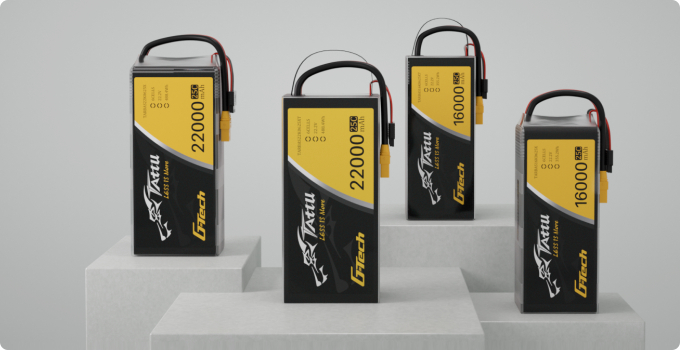
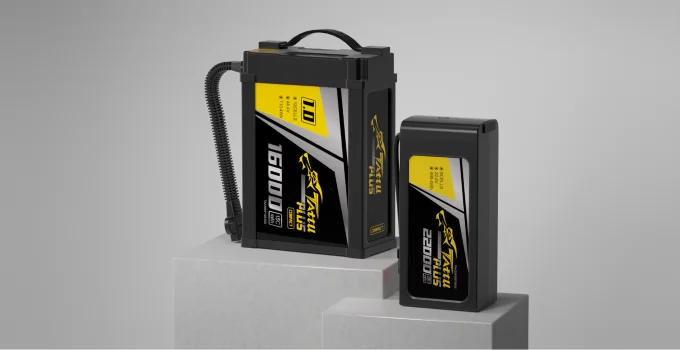
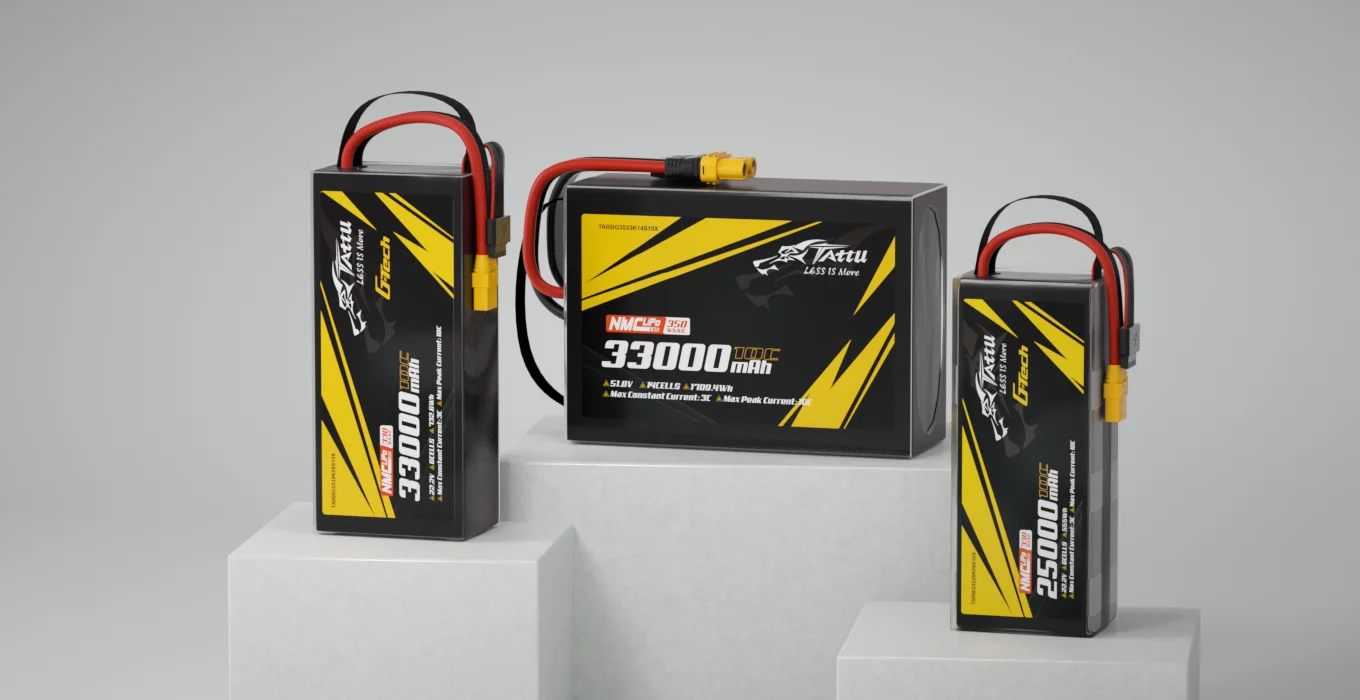
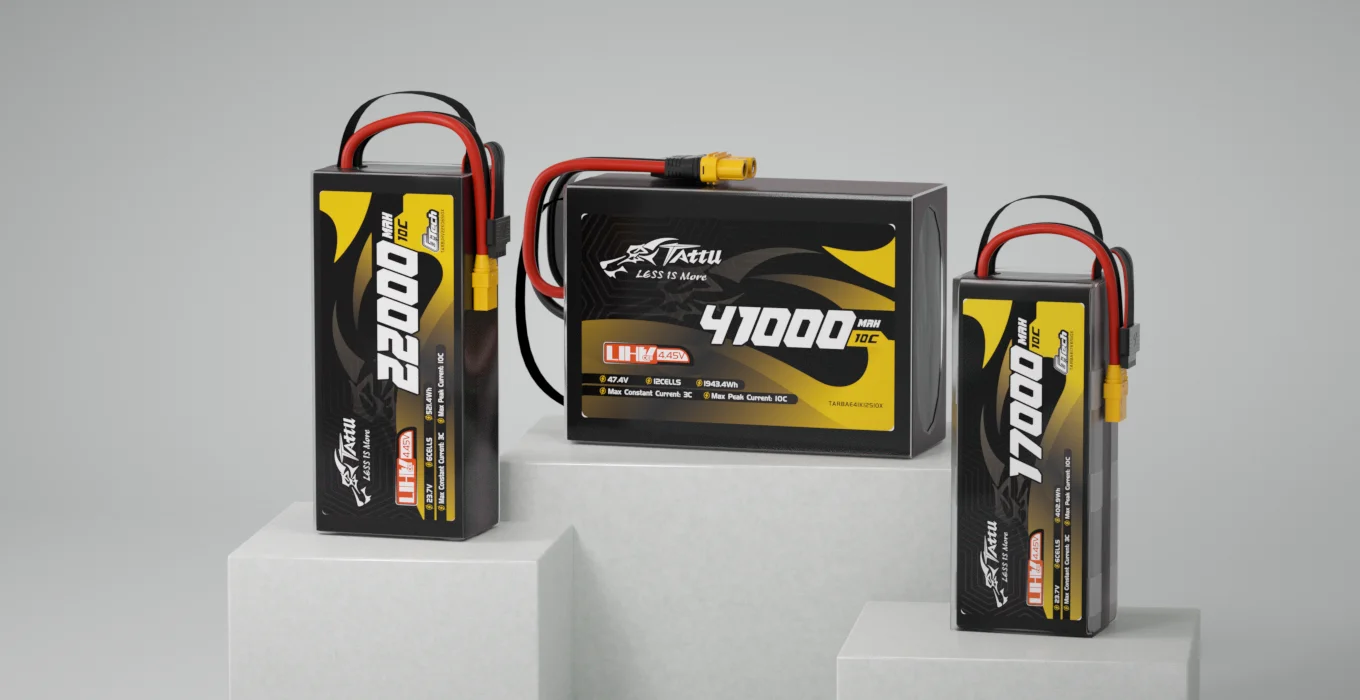
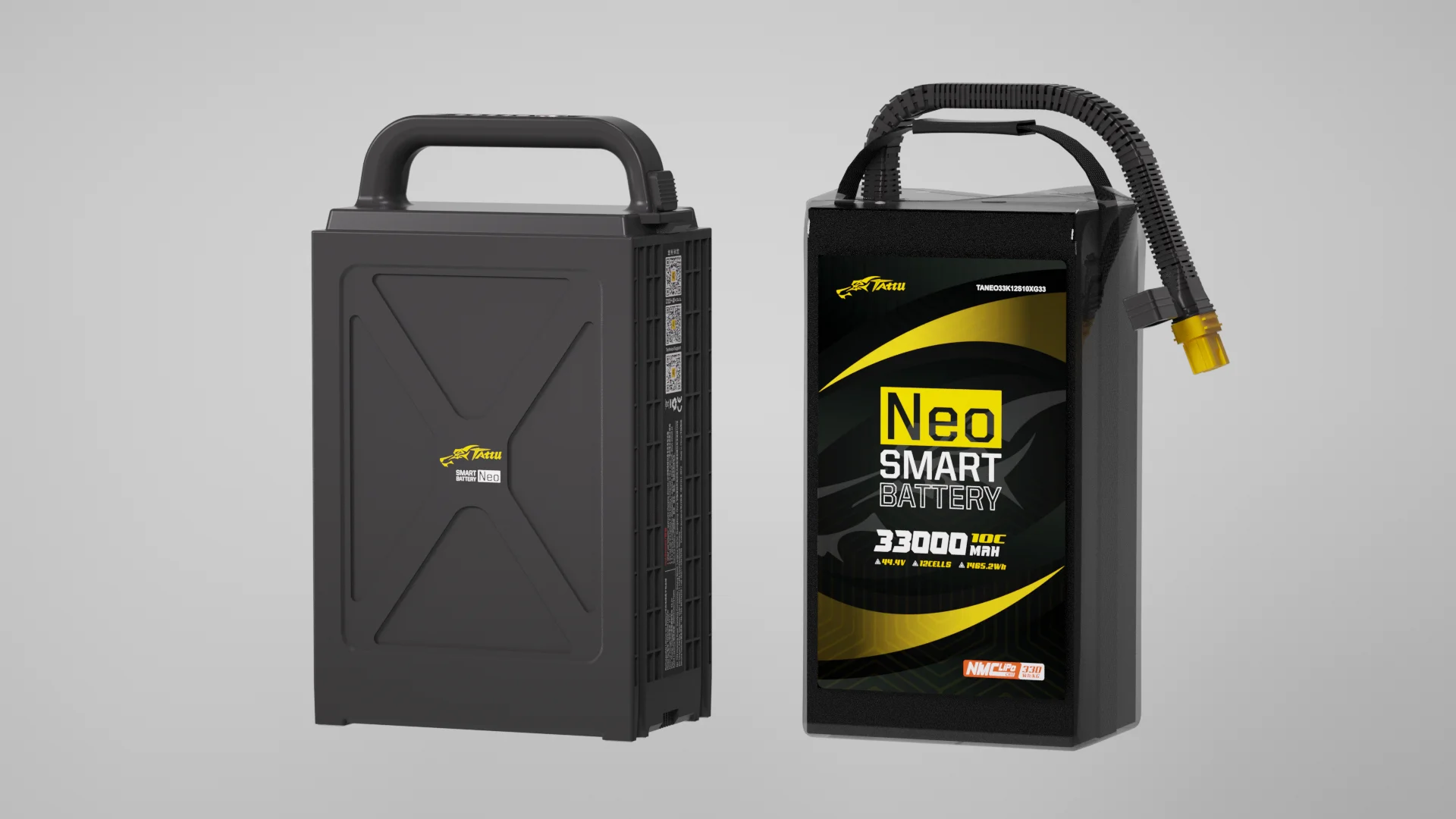
As a global leader in drone power solutions, Tattu designs custom uav battery solutions specifically matched to your drone's propulsion system. By tailoring
voltage, capacity, and BMS specifications, we help optimize performance
efficiency and reduce operating costs. For technical inquiries, fleet
recommendations, or custom power solutions, feel free to contact us at
[email protected].










 Blog
Blog
 Blog
Blog
 Blog
Blog


