Choosing the right Tattu LiPo battery charger starts with your battery, not
the charger's maximum wattage. A charger may support the correct cell count but
still be unsuitable for your battery's charging voltage, smart communication
system, or required charging speed.
For example, a 14S standard LiPo battery and a 14S Tattu smart battery may
require different charging setups. Similarly, a charger rated at 120A will not
necessarily deliver that current under every power supply or battery
configuration.
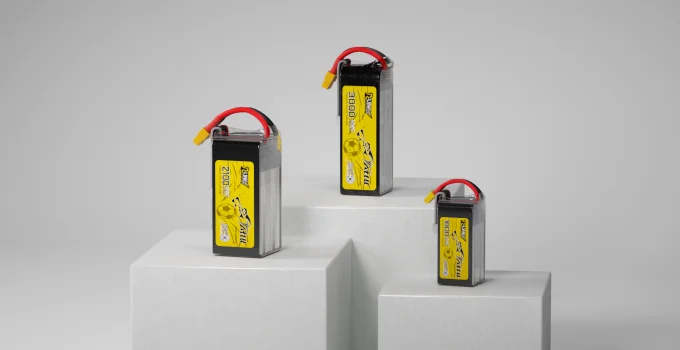
This guide compares Tattu chargers for industrial UAV, FPV, and drone
soccer batteries, helping you narrow down compatible models and select the
charging power you actually need.
1. Identify Your Battery Type First
Before comparing charger specifications, determine which of the following
battery types you use.
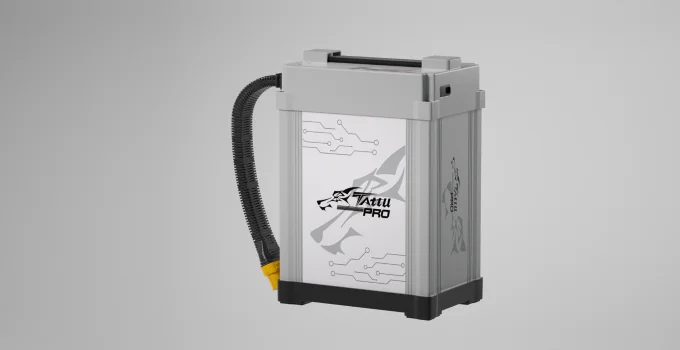
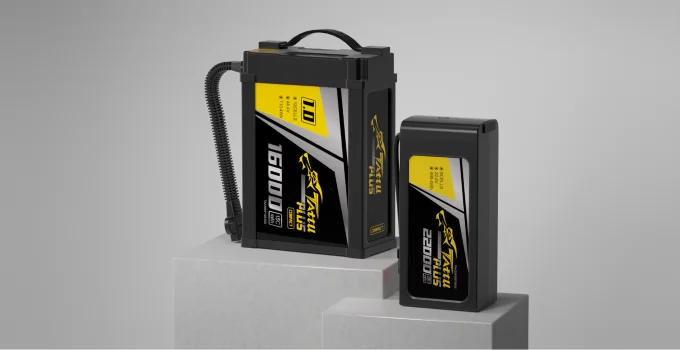
Standard Soft-Pack LiPo Batteries
These batteries do not rely on the proprietary smart communication system
used by Tattu industrial smart batteries. They require a charger that supports
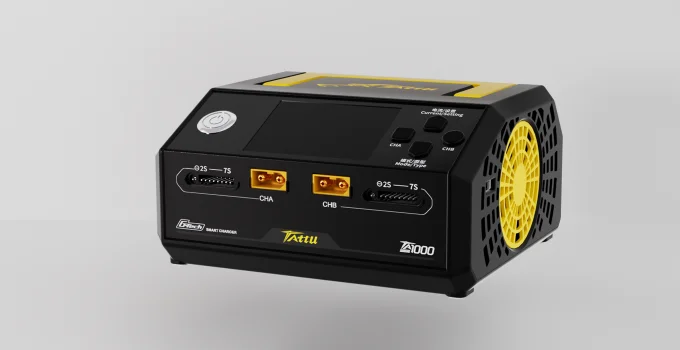
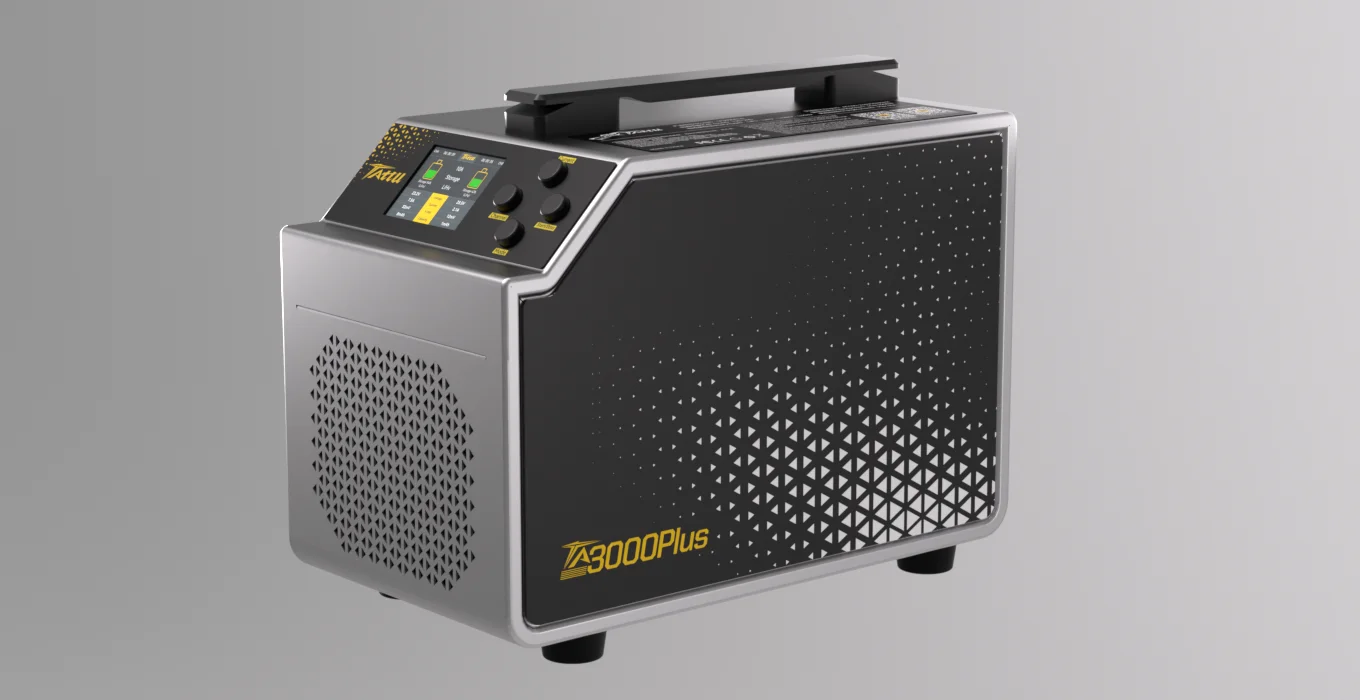
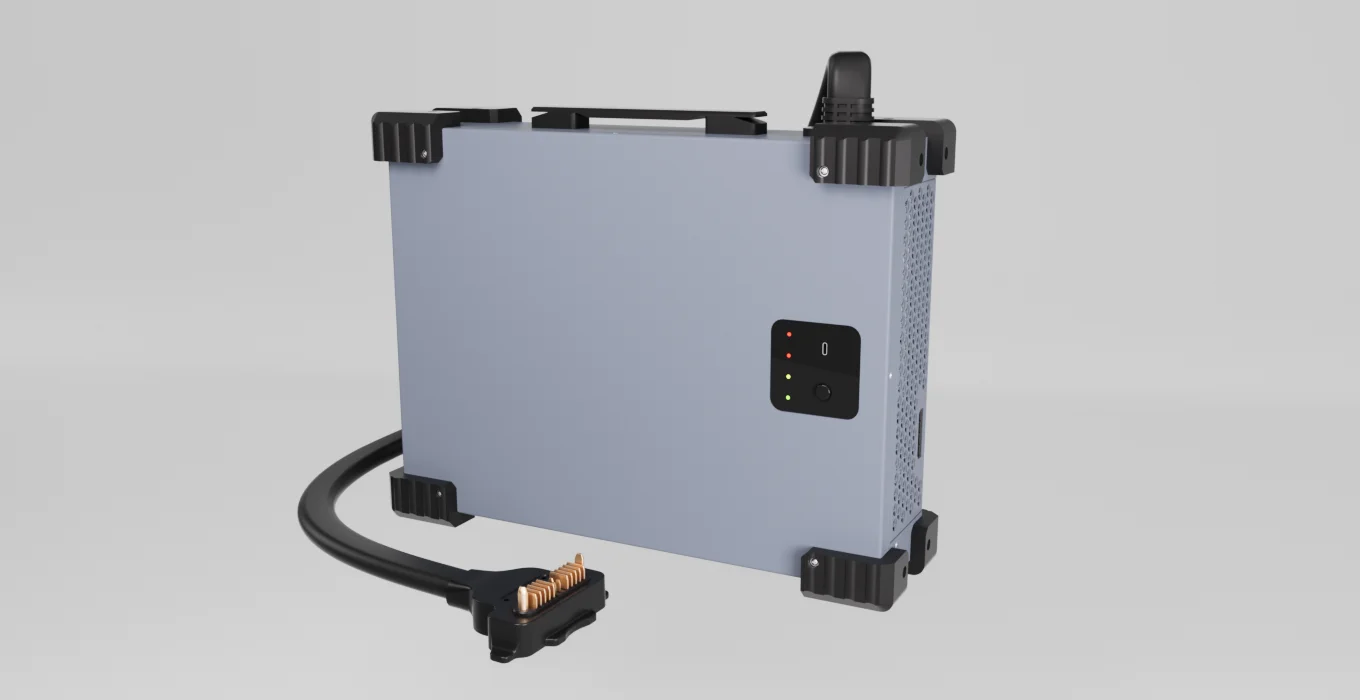
the correct cell count, charging voltage, current, and connection method. For industrial UAV applications, Tattu offers compatible options including
the TA1000, TA1500, TA3000 PLUS, and TA3200.
Tattu Smart UAV Batteries
Tattu smart batteries use integrated battery management and communication
functions. They must be charged with compatible Tattu smart chargers. Compatible options include the TA1500, TA3000 PLUS, TA3200, TA3000 PRO,
TA7200 PRO, and TA9000 PLUS.
Important: The TA3000 PRO, TA7200 PRO, and TA9000 PLUS are designed
exclusively for compatible Tattu smart UAV batteries. They should not be
selected for ordinary non-smart soft-pack batteries.
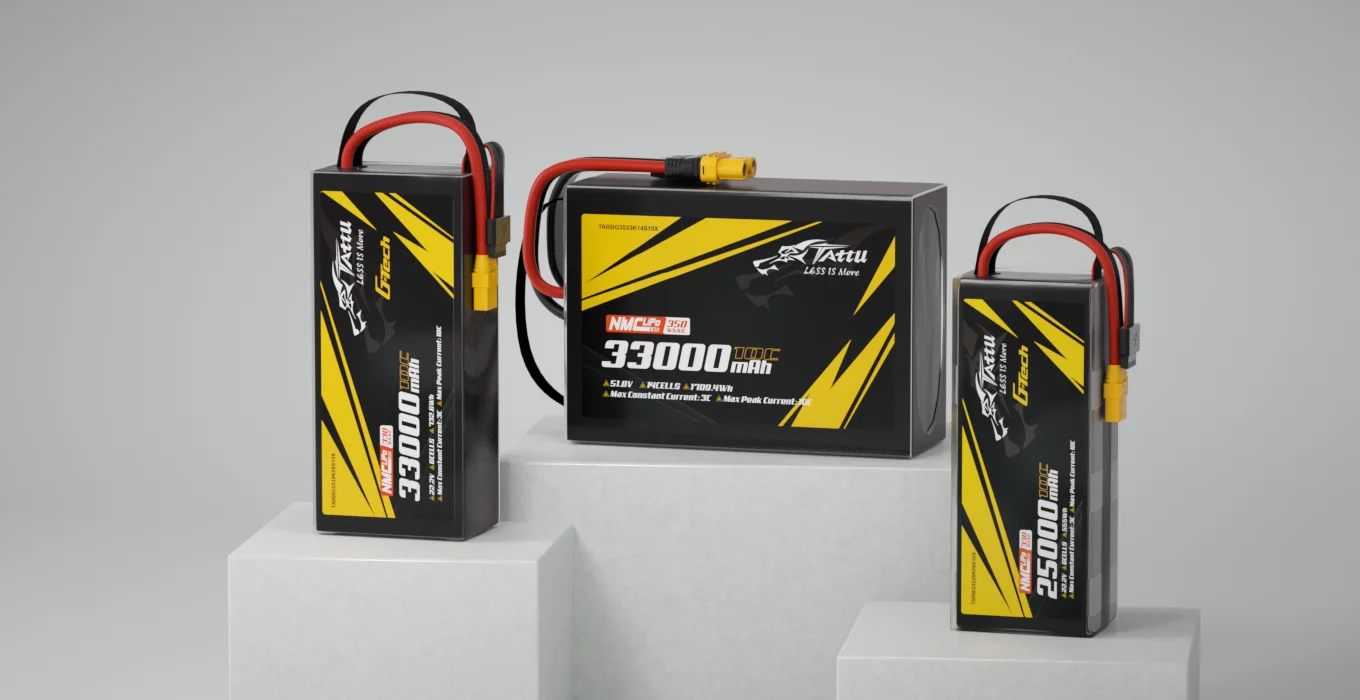
FPV and Drone Soccer Batteries
For smaller FPV and drone soccer packs, the main distinction is between
conventional non-G-Tech batteries and G-Tech batteries. G-Tech batteries support automatic recognition when paired with compatible
Tattu G-Tech chargers. The TA500 and TA500Q are dedicated to G-Tech batteries,
while the TA300 is listed for both G-Tech and non-G-Tech configurations. Do not assume that a G-Tech charger is interchangeable with an industrial
Tattu smart battery charger. They use different compatibility requirements.
2. Compare Tattu Chargers for Industrial UAV Batteries
After identifying your battery type, check its series configuration (S),
such as 6S, 12S, 14S, 18S, or 24S. The table below compares Tattu industrial UAV chargers by supported
batteries, cell count, maximum charging current, and rated charging power.
| Charger | Battery compatibility | Supported cells | Max. current | Max. charging power |
|---|
| TA1000 | Soft-pack / compatible G-Tech | 1–7S | 25A | 500W × 2 |
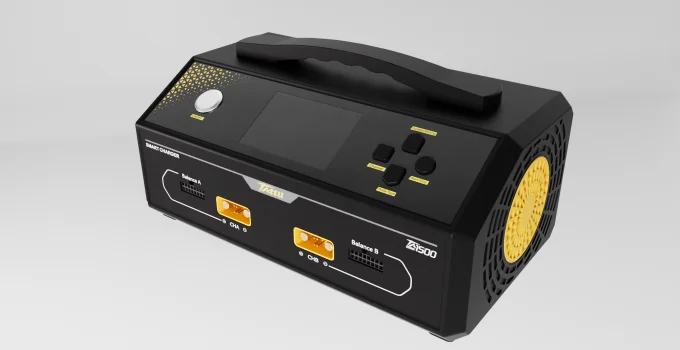
| TA1500 | Soft-pack / Tattu smart | 6–14S | 30A | 1500W |
| TA3000 PLUS | Soft-pack / Tattu smart | 12–24S | 40A | 3000W |
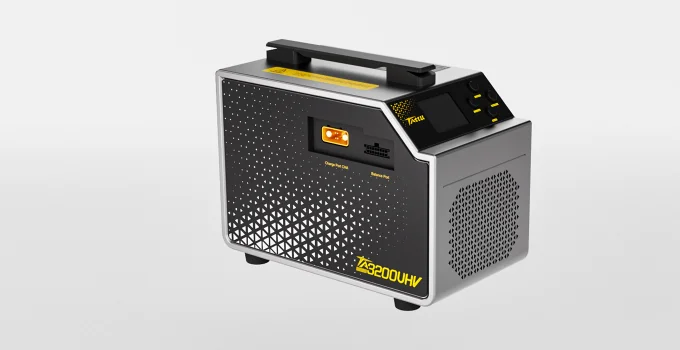
| TA3200 | Soft-pack / Tattu smart | 6–14S | 60A | 3200W |
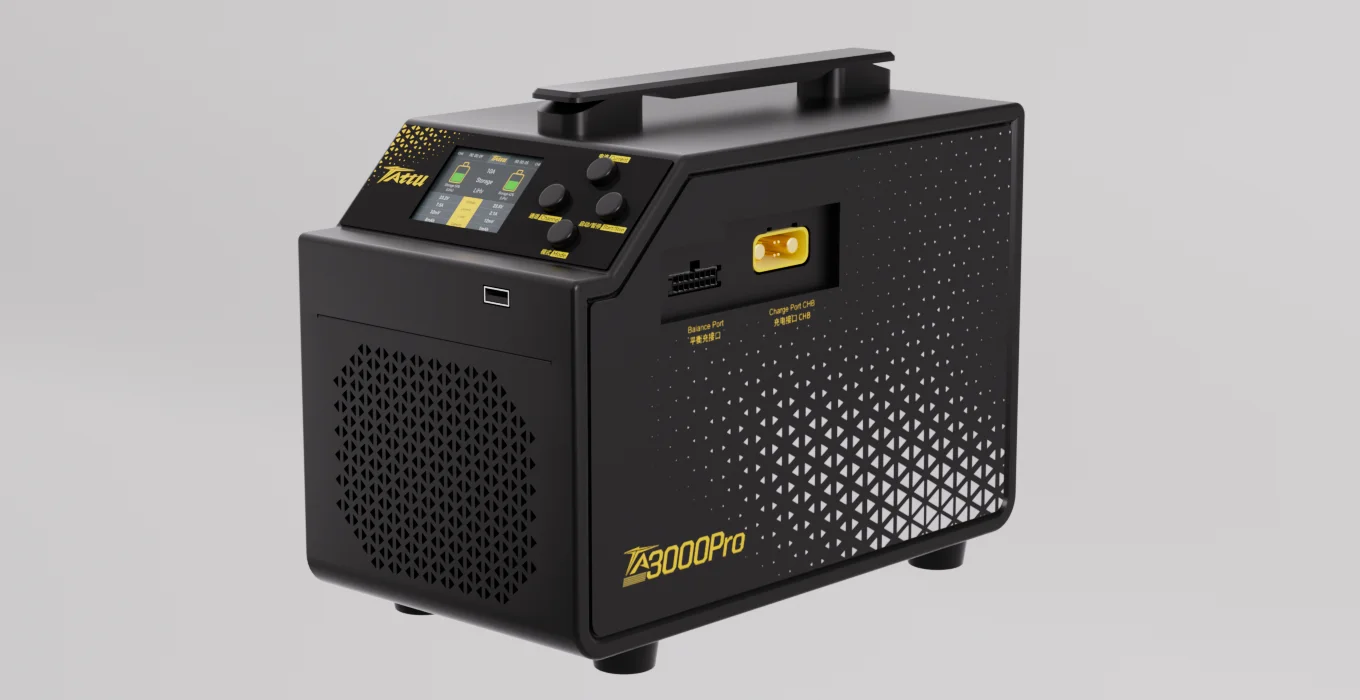
| TA3000 PRO | Tattu smart only | 12–18S | 40A | 3000W |
| TA7200 PRO | Tattu smart only | 12–18S | 120A | 7200W |
| TA9000 PLUS | Tattu smart only | 12–24S | 120A | 9000W |
These are maximum rated specifications, not guaranteed charging outputs
under every operating condition. Available power depends on the input supply,
battery voltage, and channel configuration
Which Charger Fits Your UAV Battery?
For 6S–7S standard soft-pack batteries
The TA1000 is a practical starting point. It supports 1S–7S LiPo/LiHV
batteries, with two 500W channels and up to 25A charging current per
channel.
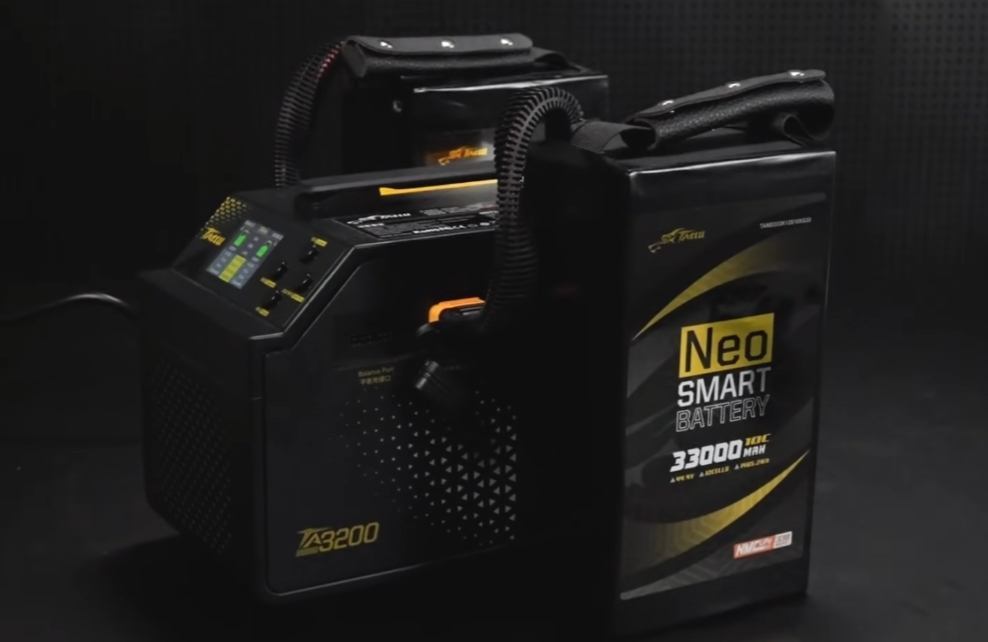
For 6S batteries that require greater charging power, the TA1500 or TA3200
may also be suitable.
For 12S–14S UAV batteries
The TA1500 is an option when a maximum 30A charging current meets your
battery's requirements.
For larger packs or applications requiring higher charging current,
consider the TA3200, which provides up to 60A and 3200W. The TA3200 series has
different voltage-specific configurations, so the correct version must be
selected.
Both chargers support compatible standard soft-pack and Tattu smart UAV
batteries.
For 18S–24S standard soft-pack batteries
The TA3000 PLUS supports 12S–24S soft-pack batteries and provides up to 40A
and 3000W.
It is an option for higher-voltage UAV battery systems where the required
charging speed falls within those limits.
Do not substitute the TA3000 PRO, TA7200 PRO, or TA9000 PLUS for non-smart
batteries simply because their voltage or power ratings appear suitable.
Which Charger Is Better for Tattu Smart UAV Batteries?
·For compatible 6S–14S Tattu smart batteries, the TA1500 and TA3200 cover
different charging power requirements.
·For 12S–18S smart batteries, the TA3000 PRO provides two charging channels,
a 40A maximum charging current, and up to 3000W.
·For higher-rate smart battery charging, the TA7200 PRO supports 12S–18S
batteries with up to 120A and 7200W. It is particularly relevant to agricultural
UAVs and other industrial drones operating with frequent battery changes. The TA9000 PLUS extends support to 24S smart batteries while increasing the
maximum charging power to 9000W.
·For 24S Tattu smart batteries, the TA3000 PLUS and TA9000 PLUS are the
applicable options among the models compared here. Your required charging
current and available power supply will determine which is more suitable.
TA3000 PLUS vs. TA3000 PRO: What's the Difference?
Although both have a maximum charging power of 3000W and current of 40A,
they serve different requirements. The TA3000 PLUS supports 12S–24S standard soft-pack and Tattu smart
batteries through a single charging channel. The TA3000 PRO supports 12S–18S
Tattu smart batteries only and offers two charging channels. Choose based on battery compatibility, supported cell count, and how many
batteries you need to charge rather than model naming alone.
3. Choose a Charger for FPV and Drone Soccer Batteries
For FPV racing, drone soccer, and other consumer drone applications,
battery compatibility and the number of charging channels are often more
important than very high output power. Tattu provides three relevant options: TA300, TA500, and TA500Q.
| Charger | Supported cells | Battery type | Max. current | Charging power | Channels |
|---|
| TA300 | 2–4S | G-Tech / non-G-Tech | 2A | 30W per channel | 8 |
| TA500 | 2–4S | G-Tech only | 5A | 500W total | 6 |
| TA500Q | 2–6S | G-Tech only | 15A | 500W total | 4 |
All three support LiPo and LiHV batteries within their specified
compatibility ranges.
TA300: For Charging Multiple Small Packs
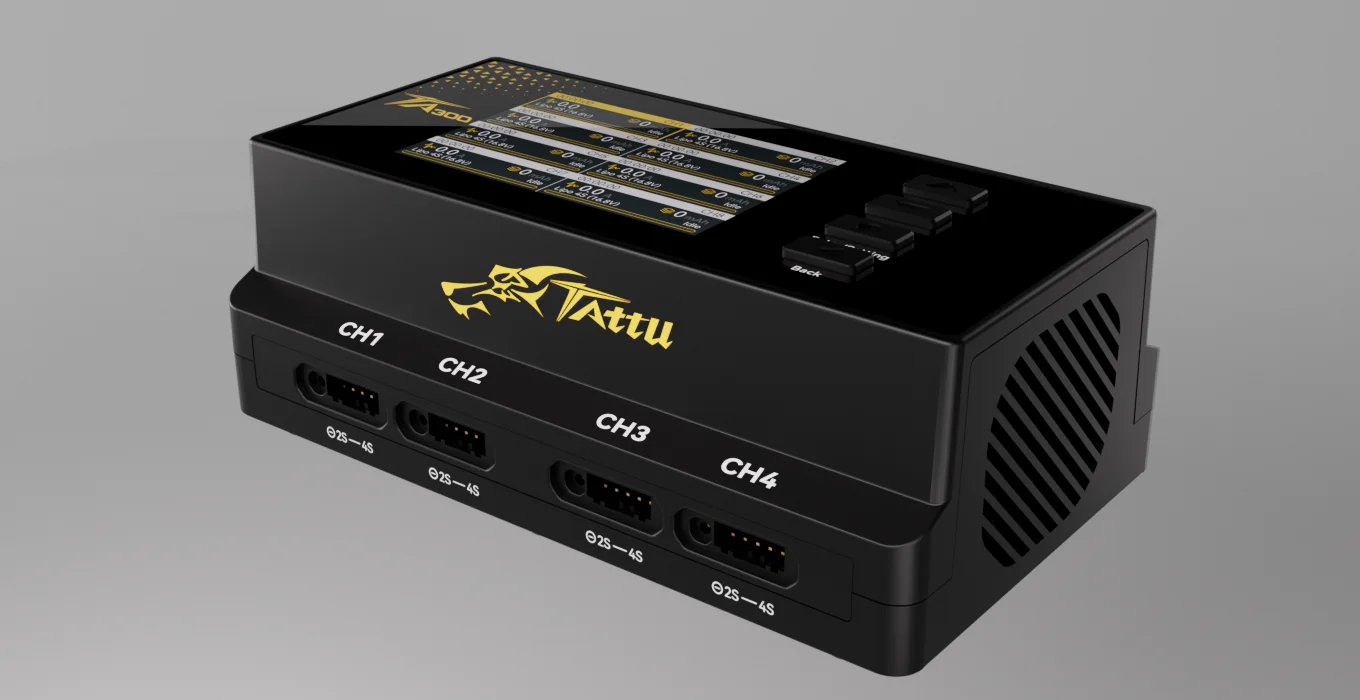
The TA300 has eight independent charging channels, each rated at up to 2A
and 30W.
It is suitable for supported 2S–4S batteries when multiple packs need to be
charged between training sessions or drone soccer matches.
Its relatively low charging current makes it better suited to
smaller-capacity packs than large, high-current FPV batteries.
TA500: For 2S–4S G-Tech Batteries
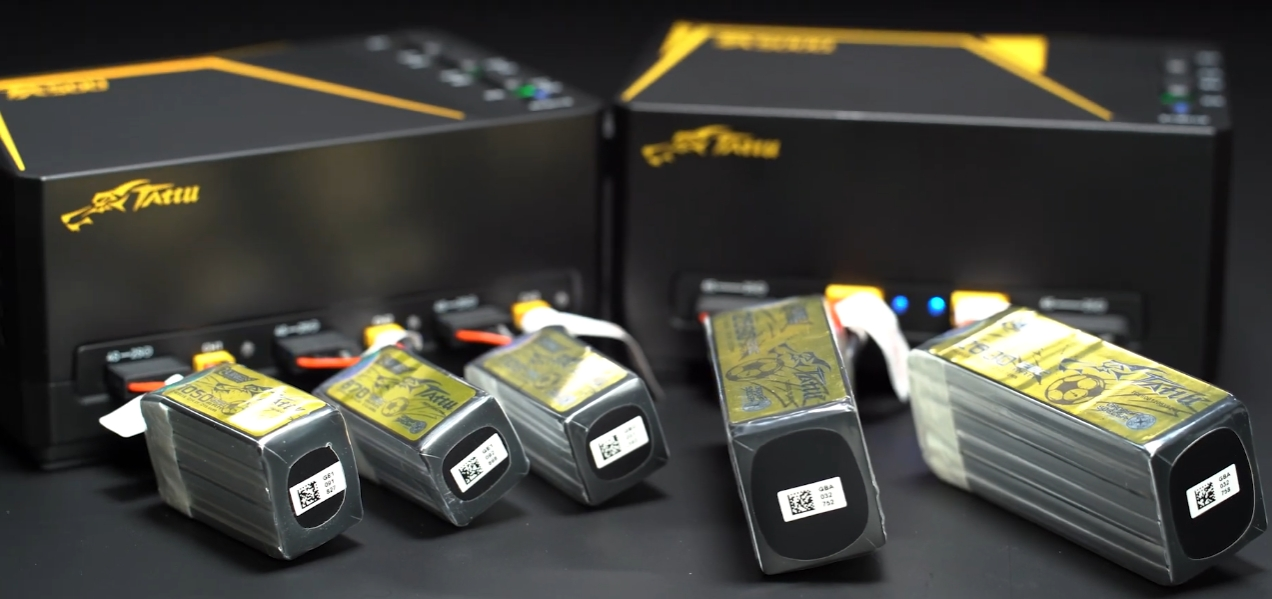
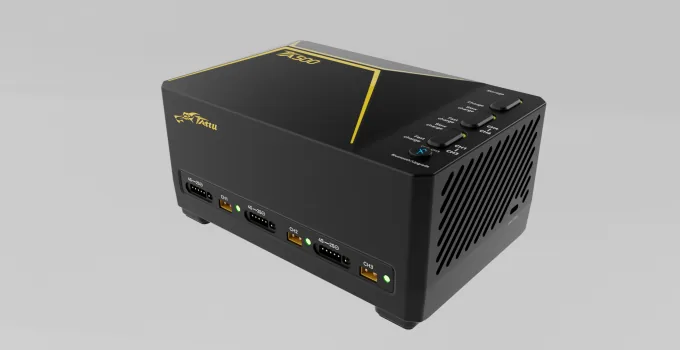
The TA500 supports six compatible G-Tech batteries simultaneously. Each
channel provides up to 5A, with a maximum channel power of 80W and approximately
500W total rated output.
It supports automatic battery recognition and selectable normal and fast
charging modes for compatible G-Tech packs.
This makes it suitable for teams that use multiple 2S–4S G-Tech batteries
and need a centralized charging setup.
TA500Q: For Higher-Current 2S–6S G-Tech Batteries
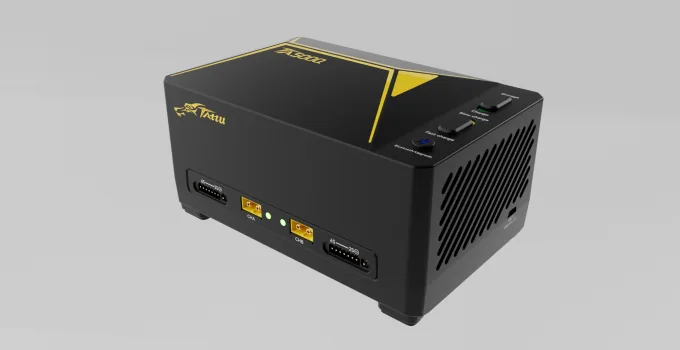
The TA500Q supports four independent channels, with up to 15A per channel
and 500W total charging power.
Unlike the TA500, it supports 6S G-Tech batteries, making it a more
suitable option for compatible higher-voltage FPV or drone soccer
applications.
If you use a conventional non-G-Tech 6S FPV battery, do not assume that the
TA500Q supports it. Its listed compatibility is specifically for G-Tech
batteries.
4. Match Charging Current and Power to Battery Capacity
Once you have a shortlist of compatible chargers, the next question is
whether they can deliver your required charging rate.
Charging current is determined by battery capacity and the permitted
charging C-rate.
Required charging current (A) = Battery capacity (Ah) × Charging C-rate
For example, a 30,000mAh battery has a capacity of 30Ah.
| Charging rate | Required current |
|---|
| 1C | 30A |
| 3C | 90A |
| 5C | 150A |
These values are calculations, not recommendations for every battery.
Always follow the maximum charging rate specified for the particular battery
model.
Why Charging Power Matters as Much as Current
A charger rated at 30A cannot necessarily maintain 30A throughout the
charging process. Its output is also limited by available power.
Consider a 14S standard LiPo battery with a 30Ah capacity and an approved
1C charging rate. At a maximum cell voltage of 4.2V, the pack reaches 58.8V near full
charge.
The approximate electrical power required to maintain 30A at that voltage
is:
58.8V × 30A = 1764W
The TA1500 has a maximum charging power of 1500W. Although it supports 14S
batteries and is rated at 30A, it cannot maintain 30A at 58.8V because the
required power exceeds its rating. The TA3200, with up to 3200W, offers more power headroom for this
example. This does not mean that every 14S battery needs a TA3200. The correct
choice depends on its allowable charging current and how quickly it needs to be
recharged.
For high-rate charging, also account for the charger's voltage and current
limits, available input power, and charging profile. Charging current typically
decreases toward the end of the charge cycle, so calculated current alone cannot
determine the exact charging time.
5. Check the Actual Power Supply and Charging Channels
For industrial UAV charging, the power available at your charging location
can significantly affect charger performance.
AC110V vs. AC220V
Some Tattu chargers have different power limits depending on the input
voltage.
For example, the TA1500 is rated at up to 800W with AC110V input and 1500W
with AC220V input.
The TA3200 reaches up to 1200W on AC110V and 3200W on AC220V.
A charger that meets your requirements under one power supply may charge
more slowly when used with another.
Mains Power vs. Generator Connection
The distinction becomes particularly important for high-power chargers.
According to Tattu's published specifications:
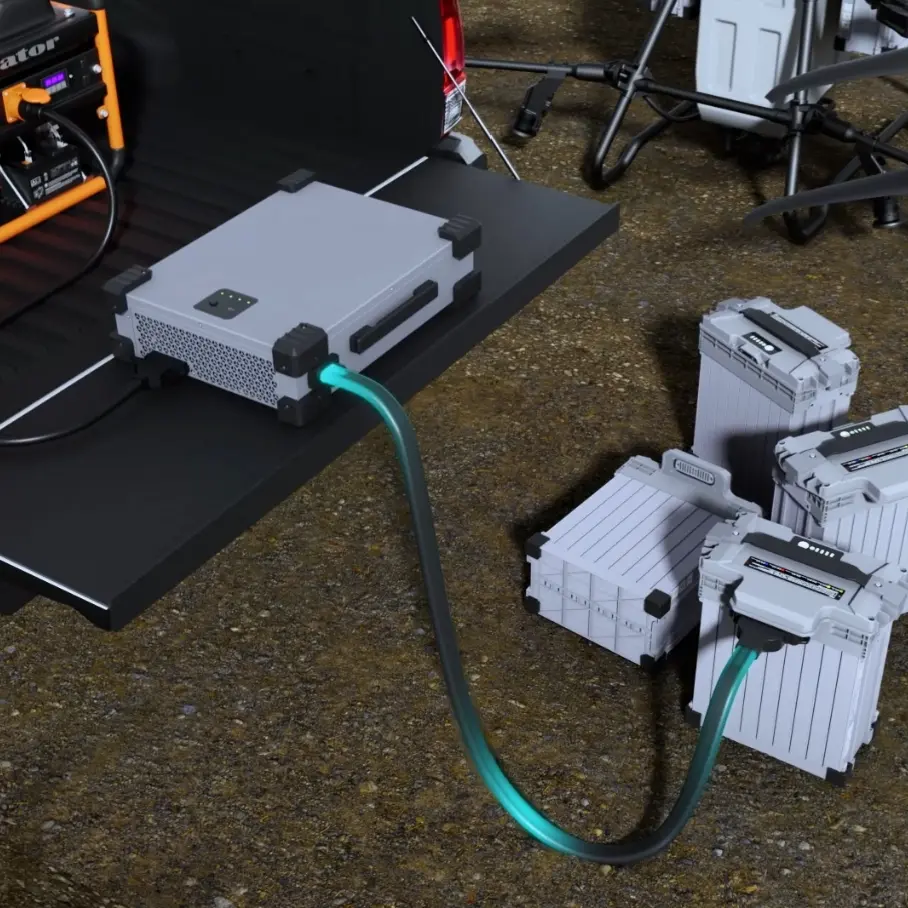
·TA7200 PRO: Up to 3000W through AC220V mains power, or 7200W with the
specified AC220V generator wiring.
·TA9000 PLUS: Up to 3000W through AC220V mains power, or 9000W with the
specified AC220V generator wiring.
Therefore, selecting a 7200W or 9000W charger does not automatically mean
that maximum output will be available from a regular wall outlet. The
appropriate power connection and electrical capacity are essential.
How Many Batteries Must You Charge at Once?
Charging channels also affect daily workflow:
For industrial UAV batteries, models such as the TA1500, TA3200, TA3000
PRO, TA7200 PRO, and TA9000 PLUS offer two channels, while the TA3000 PLUS has
one. For FPV and drone soccer operations, the TA300 provides eight channels, the
TA500 offers six, and the TA500Q provides four.
However, the number of channels alone does not guarantee that every channel
can deliver its maximum current simultaneously. Check the total power budget and
channel-specific specifications.
6. Final Checklist Before Choosing a Tattu Charger
Before ordering, confirm the following details:
·Battery compatibility: Is it a standard soft-pack LiPo battery, a Tattu
smart UAV battery, or a G-Tech battery?
·Cell count and charging voltage: Does the charger support the pack's S
configuration and its specific LiPo, LiHV, or LiUHV charging voltage? For
specialized voltage profiles such as LiXHV, confirm compatibility with Tattu
directly.
·Required charging current: Does the battery allow the intended C-rate, and
can the charger provide the corresponding current?
·Available power: Can your AC supply or supported generator connection
provide the required charging power?
·Channels and connectors: How many packs need charging at once, and are the
charging connectors, balance connections, and smart communication interfaces
compatible?
A charger that meets all five requirements is a better choice than one
selected solely for the highest advertised wattage.
7. Frequently Asked Questions
Can I charge a Tattu smart UAV battery with a standard LiPo charger?
No. Tattu smart UAV batteries require compatible Tattu smart chargers that
support their battery communication and charging requirements. Matching the
voltage and connector alone is not sufficient.
Which Tattu charger should I choose for a 14S LiPo battery?
For compatible standard soft-pack or Tattu smart 14S batteries, the TA1500
and TA3200 are possible options. The TA1500 supports up to 30A and 1500W, while
the TA3200 offers up to 60A and 3200W. Choose according to the battery's
charge-rate limit, voltage profile, and required charging speed.
Which Tattu chargers support 18S and 24S smart batteries?
For 18S smart batteries, compatible options include the TA3000 PLUS, TA3000
PRO, TA7200 PRO, and TA9000 PLUS. For 24S smart batteries, the TA3000 PLUS and
TA9000 PLUS are the relevant options in this guide.
Does a higher-wattage LiPo charger always charge faster?
Not necessarily. Actual charging speed depends on the battery's permitted
charging current, pack voltage, charger's maximum current and power, available
input power, and charging profile. A higher-rated charger provides additional
capacity only when the battery and operating conditions can use it.
Can the TA500Q charge any 6S FPV LiPo battery?
No. The TA500Q is specified for compatible 2S–6S G-Tech batteries. Standard
non-G-Tech 6S FPV batteries require separate charger compatibility
confirmation.
Find the Right Tattu Charger for Your Drone
Whether you are charging small FPV batteries, standard UAV LiPo packs, or
high-voltage Tattu smart batteries, the selection process is the same: confirm
compatibility first, calculate the required charging current and power, and then
choose the charger that fits your operating setup. Explore Tattu Chargers and Accessories to compare available models, or
contact Tattu for help confirming charger compatibility with your battery
configuration.










 Blog
Blog
 Blog
Blog
 Blog
Blog


