Tattu NEO Powers Flying De-Icing Robots in Harsh Winter Conditions
Case Study
Ice accumulation on high-voltage transmission lines threatens grid reliability and regional power supply during severe winter weather. Manual de-icing exposes crews to hazardous work at height and can be slow and labor-intensive.
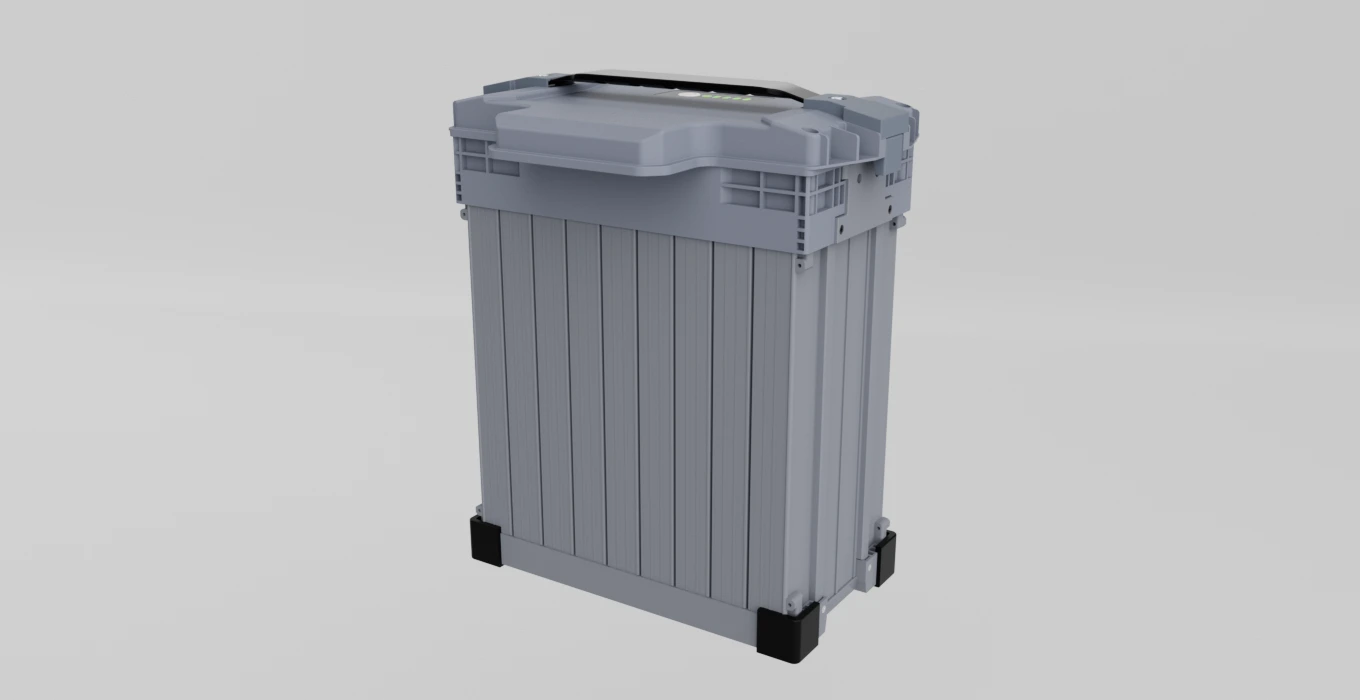
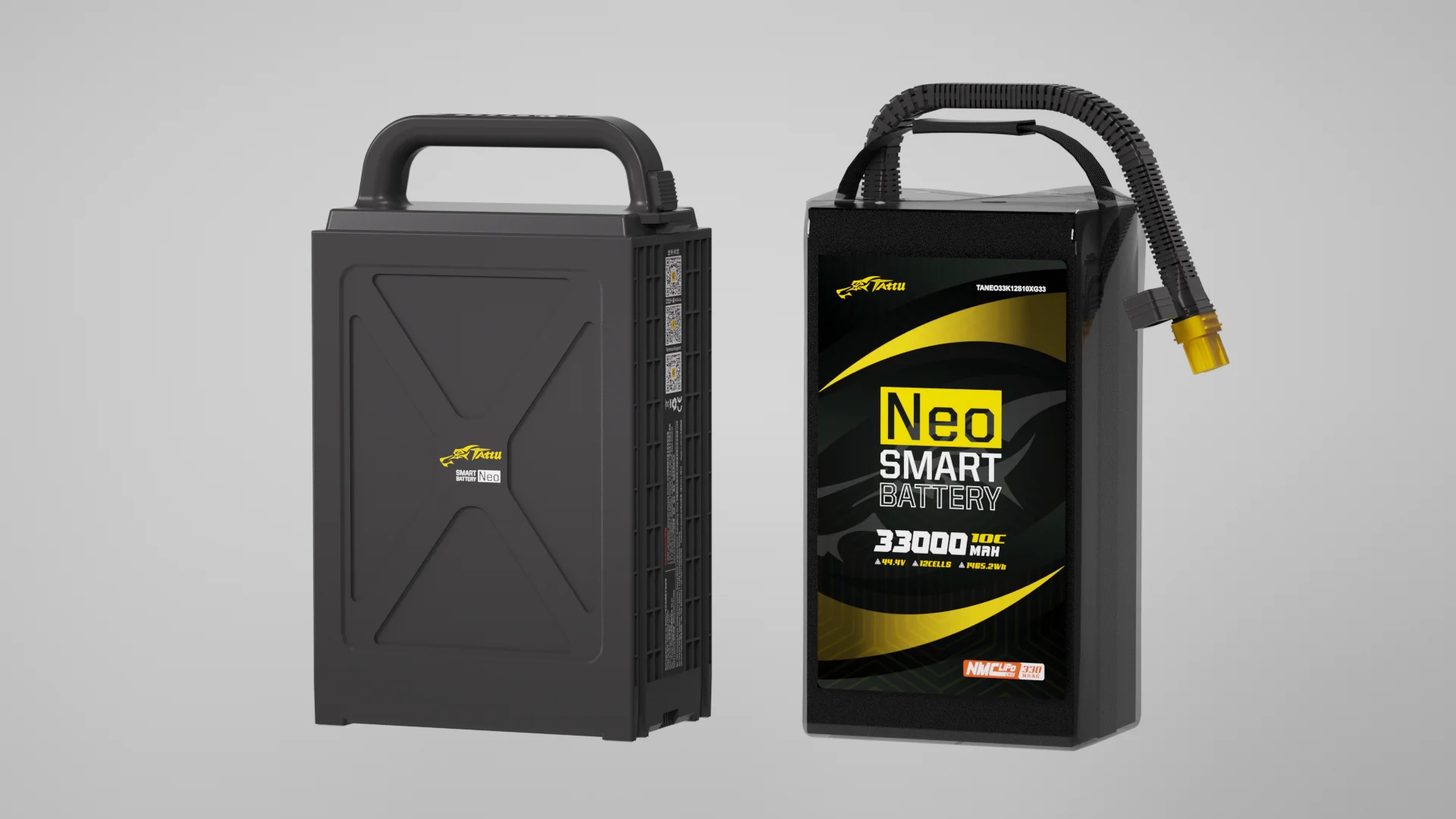
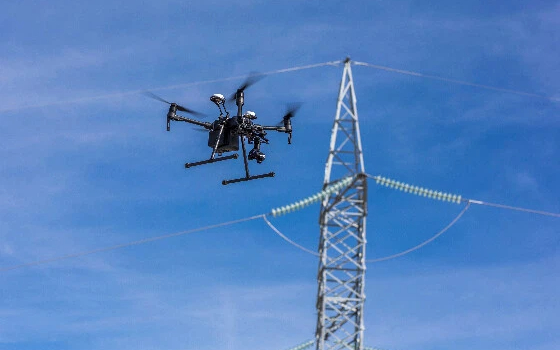
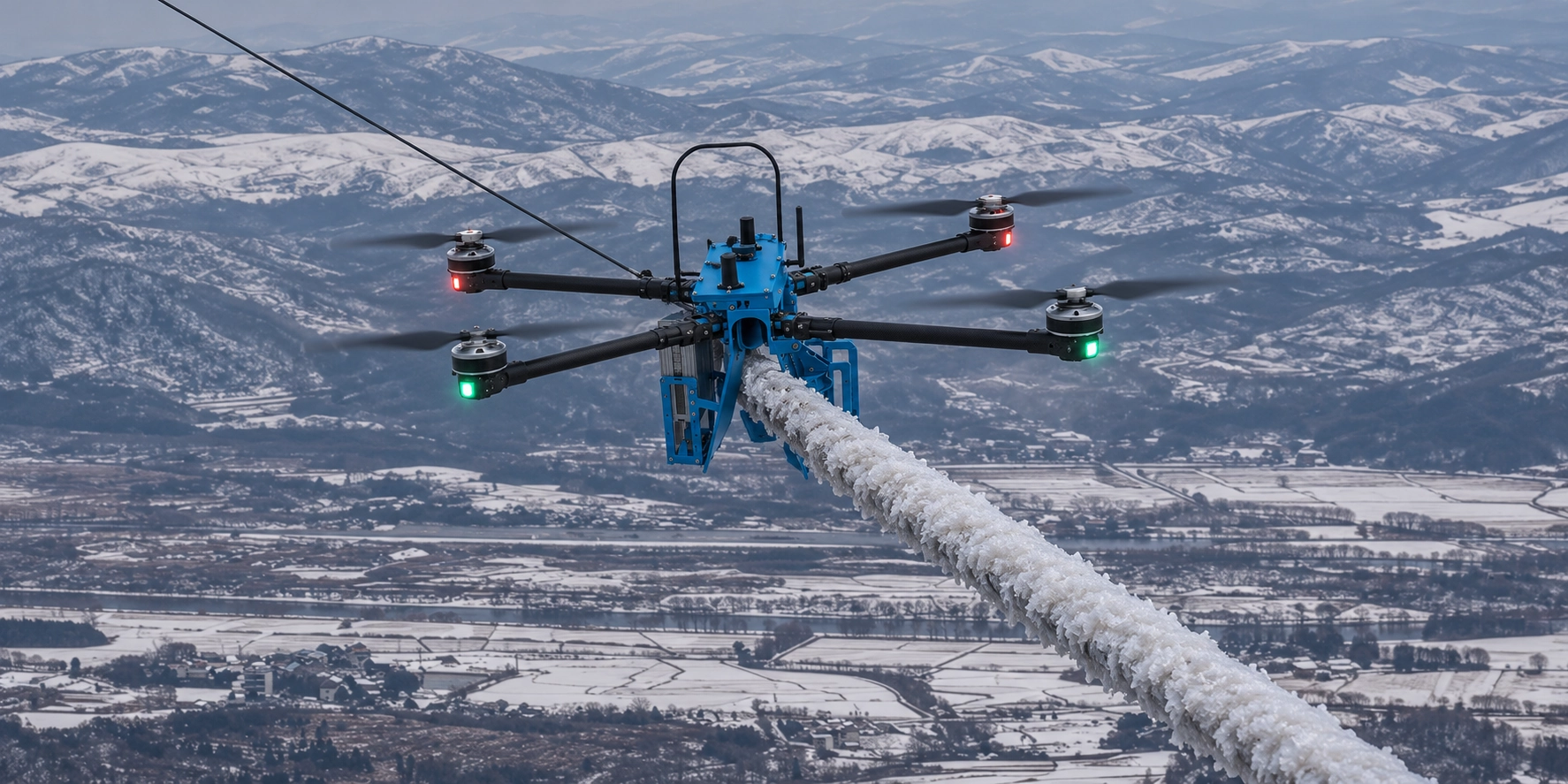
To improve winter maintenance efficiency, a State Grid inspection team deployed a flying de-icing robot powered by the Tattu NEO 29000mAh 12S 5C 47.4V UHV Smart LiPo Battery. The operation cleared ice across 2,000 meters of line in 15 minutes, reducing de-icing time and labor costs.
Low temperatures can increase lithium battery internal resistance, reduce available capacity, and cause greater voltage sag under load. For a de-icing platform, this can limit working time and reduce the power margin available for demanding maneuvers or mechanical loads.
Combined Flight and De-Icing Loads
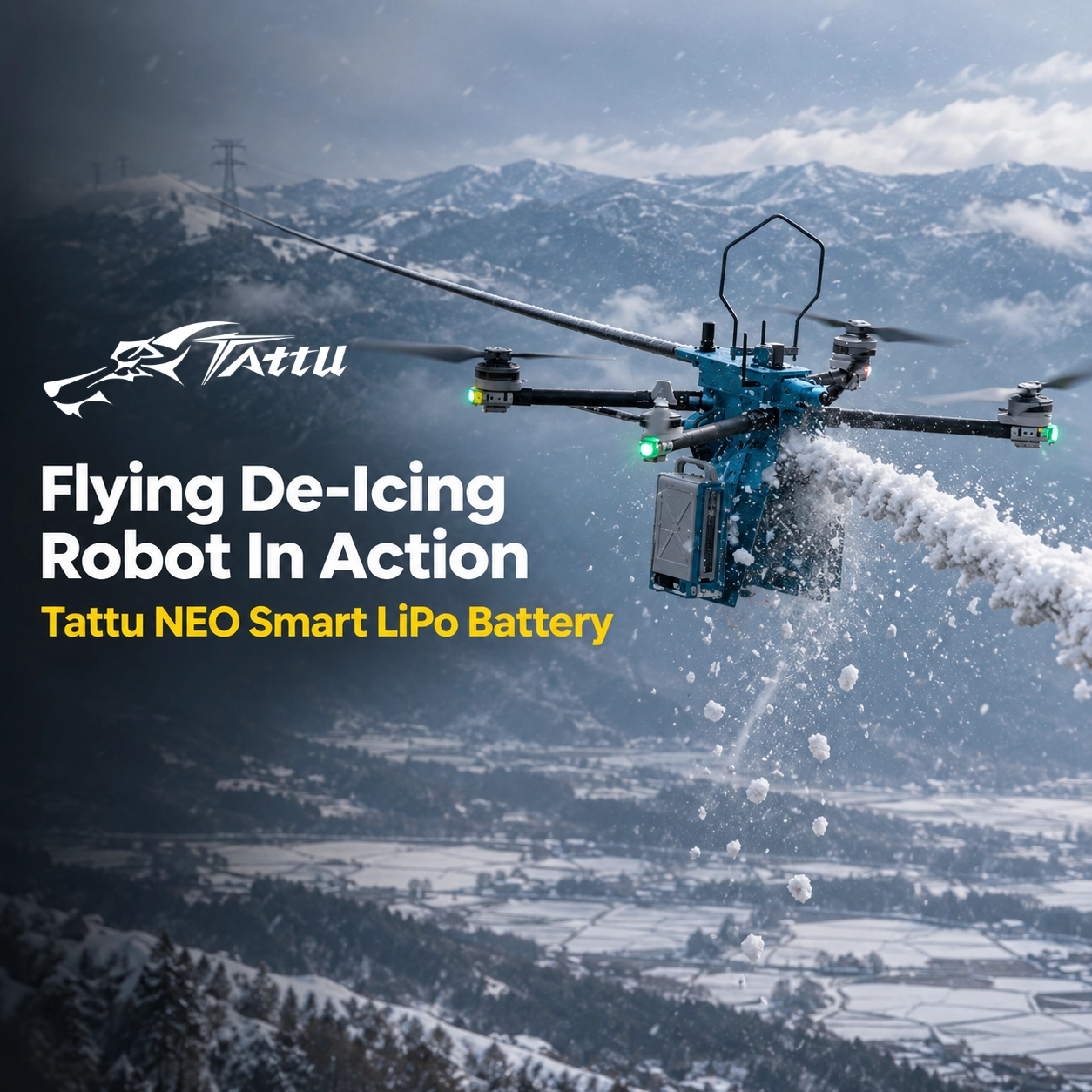
The robot uses vibration and blade action to break ice as it travels along the ground wire. Its power system must accommodate propulsion, onboard controls, and the de-icing mechanism across different stages of the task, including changes in load as the mechanism encounters accumulated ice.
Precise Operation Around Overhead Wires
Approaching the wire, aligning the mechanism, and maintaining controlled movement require precise operation. Reliable battery output supports the propulsion and control systems as they respond to positioning adjustments and changing working conditions.
How Tattu NEO Supports the Mission
Low-Temperature Heating
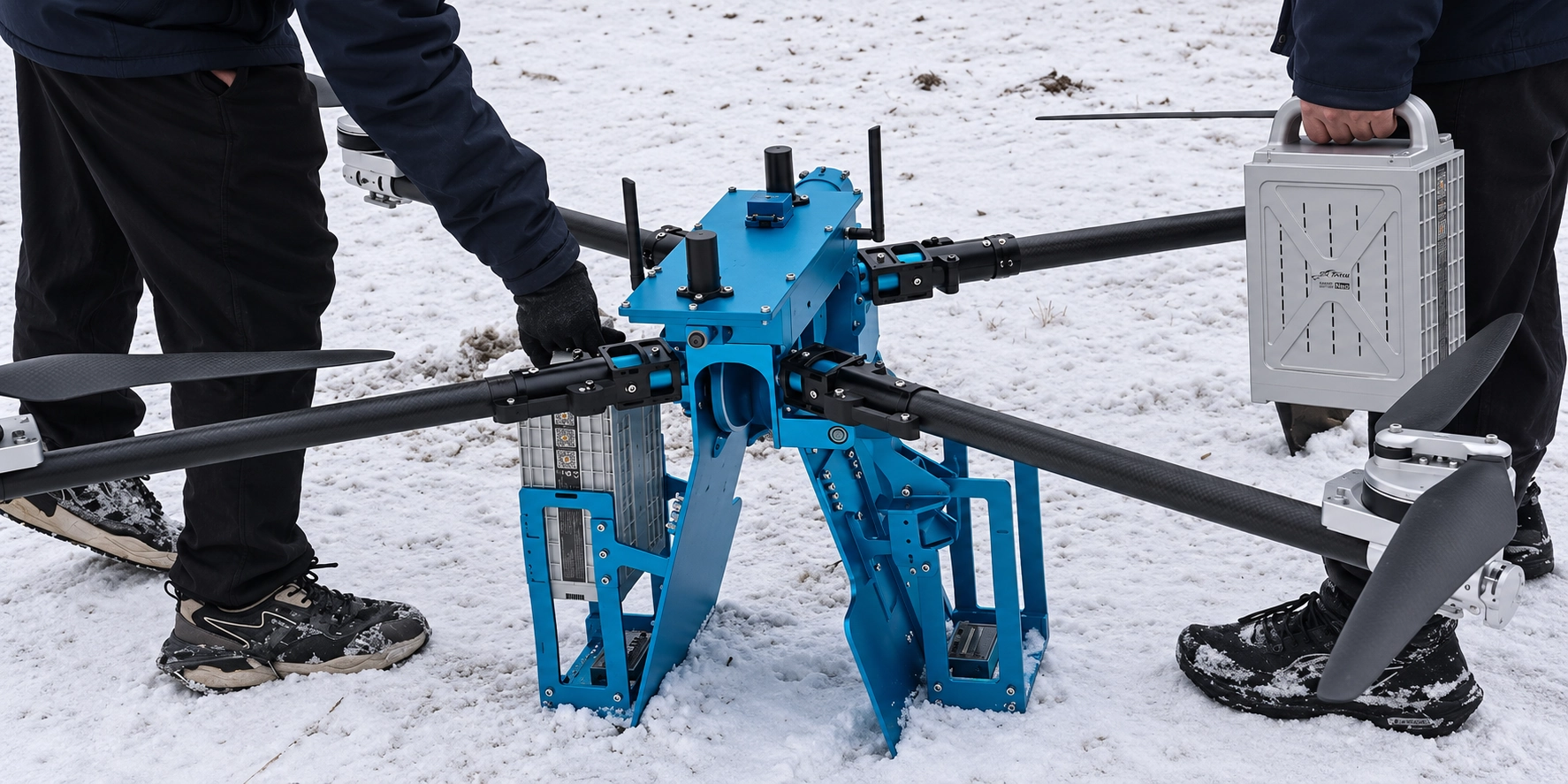
The Tattu NEO battery used in this project incorporates a heating function to warm its cells in cold conditions. This helps address the cell-temperature challenges that can restrict winter battery performance.
For the inspection team, heating is part of the battery solution carried by the robot, supporting deployment in the cold weather when de-icing is most urgently needed.
Capacity and Output for Sustained Work
The battery combines 29Ah capacity with a 5C discharge rating to meet the platform's energy and power requirements. Capacity supports continued operation, while discharge capability helps accommodate the electrical demand of flight and mechanical de-icing.
This combination suits a task involving both aerial maneuvering and sustained work along an overhead wire.
UHV Energy Configuration
The UHV cells have a nominal voltage of 3.95V each, giving the 12S pack a nominal voltage of 47.4V. With a capacity of 29Ah, the battery provides approximately 1,374.6Wh of nominal energy.
This configuration brings together the voltage and stored energy selected for the robot's power system. Alongside low-temperature heating, it addresses both the electrical demands of the equipment and its winter operating environment.
Completing 2,000 Meters of De-Icing in 15 Minutes
The robot completed the target area's ice removal in 15 minutes, covering 2,000 meters of line. Mechanized de-icing reduced the need for direct manual ice removal at height and helped lower labor costs.
The platform is specified for a maximum de-icing speed of at least 2 km/h, a maximum travel speed of at least 2.5 km/h, and typical de-icing operating endurance exceeding two hours, depending on working conditions.
For this application, Tattu NEO provides a battery configuration that combines substantial stored energy, discharge capability, and built-in heating. Together, these features support a specialized robot performing demanding maintenance in cold weather.
Explore the Tattu NEO smart UAV battery range to discuss a power solution for your platform and operating conditions.








 Case Study
 Case Study
 Case Study


