Tattu 23000mAh 14S Batteries Power Ramy RC's Giant Airbus A380 First Flight
Case Study
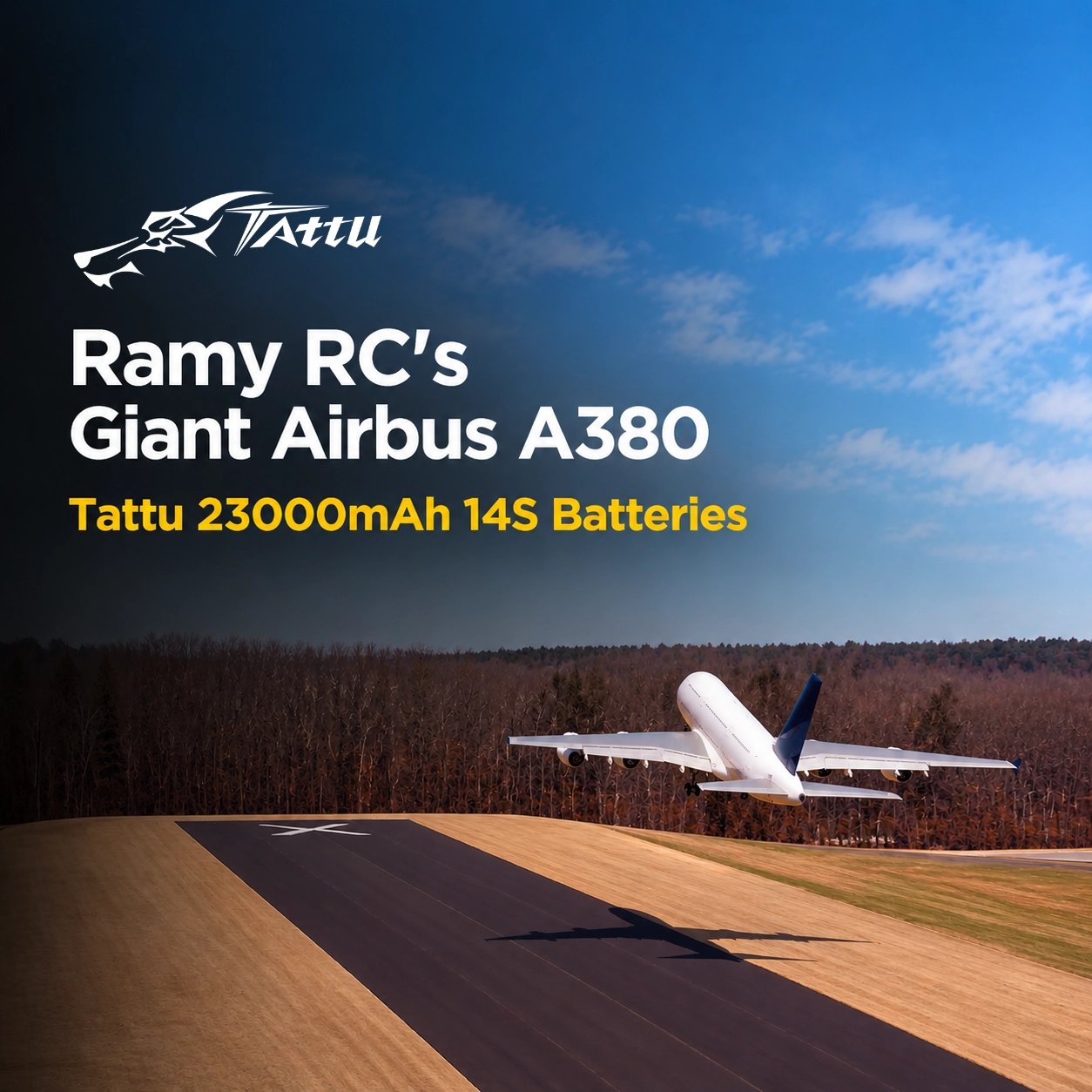
Ramy RC's 1/8-scale Airbus A380 has completed its maiden flight, bringing a giant electric RC airliner into the air. Measuring 8.83 meters in length with a 9.75-meter wingspan, the aircraft weighs 800 lb (approximately 362 kg) and uses four electric ducted fans (EDFs) for propulsion.
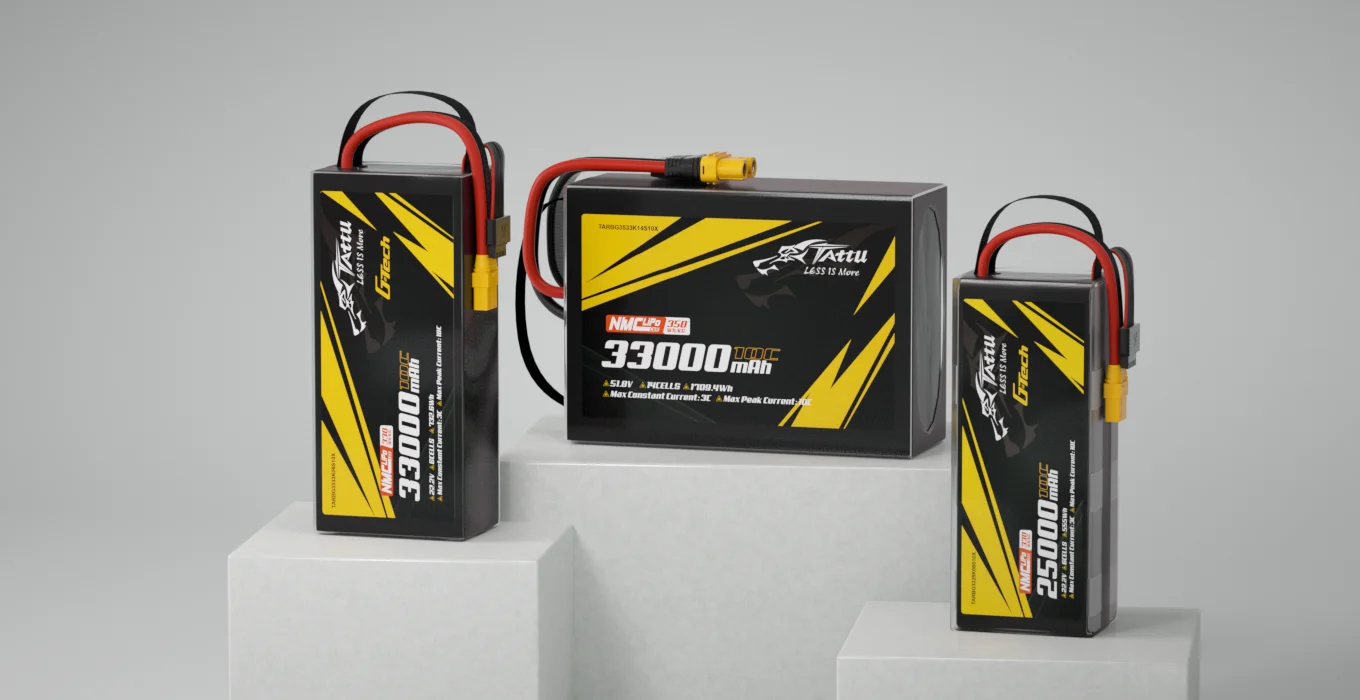
At the heart of its power system are eight Tattu 23000mAh 14S high-C-rate LiPo batteries operating on a 51.8V nominal voltage platform. The battery setup supplies power to four 250mm EDFs, 39 servos, and multiple onboard actuators, supporting the aircraft's propulsion and control systems throughout its maiden flight.
The aircraft reached a reported top speed of 103 mph (166 km/h) and completed a smooth landing, marking an important milestone for this large-scale electric RC aircraft project.
A model aircraft of this size requires a power system capable of supporting both high propulsion demand and extensive onboard controls.
The four EDFs provide the thrust needed for takeoff, acceleration, and flight, while 39 servos and multiple actuators operate the aircraft's control surfaces and mechanical systems. All these components contribute to the aircraft's overall electrical load.
Eight Tattu 23000mAh 14S high-C-rate battery packs supply the energy required by this system. The configuration brings together the voltage, capacity, and discharge capability needed to support a large electric aircraft with multiple high-power propulsion units.
Meeting the Power Demands of Four EDFs
During takeoff, all four EDFs must build thrust as the aircraft accelerates along the runway. This places substantial demands on the battery system, particularly when multiple propulsion units draw high current at the same time.
Battery selection for this type of aircraft needs to account for discharge capability, voltage under load, and the combined power requirements of the propulsion system. The high-C-rate Tattu battery configuration is designed to support demanding power delivery in high-performance electric RC applications.
Supporting Propulsion and Flight Control
The electrical load extends beyond the propulsion system. The aircraft's 39 servos and additional actuators perform the control and mechanical functions needed throughout flight.
The battery system must therefore support both propulsion and onboard control equipment as part of an integrated aircraft power architecture.
During its maiden flight, the A380 reached a reported speed of 103 mph (166 km/h) and completed a smooth landing. This successful flight marked a significant step in bringing the giant electric RC airliner from construction to flight.
Tattu High-C-Rate Batteries for Large-Scale RC Aircraft
Ramy RC's Airbus A380 combines a large airframe, four 250mm EDFs, and an extensive onboard control system. Eight Tattu 23000mAh 14S high-C-rate LiPo batteries provide the energy foundation for this demanding electric aircraft configuration.
For large-scale RC jets and other high-power electric platforms, battery selection requires careful consideration of voltage, capacity, discharge capability, and the combined electrical load of propulsion and onboard systems.
If you have a high-power RC aircraft or another demanding electric-platform project, feel free to contact Tattu to discuss a battery solution for your application.










 Case Study
 Case Study
 Case Study


