For UAV platforms under development, repeated flight testing is essential for validating aircraft performance, autonomous control systems, and simulation models.
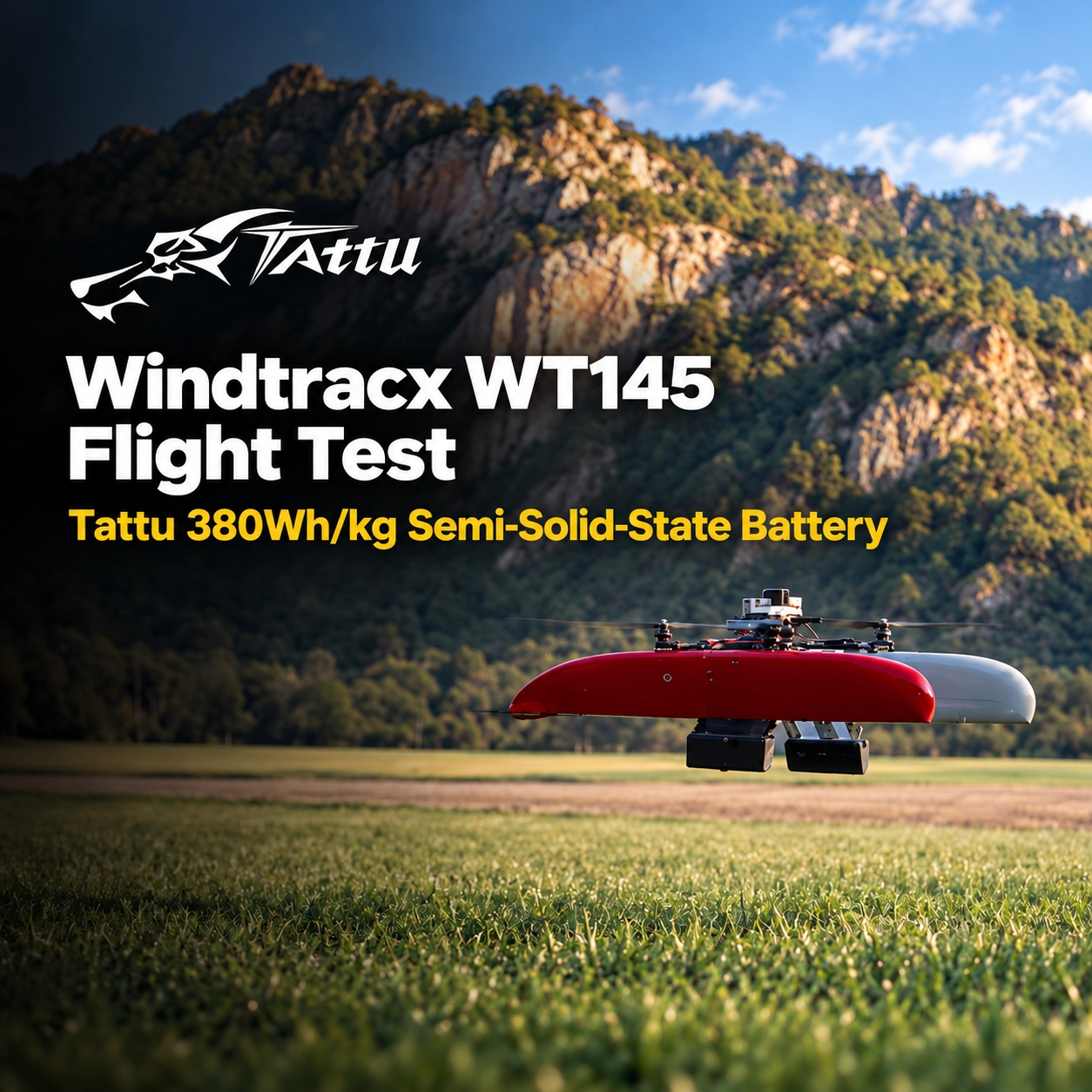
Swiss deep-tech company Windtracx recently conducted an approximately six-hour field flight test with WT145, its small untethered test drone.
During the test, WT145 was powered by Tattu 380 Wh/kg semi-solid-state batteries. The team conducted both manual and fully autonomous flight modes, collecting real-world flight data to further validate the aircraft and its control systems.
This flight test demonstrates how high energy density battery technology can support extended UAV testing and development.
Case Overview
Item
Details
Test Platform
WT145 untethered test drone
Battery Used
Tattu 380 Wh/kg semi-solid-state battery
Test Duration
Approximately 6 hours of field flight testing
Flight Modes
Manual and fully autonomous
Test Purpose
Flight data collection and system validation
Working Video
Supporting Extended Flight Testing and Data Collection
During this field test, Windtracx operated WT145 in both manual and fully autonomous flight modes while collecting real-world flight data.
The collected data helps the team compare actual aircraft performance with simulation results, providing valuable input for further optimization of flight models and autonomous control systems.
For UAV development projects, reliable battery performance is an important part of the testing process. Stable energy supply supports repeated flight validation and allows engineering teams to collect more complete operational data during field testing.
380 Wh/kg Energy Density for Weight-Sensitive UAV Platforms
Battery weight directly affects UAV payload capacity, flight time, and overall system design.
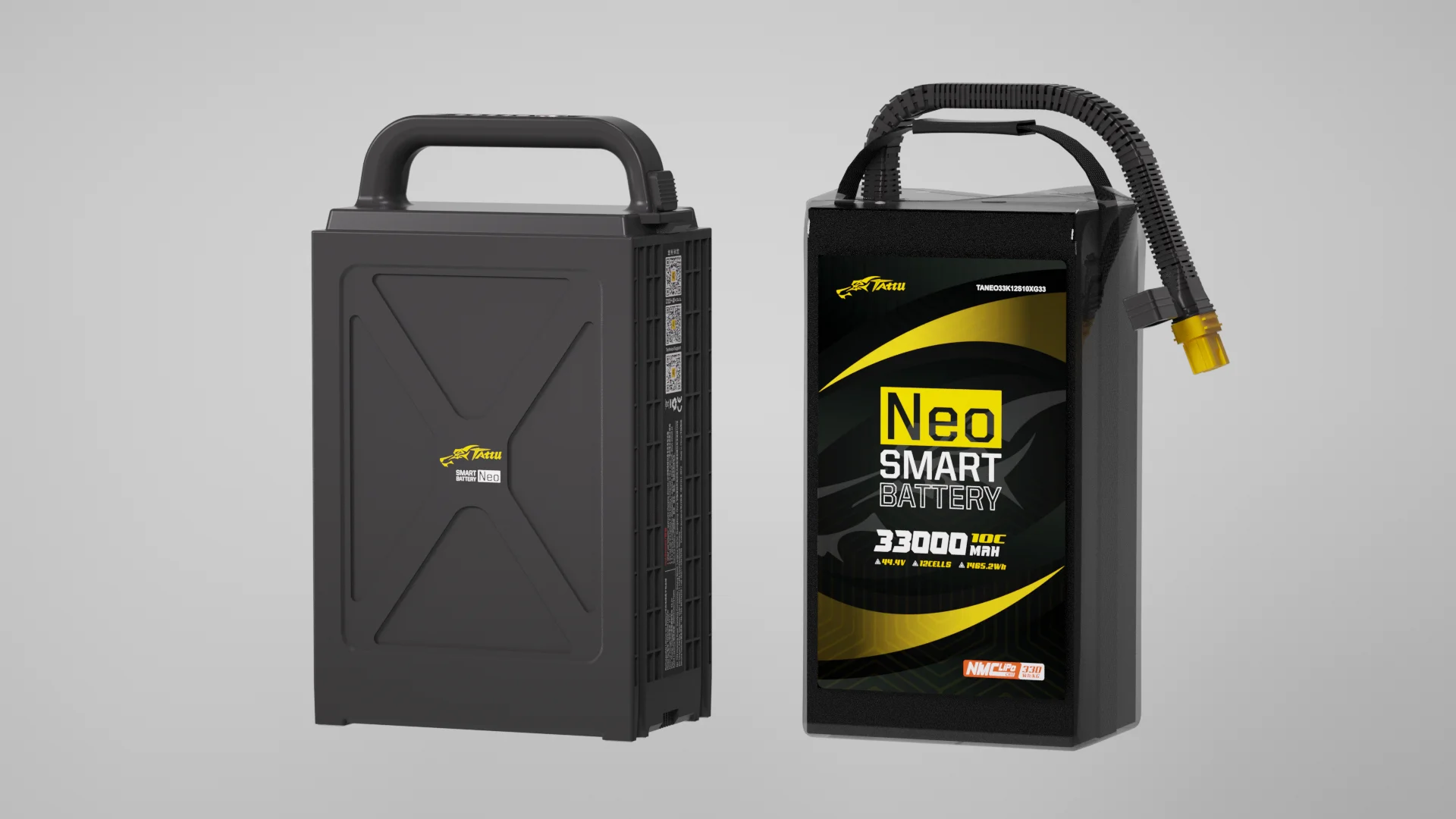
Tattu semi-solid-state battery technology is developed for weight-sensitive applications. In this WT145 flight test, Windtracx selected the Tattu 380 Wh/kg semi-solid-state battery series to provide a high energy density power solution for the UAV platform.
when balancing:
- Battery capacity and aircraft weight;
- Flight time and payload requirements;
- Energy storage and overall system efficiency.
For experimental and long-endurance UAV platforms such as WT145, these characteristics create additional possibilities for aircraft development and testing.
Exploring More Application Scenarios
WT145 serves as a test platform in Windtracx's ongoing technology development.
Through continuous flight validation and data accumulation, the team is exploring broader application possibilities for its technology.
Each flight test brings the project one step closer to the next stage of validation.
Tattu Semi-Solid-State Battery for Next-Generation UAV Development
Long-endurance UAVs, autonomous aircraft, and other weight-sensitive aerial platforms require battery solutions that provide sufficient energy while maintaining reasonable system weight.
Tattu semi-solid-state battery technology combines high energy density with UAV-focused design considerations, helping developers explore new possibilities for longer-duration and more efficient flight systems.
The Windtracx WT145 flight test demonstrates the application of 380 Wh/kg semi-solid-state battery technology in a real UAV development environment, supporting continuous testing and innovation in advanced aerial systems.
If you are developing long-endurance UAVs, autonomous aircraft, or other weight-sensitive aerial platforms, feel free to contact Tattu to discuss a battery solution for your project.






 Case Study
 Case Study
 Case Study


