A 28S LiPo battery represents the cutting edge of electric unmanned aerial
vehicle (UAV) power systems. By connecting 28 lithium polymer cells in series,
these packs deliver voltages exceeding 100 volts, unlocking a new tier of
heavy-lift capability, endurance, and efficiency for industrial drones. However,
operating at such high voltages demands a deep understanding of the underlying
engineering, strict safety protocols, and specialized support hardware. This
comprehensive guide breaks down the technical specifications, engineering
advantages, and management protocols of 28S systems, providing actionable
insights for UAV engineers, operators, and fleet managers.
What Is a 28S LiPo Battery?
A 28S LiPo battery is a lithium-polymer battery pack made from 28 cell
groups connected in series. The letter “S” describes the number of
series-connected groups and therefore determines the pack voltage. Depending on
the cell chemistry, a 28S pack normally operates at approximately 100–123 volts.
That makes it fundamentally different from a conventional hobby-drone battery.
It must be treated as a high-energy, hazardous-voltage power system requiring a
properly engineered BMS, charger, connector, precharge circuit, wiring harness,
ESC, motor system, enclosure, and maintenance procedure.
What is the nominal and maximum voltage of a 28S LiPo battery?
A "28S" battery configuration means 28 individual lithium-polymer cells are
wired in series. The total voltage output depends on the specific cell
chemistry—standard Lithium Polymer (LiPo) versus High-Voltage Lithium Polymer
(LiHV).
•Standard LiPo: The nominal voltage is 103.6V (28 × 3.7V), and the fully
charged maximum voltage reaches 117.6V (28 × 4.2V).
•LiHV (High Voltage): The nominal voltage sits at 106.4V (28 × 3.8V), with a
fully charged maximum voltage of 121.8V (28 × 4.35V).
Commercial high-voltage pouch cells are available in both 3.8 V/4.35 V and
3.85 V/4.4 V versions. Therefore, “28S LiHV” is not enough information to
configure a charger. The cell and pack datasheets must identify the permitted
charge cutoff voltage. The minimum operational voltage is less universal. It
depends on cell chemistry, discharge rate, temperature, voltage sag, BMS
settings, and the drone manufacturer’s required landing reserve. A cell-level
protection cutoff might be around 3.0–3.2 V in one design, but a drone should
normally land well before the BMS reaches its emergency undervoltage cutoff.
What are the main applications for a 28S drone battery?
A 28S architecture is generally selected when an aircraft requires
substantial electrical power but the designer wants to keep bus current,
conductor losses, and connector heating under control.
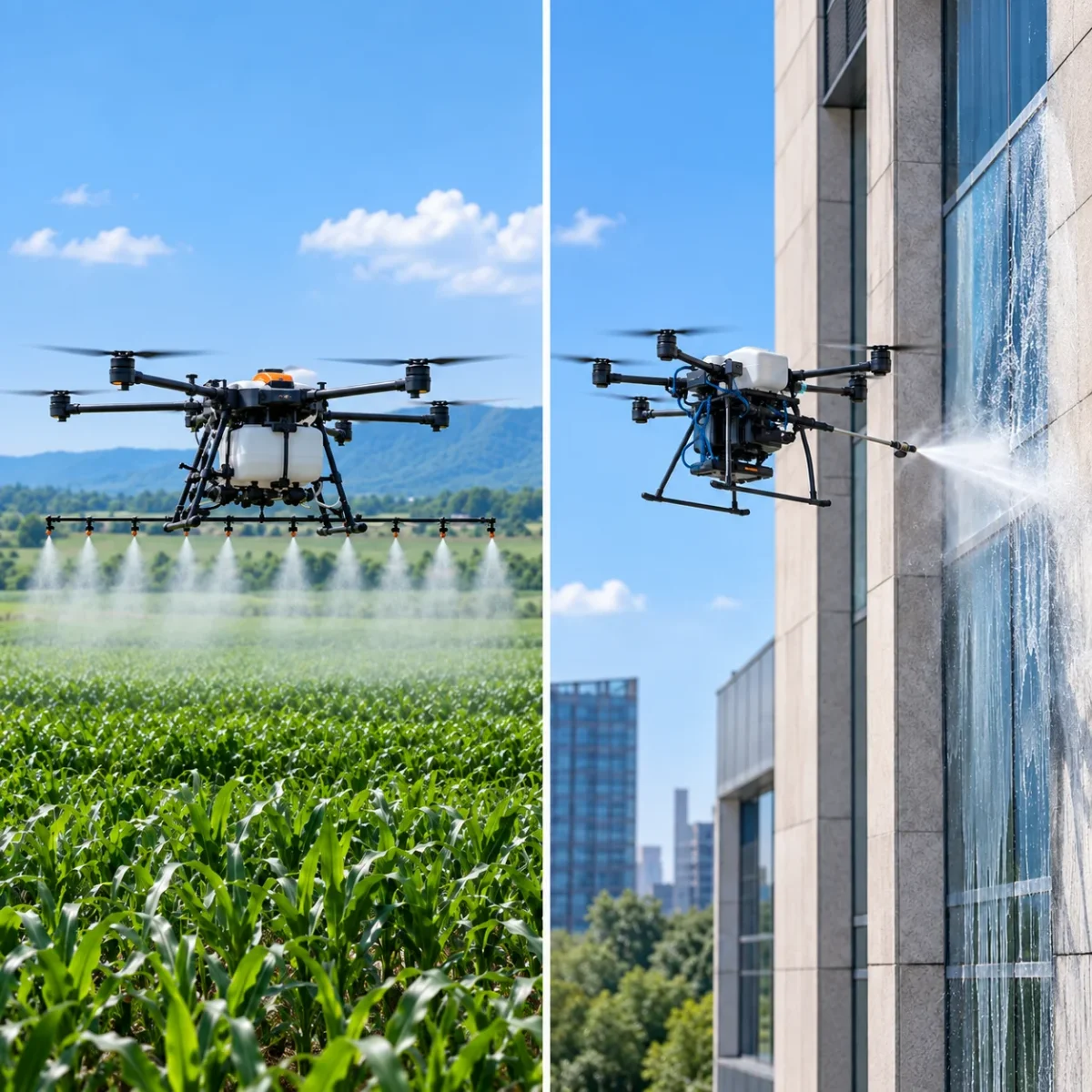
•Agricultural Drones: Powering large-capacity spraying and seeding drones
carrying massive payloads.
•Heavy-Lift UAVs: Utilized in industrial logistics, last-mile heavy
delivery, and geological surveying.
•eVTOLs: Electric Vertical Takeoff and Landing vehicles designed for
passenger transport or large-scale cargo logistics.
•Cinematography Drones: High-end, multi-rotor aerial rigs carrying heavy
cinematic camera and lighting equipment.

Why upgrade from a 12S/14S system to a 28S high-voltage system?
The shift from a 12S (approx. 50V) or 14S (approx. 60V) architecture to 28S
is grounded in fundamental electrical engineering principles—primarily the
pursuit of efficiency and weight reduction.
For a given power demand PP, the relationship P=V×I dictates that doubling
the voltage allows you to halve the current while delivering identical power.
The most critical gain comes from resistive losses in cables, connectors, and
motor windings, expressed by Ploss=I²R . Halving the current slashes these
thermal losses to just 25% of their original value.
This delivers three tangible operational advantages:
•Extended Flight Time: Less energy wasted as heat means more battery
capacity is converted into useful thrust, directly improving overall system
efficiency.
•Lighter Aircraft Construction: Significantly lower current requires
thinner and lighter copper wiring and smaller connectors, reducing the
airframe’s all-up weight and further increasing payload capacity or
endurance.
•Increased Component Longevity: Batteries, ESCs, and motors experience
substantially less thermal stress during high-current maneuvers. This cooler
operation preserves cell chemistry and protects electronic components, extending
the lifecycle of the entire propulsion system.
How to Calculate Capacity, Maximum Discharge Current, and Runtime for a 28S
LiPo Pack?
Understanding the numerical specifications of your 28S pack is essential
for matching it to your drone’s powertrain. Here is how to calculate the key
metrics:
•Energy Capacity (Watt-hours): This is the true measure of the work the
battery can perform.
Capacity (Wh)=Voltage (nominal)×Amp-hours (Ah)
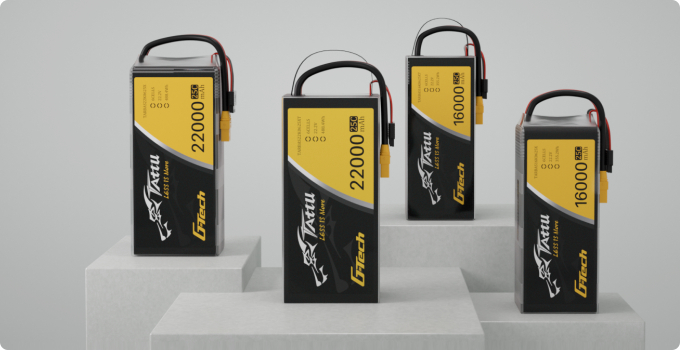
Example: A 28S standard LiPo rated at 22,000mAh (22Ah) has a nominal
voltage of 103.6V. Its energy capacity is 103.6V×22Ah=2,279.2Wh.
•Maximum Continuous Discharge Current (Amps): This determines the sustained
current the pack can safely deliver without damage or excessive sag.
Max Current (A)=Capacity (Ah)×Discharge Rate (C-rating)
Using the same 22Ah pack with a 25C continuous rating:
22Ah×25C=550A22Ah×25C=550A. The propulsion system’s total draw must never exceed
this in sustained operation. Peak discharge rates (e.g., 50C for 2 seconds)
indicate short-burst capability.
•Estimated Flight Runtime: A theoretical figure that must be validated with
real-world telemetry, but useful for system design.
Runtime (minutes)=(Capacity (Ah)/Average In-flight Current Draw
(A))×60×Depth of Discharge (DoD)
To protect battery health, a maximum DoD of 80–85% is standard. If a
heavy-lift drone draws an average of 110A in hover with the 22Ah pack and a safe
DoD of 80%, the flight time is (22/110)×60×0.8≈9.6(22/110)×60×0.8≈9.6 minutes.
Always land with a reserve, as aggressive maneuvers increase current draw
dramatically.
How Does the Battery Management System (BMS) Work in a 28S Smart
Battery?
A 28S system demands an exceptionally robust, intelligent BMS to manage the
inherent complexity of 28 cells in series. A single weak cell can compromise the
entire pack. The BMS serves as the battery’s brain and guardian, performing
these critical functions:
•Active Cell Balancing: Instead of wasting excess energy as heat (passive
balancing), an active BMS redistributes charge from higher-voltage cells to
lower-voltage ones during both charging and discharging. This keeps all 28 cells
within a tight voltage delta, maximizing usable capacity and preventing
dangerous over-voltage or under-voltage events on individual cells.
•Comprehensive Safety Protections: The BMS continuously monitors pack-level
and individual cell voltages, charge/discharge current, and multi-point
temperatures via thermistors. It will instantly disconnect the output on
detecting overcharge, deep discharge, over-current, or extreme temperature
conditions.
•Digital Communication Protocol: Industrial 28S batteries do not operate
blindly. They utilize robust communication buses—typically DroneCAN or standard
CAN bus—to stream real-time telemetry. The flight controller receives State of
Charge (SoC), State of Health (SoH), individual cell voltages, temperature, and
error flags, enabling intelligent flight modes like low-battery return-to-home
and precise remaining-time calculations.
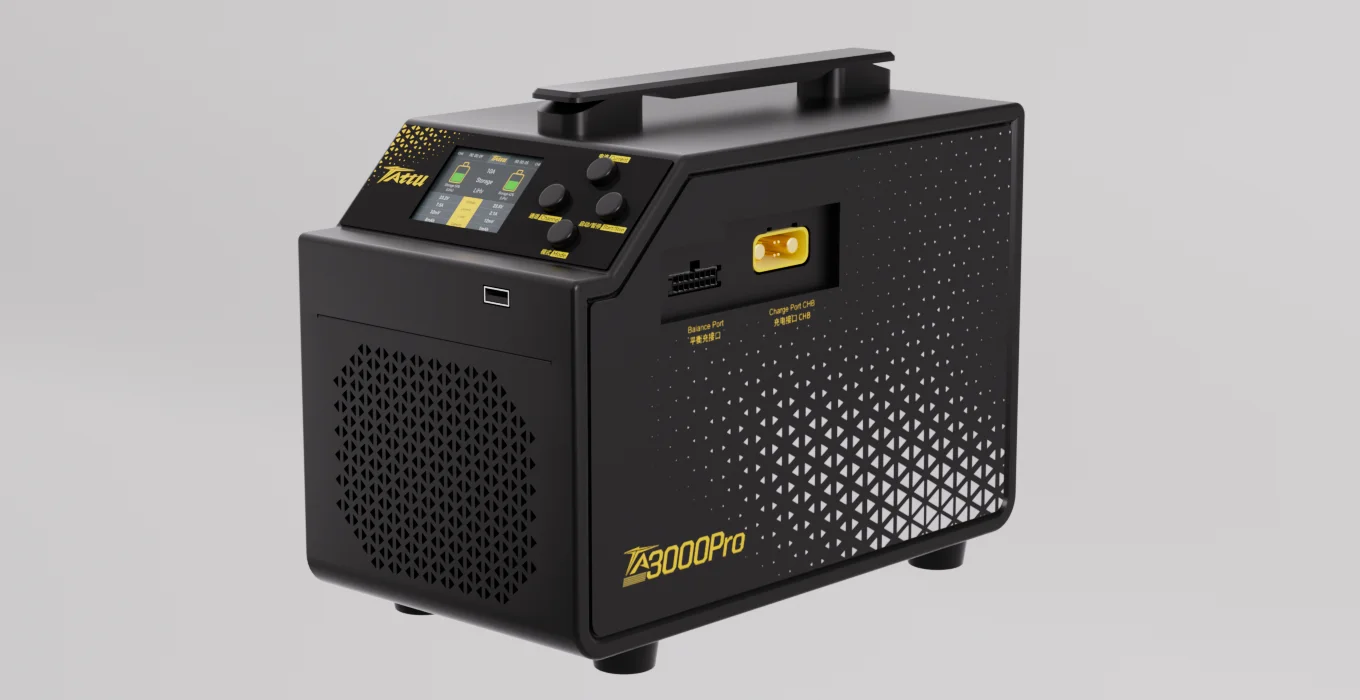
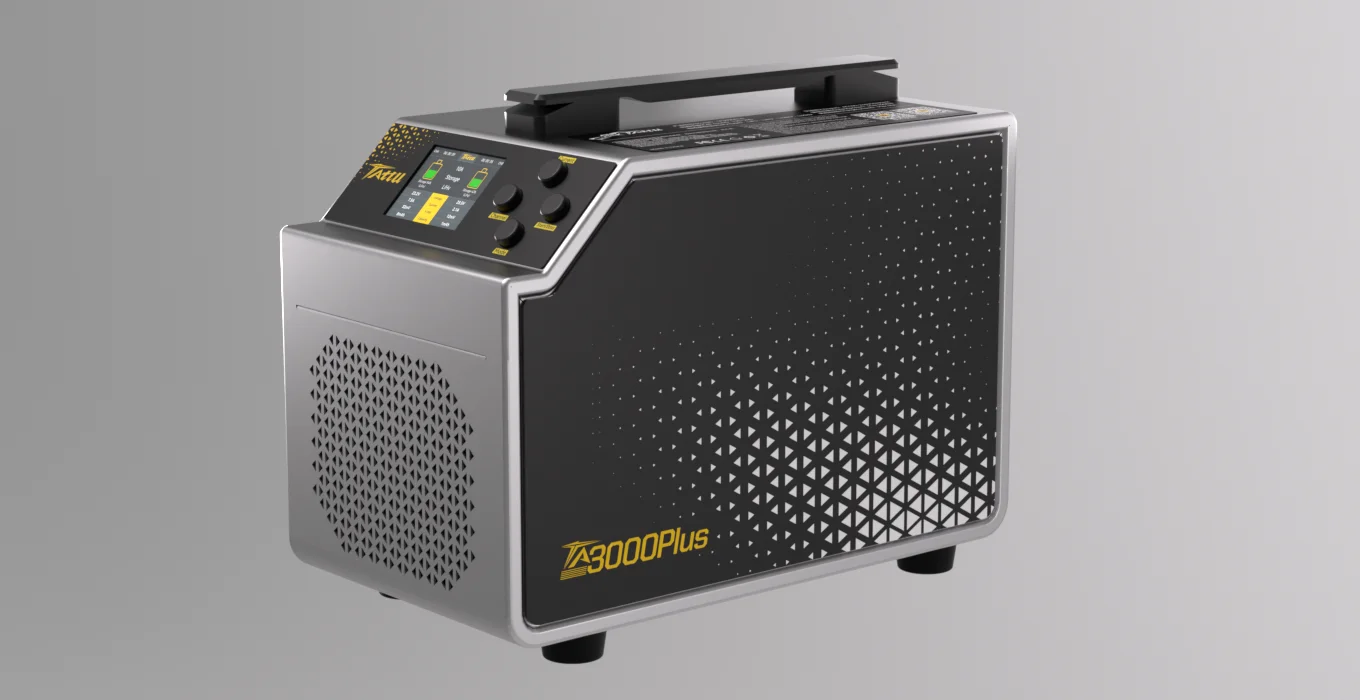
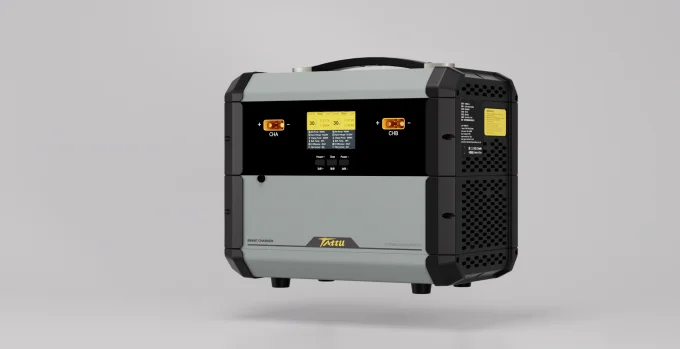
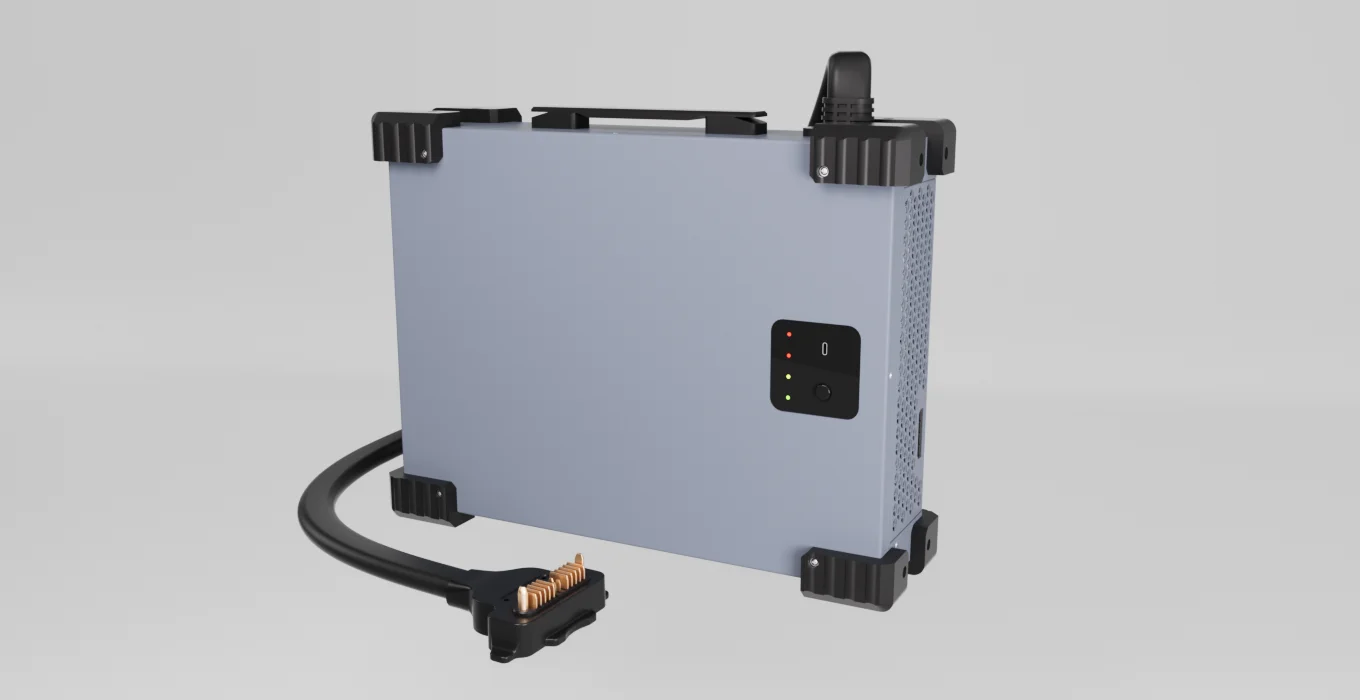
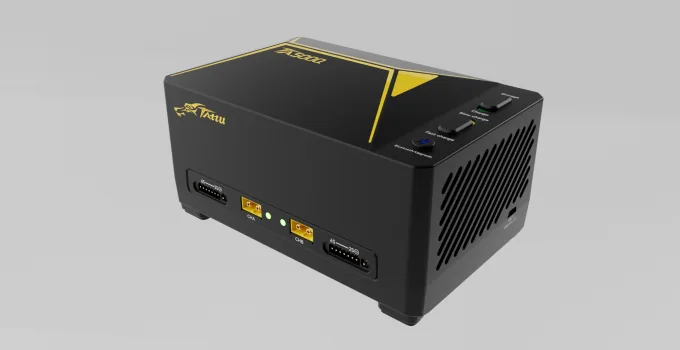
What Kind of Charger Is Required for a 28S LiPo Battery?
Standard hobby-grade RC chargers are completely unsuitable and dangerous
for 28S systems. A 28S battery requires a specialized, industrial smart charger
engineered for safe high-voltage, high-power delivery.
•Voltage and Power Output: The charger must be capable of outputting over
120V DC to fully charge LiHV packs. To achieve practical charge times (e.g.,
1C), the charger’s wattage must be substantial. A 22Ah, 28S LiHV pack at 121.8V
requires 22A×121.8V=2,680W. Chargers rated for 3,000W to 6,000W+ are typical and
often require a 220V AC (or even industrial three-phase) input to handle the
current on the AC side.
•BMS Communication is Mandatory: These chargers do not simply apply a
constant voltage. They interface directly with the battery’s BMS via a dedicated
data cable (CAN or similar). The BMS dictates the charging current in real-time
based on cell-level temperatures and balance status. Should a cell deviate or
overheat, the BMS commands the charger to reduce current or terminate the cycle
immediately. Never attempt to bypass this communication and directly charge a
28S smart battery.
What are the main safety precautions when charging, using, and storing a
28S LiPo battery?
High-voltage DC demands respect. Incorporating these safety practices is
non-negotiable for operational integrity.
•Charging Environment: Always charge in a well-ventilated, fire-proof
containment on a non-flammable surface. Never leave a charging 28S battery
unattended.
•Personal Protective Equipment: When connecting or handling charged packs,
use insulated, high-voltage-rated gloves and safety glasses. Verify that all
connectors are rated for the pack’s maximum voltage and current.
•Inspection Ritual: Before every flight, inspect the pack for swelling,
punctures, or deformed wiring. After flight, check for abnormal cell voltage
deltas via the BMS data link. A cell drift of more than 50mV under no load is a
serious warning sign.
•Storage Voltage: If a pack will not be used within 24 hours, it should be
brought to its storage voltage (approximately 3.8V/cell). Many smart batteries
automate this, but for dumb packs, a precise storage discharge or charge is
required.
How Can You Extend the Cycle Life of a 28S LiPo Battery?
A high-quality 28S pack is a significant capital investment. With
disciplined care, you can achieve 500–800+ cycles while maintaining performance.
Adhere to these guidelines:
•The 20% Rule: Never drain a 28S battery below 20% capacity (approximately
3.5V to 3.6V per cell resting voltage). Repeatedly drawing a pack down to its
absolute minimum voltage will drastically reduce its total cycle life and
increase internal resistance.
•Thermal Management: Never charge a 28S battery immediately after a
heavy-lift flight. Allow the pack to cool to ambient temperature before
connecting it to a charger. Charging a hot LiPo battery accelerates lithium
plating and can lead to thermal runaway.
•Storage Environment: Store batteries in a fire-retardant industrial
battery cabinet, kept in a climate-controlled environment (ideally between 15°C
and 25°C). Avoid areas with high humidity or extreme temperature
fluctuations.
•Routine Inspection: Before every deployment, physically inspect the outer
casing for swelling, check the heavy-duty connectors for carbon buildup or pin
degradation, and verify through the CAN interface that cell voltage deviation
(delta) is within acceptable limits (typically <0.05V variance between the
highest and lowest cell).
Conclusion
The 28S LiPo battery represents a generational leap in drone
electrification. By doubling voltage to slash resistive power losses, it enables
heavy-lift agricultural, logistics, eVTOL, and cinema platforms to achieve
longer flight times with cooler, lighter powertrains. However, this performance
depends entirely on treating the 28S pack as an integrated energy system—not a
simple battery. An active-balancing BMS with DroneCAN telemetry, a matched
industrial smart charger communicating via data link, and built-in protections
such as pre-discharge short-circuit blocking and automatic storage discharge are
all non-negotiable safety components. As a globally recognized manufacturer of
smart UAV batteries, Tattu provides high-power and high-energy-density 28S and
24S LiPo batteries to meet the demands of various industrial drone applications.
For more information, please feel free to contact us at [email protected].











 Blog
Blog
 Blog
Blog
 Blog
Blog


