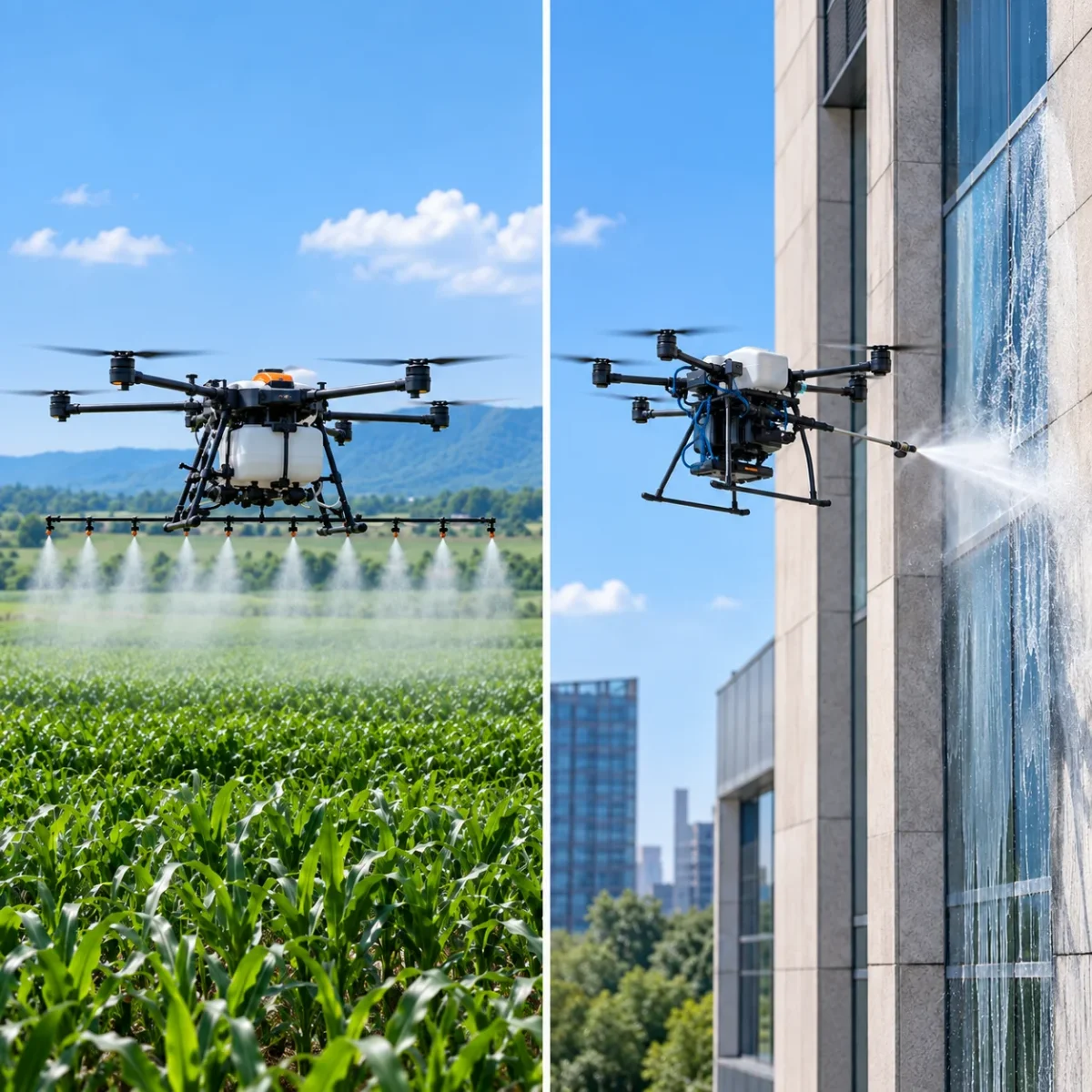
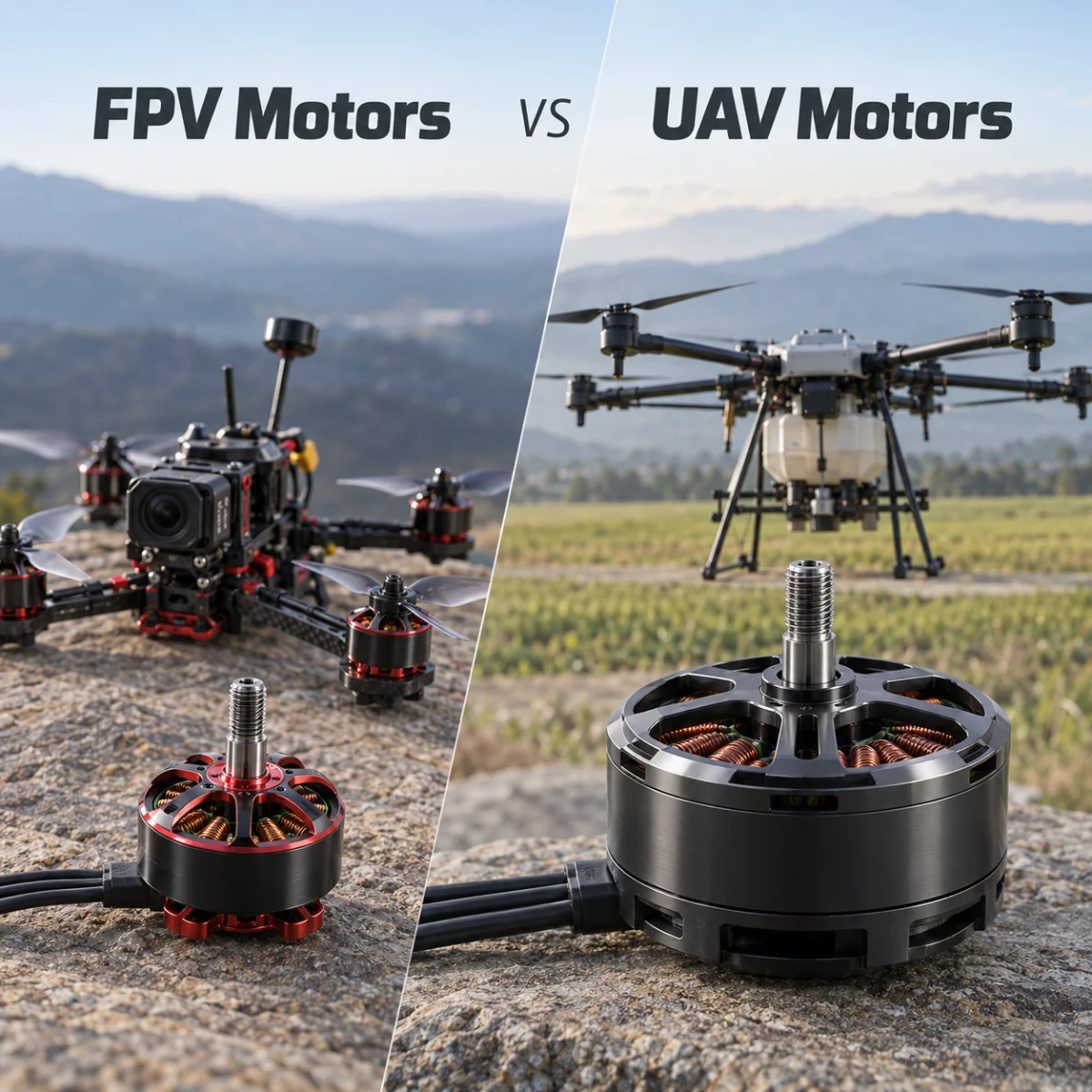
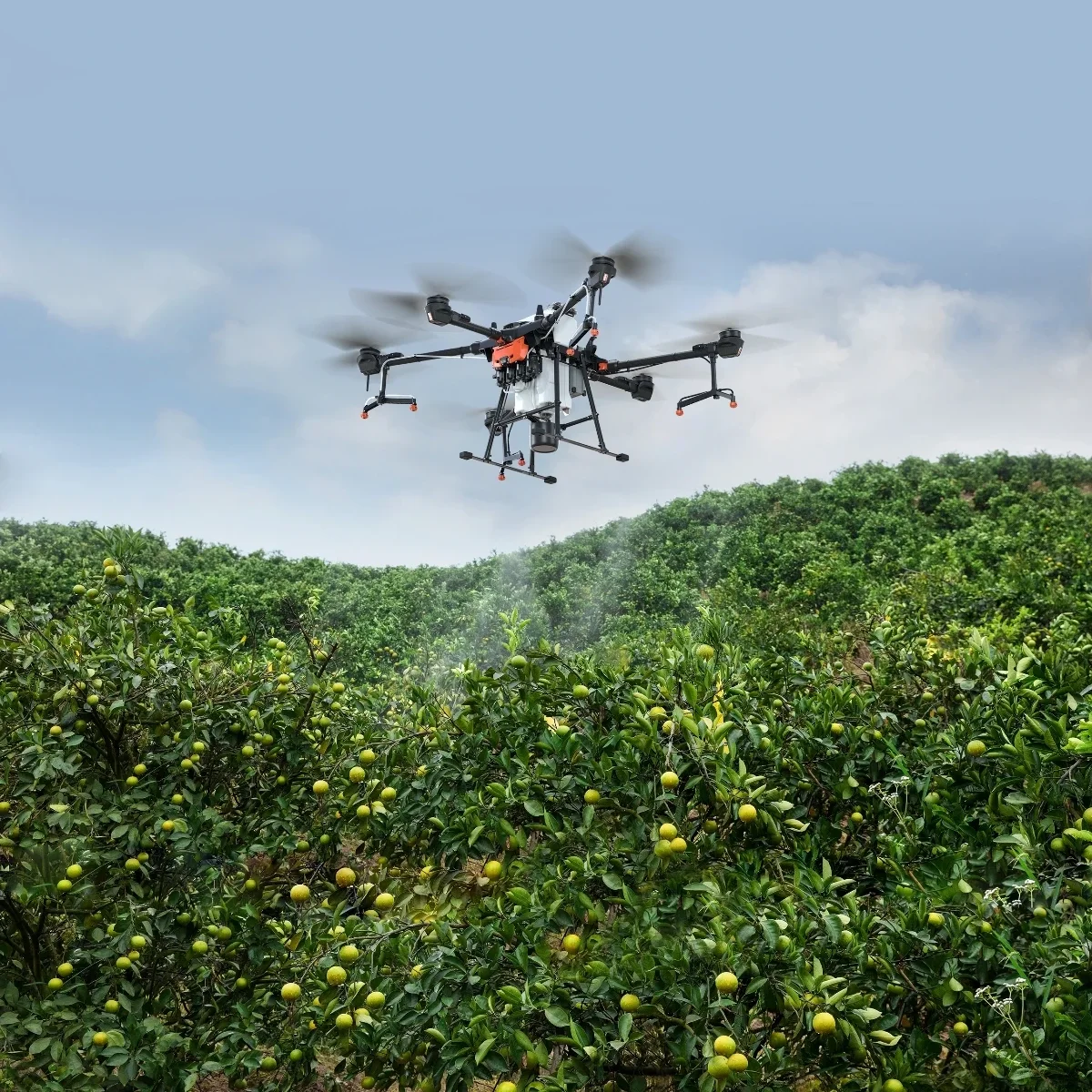
Spray drones are no longer limited to crop protection. Similar-looking
multirotor platforms are now being used to clean building facades, windows,
roofs, solar panels, industrial structures, and other hard-to-reach
surfaces.
At first glance, the two systems can look surprisingly similar: both may be
large multirotors carrying pumps, nozzles, batteries, and liquid-handling
hardware. In practice, the answer is more complicated.
Agricultural spray drones are primarily designed to carry liquid through
the air and distribute it over an area below the aircraft. Many commercial
cleaning drones instead carry a nozzle while water or cleaning solution is
supplied continuously from the ground through a hose. That difference changes
the aircraft's loading, propulsion requirements, control strategy, and even its
power-system architecture. This article explains those differences from an
engineering and real-world operating perspective.
What is an Agricultural Spray Drone?
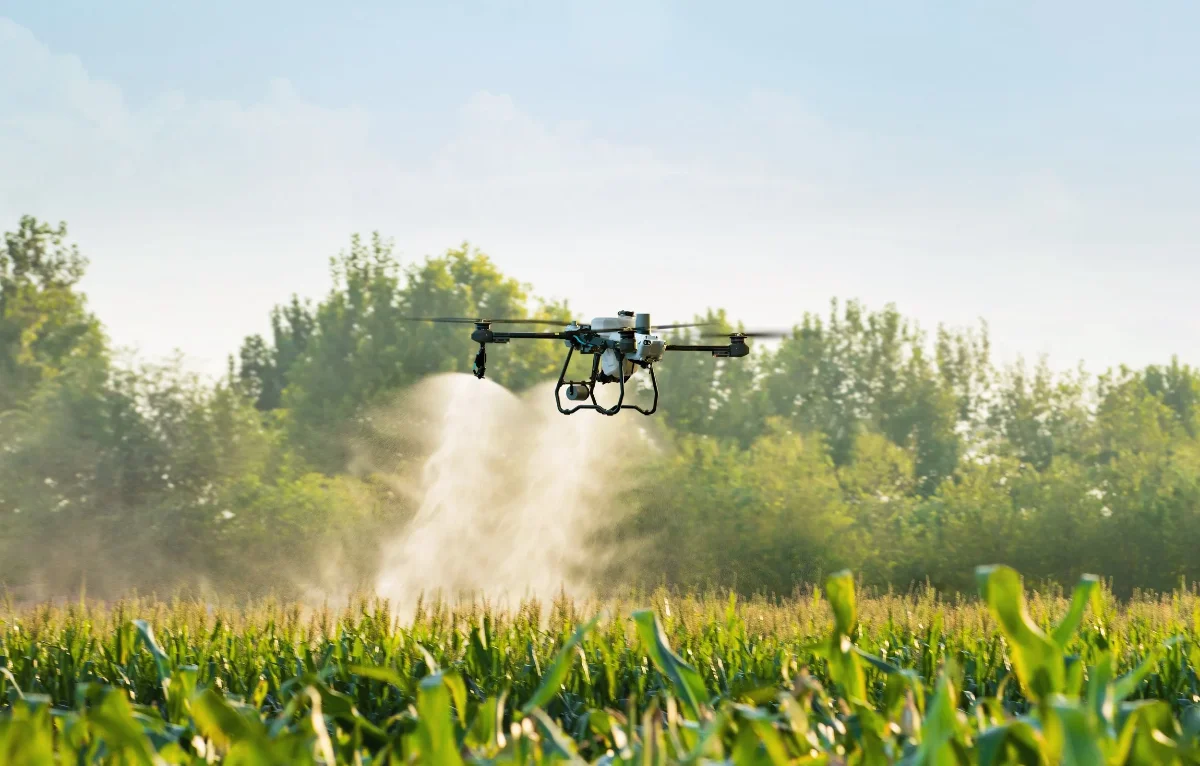
An agricultural spray drone (also called a plant-protection or
crop-spraying UAV) is a multi-rotor aircraft built to apply pesticides,
herbicides, fungicides, fertilizers, or seeds over farmland. Typical commercial
models carry onboard tanks of 10–100 liters (roughly 2.6–26 gallons), with many
popular platforms in the 30–50 L range.
They fly low—usually 1.5–3.5 m above the crop canopy—at relatively slow
speeds (often 3–7 m/s). They rely on RTK (Real-Time Kinematic) GPS for
centimeter-level positioning and downward-facing terrain-following radar to
maintain a consistent altitude over uneven farmland. The goal of an agricultural
drone is to generate a powerful downward wash (downwash) that forces a fine
chemical mist deep into the plant canopy without drifting into neighboring
fields.
What is a Cleaning Spray Drone?
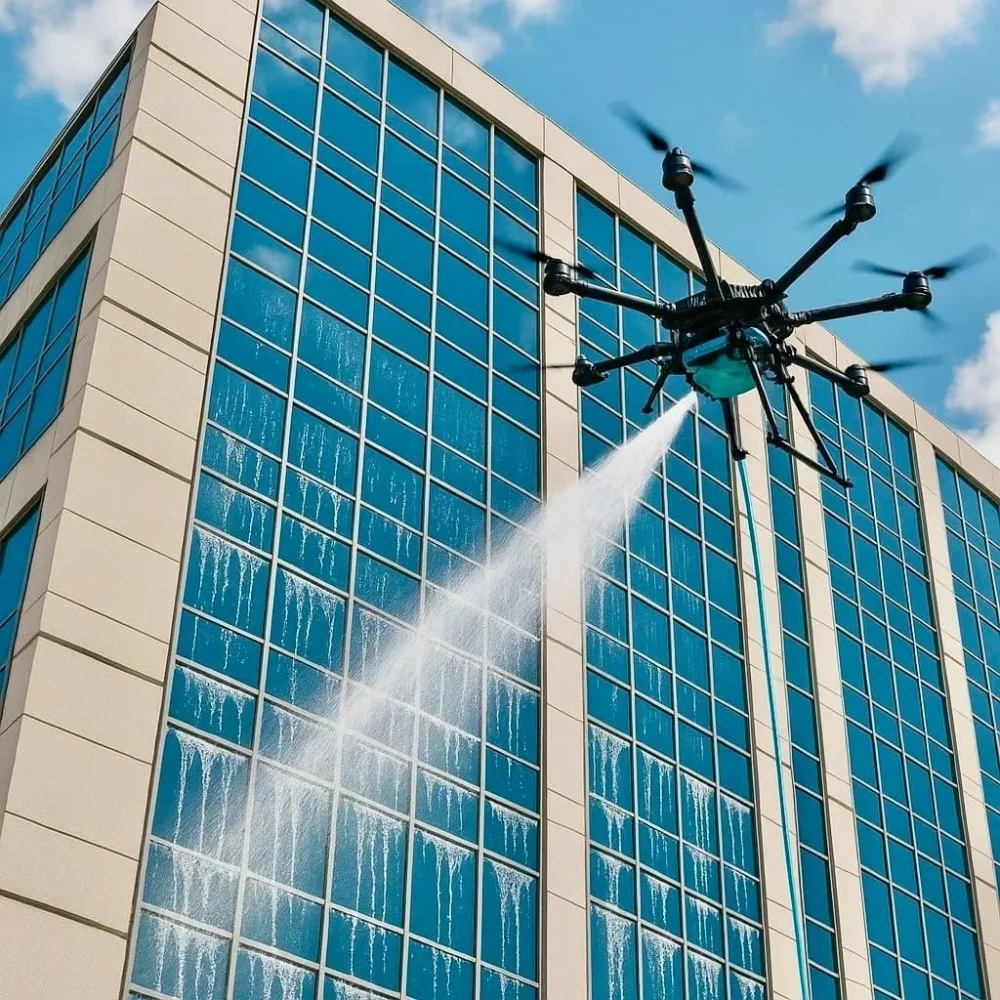
A cleaning spray drone is a UAV system used to wash or treat surfaces that
are difficult, unsafe, or expensive to reach by conventional methods. Common
targets include glass façades, curtain walls, exterior walls, solar panels,
roofs, billboards, industrial structures, bridges, storage tanks, and elevated
building features.
Unlike an agricultural sprayer, a cleaning drone often works close to a
fixed surface rather than flying across open ground. It may need to hold a
stable position near a wall, maintain a controlled nozzle-to-surface distance,
compensate for wind deflected by the building, and move slowly along a vertical
or horizontal cleaning path.
The cleaning liquid is frequently delivered from the ground through a hose.
The ground system may include a water tank or municipal-water connection,
filtration, a detergent or chemical mixing system, a pressure washer, a pump,
hose management equipment, and safety controls.Some lighter platforms carry
small onboard tanks, but the dominant commercial approach for high-rise work
relies on continuous ground supply so the aircraft does not have to lift large
volumes of liquid.
Propulsion Differences: Agricultural vs. Cleaning Spray Drones
At the propulsion-system level, agricultural and cleaning spray drones use
the same basic architecture: brushless motors, ESCs, propellers, flight
batteries, and a flight controller. The fundamental difference is not the
component category, but the design load case each system must satisfy.
Agricultural spray drones are designed around a heavy but predictable
onboard payload. Their motors, ESCs, propellers, and frame must efficiently lift
the drone at its maximum takeoff weight, including a full liquid tank, pump,
battery, and spray system. As spraying continues, the liquid mass declines
gradually, so the aircraft becomes lighter in a relatively predictable way. The
propulsion priority is therefore high continuous lift, efficiency, thermal
reliability, and repeatable performance during loaded takeoffs and field
passes.
Cleaning spray drones are designed around a smaller or externally supplied
liquid payload but more variable external forces. In hose-fed cleaning, the main
water source and pressure pump remain on the ground. The drone must compensate
for hose weight, hose tension, lateral drag, spray-nozzle reaction force, and
turbulent airflow around buildings. Its propulsion system therefore needs strong
control authority and sufficient thrust reserve to maintain position and safely
move away from the surface when these forces change.
Power Systems Differences : Agricultural vs. Cleaning Spray Drones
Power system architecture is where the specific demands of each job become
apparent.
Agricultural Drone Power Systems:
These drones operate untethered in massive fields, requiring high-density
power sources capable of sustaining continuous, heavy loads. They rely on
high-capacity smart batteries (often 12S to 14S, or up to 28S for heavy-lift
models) with robust Battery Management Systems (BMS). Because they fly
back-to-back missions, these batteries must support extremely fast charging. The
latest advancements utilize silicon-carbon anodes to increase energy density
without adding weight, alongside advanced AFE (Analog Front-End) and MCU chips
to monitor cell health during rapid discharges in hot, dusty environments.
Cleaning Drone Power Systems:Power setups here depend on the tethering
system.
Fully Tethered Systems: Some cleaning drones receive continuous
electrical power from a ground station via a micro-tether, allowing them to fly
indefinitely.
Battery-Powered Systems: If only the water hose is tethered, the drone
still relies on onboard batteries for flight. These batteries must deliver
rapid, high C-rate bursts of power to stabilize the drone against sudden wind
gusts near buildings and compensate for the increasing weight of the hose as the
drone flies higher.
Can an Agricultural Spray Drone be Directly Modified into a Cleaning Spray
Drone?
Usually, no—not safely or professionally. An agricultural drone may serve
as a starting airframe for a low-pressure, limited cleaning application, but it
should not be assumed to be suitable for façade or high-pressure cleaning merely
by replacing the tank, nozzle, or pump. The reason is that agricultural spraying
and aerial cleaning impose different engineering and operational loads.
Airframe loading is different
Agricultural drones are designed around an
onboard liquid tank that becomes lighter during the flight. A hose-fed cleaning
drone experiences external, variable forces from a hose that can pull sideways,
downward, or suddenly when snagged.
Nozzle reaction can destabilize the aircraft
A high-pressure jet creates a
recoil force. If the nozzle, boom, center of gravity, or flight-control tuning
is not designed for it, the drone can pitch, roll, yaw, or drift toward the
surface.
Chemical compatibility may differ
Agricultural systems may be designed for
pesticides and fertilizers, while cleaning systems may use detergents,
degreasers, surfactants, deionized water, alkaline solutions, or other products.
Seals, tubing, pumps, filters, connectors, and coatings must be compatible with
the actual fluid used.
Water ingress risk increases
A cleaning drone can operate directly in
mist, splashback, runoff, and detergent foam. The airframe, batteries,
connectors, ESCs, cameras, and payload interfaces need protection appropriate to
that environment.
The safety case changes.
Cleaning often occurs near buildings, roads,
people, property, and falling-water zones. A field-spraying risk assessment is
not enough for a dense urban or industrial site.
Legal and insurance requirements may differ.
Local aviation rules, property
permissions, worker-safety requirements, public-liability insurance,
chemical-use rules, and operating approvals can all change when moving from
agricultural land to urban facade work.
Can the Batteries Used in Agricultural Spray Drones be Used in Cleaning
Spray Drones?
Yes, in many cases, but with important caveats regarding physical
integration and environmental protection. Compatibility depends on matching
voltage (S-count), capacity, continuous and peak discharge ratings (C-rating),
connectors, battery management system (BMS) communication protocols, physical
form factor, and mounting.
High-quality agricultural drone batteries are over-engineered for harsh
conditions, making their core specifications highly suitable for untethered
cleaning drones. An agricultural smart battery designed for a 10L or higher
payload has the necessary capacity, high continuous discharge rate, and
intelligent BMS required to lift a cleaning drone and its heavy water hose.
However, cross-compatibility comes down to two factors:
Ingress Protection (IP Rating): While agricultural batteries are sealed
against dust and chemical moisture, a cleaning drone operates in a highly wet
environment with splashing water and chemical detergents. A shared battery must
have a rigorous waterproof rating and securely sealed connectors to prevent
short circuits.
Form Factor and Weight Distribution: Cleaning drones require precise
center-of-gravity balancing to hover steadily against a wall. If the
agricultural battery is too bulky or does not fit perfectly into the cleaning
drone’s chassis, it will throw off the aircraft's stability.
Conclusion
Agricultural spray drones and cleaning spray drones both move liquid
through the air, but they are optimized around fundamentally different missions.
Agricultural drones are primarily mobile liquid carriers. Their propulsion and
battery systems are built around heavy takeoff weight, large onboard tanks,
efficient field coverage, and rapid turnaround between sorties.
Professional cleaning drones are increasingly airborne spray tools
connected to ground infrastructure. Their design must account for suspended hose
mass, changing hose geometry, high-pressure jet reaction, close-surface
aerodynamics, moisture exposure, and precise low-speed positioning. Choosing the
right platform—or correctly adapting one—starts with matching the machine to the
actual work: field acreage and chemical type versus building height, surface
sensitivity, and pressure requirements.
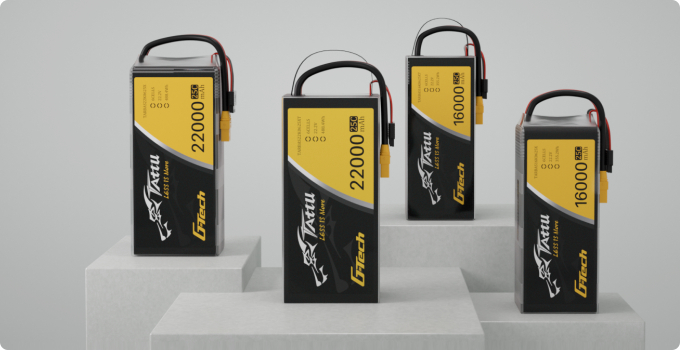
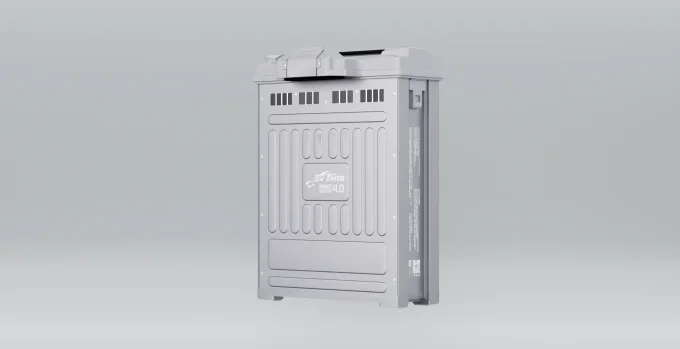
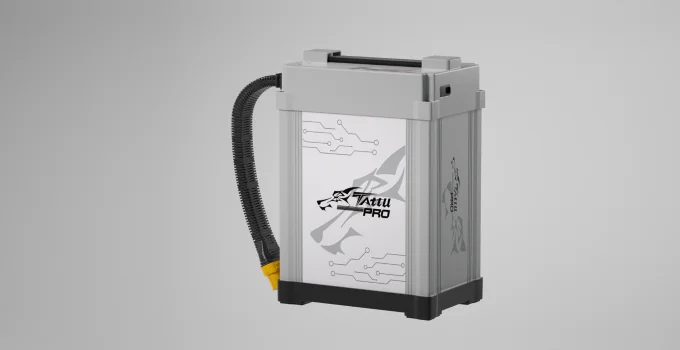
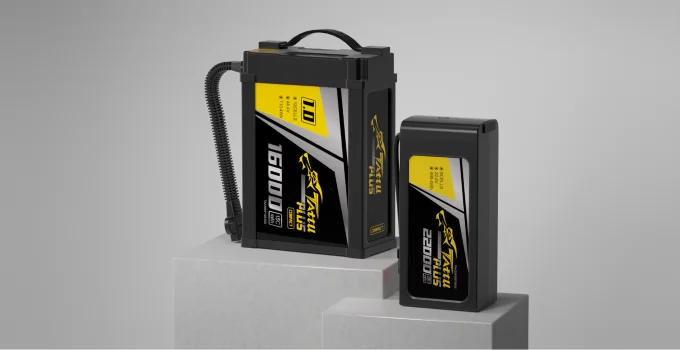
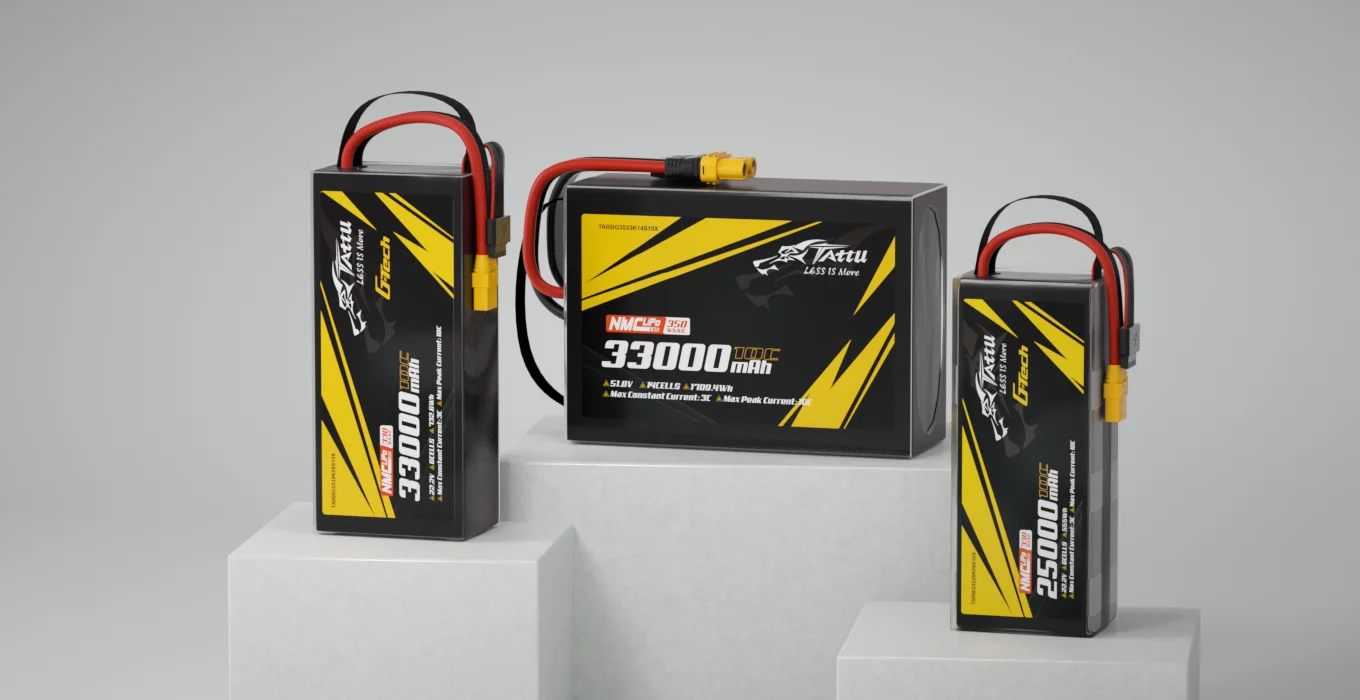
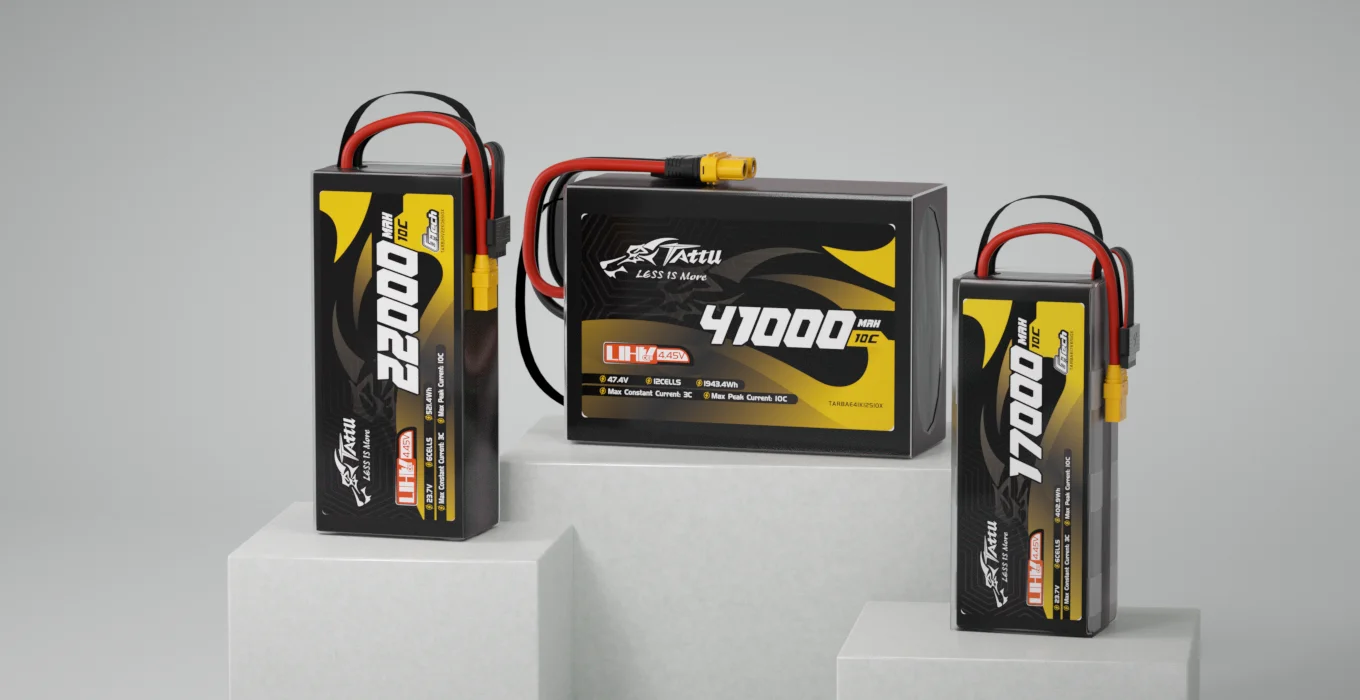
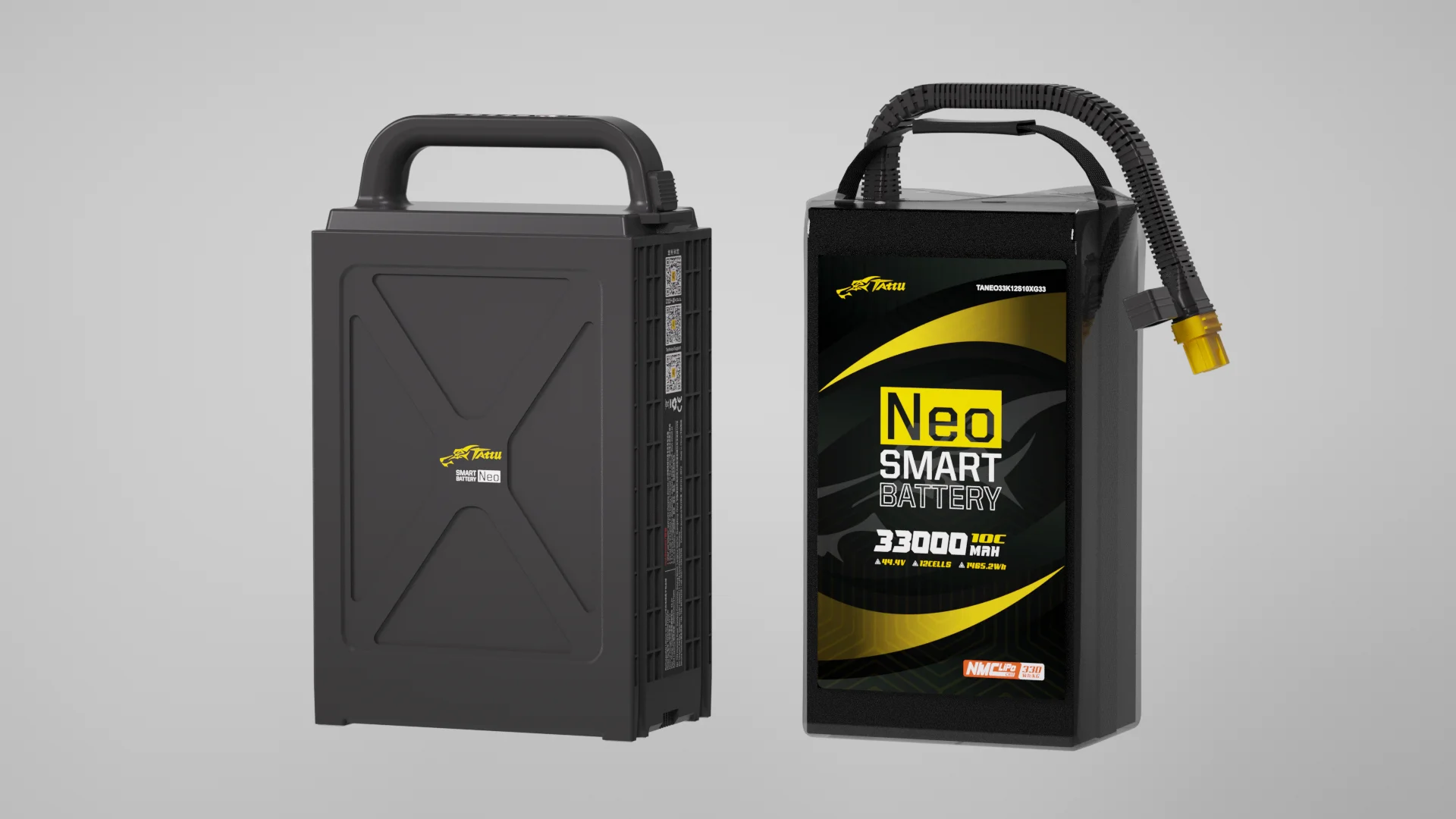
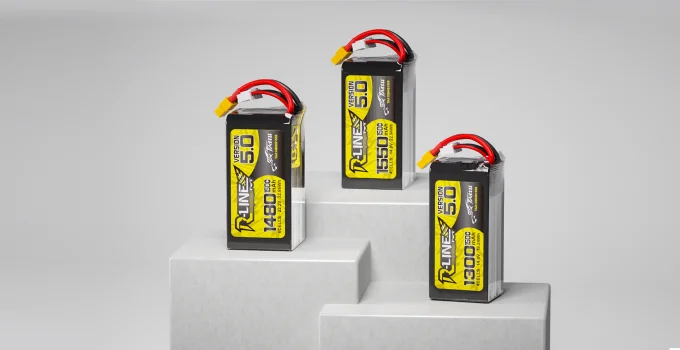
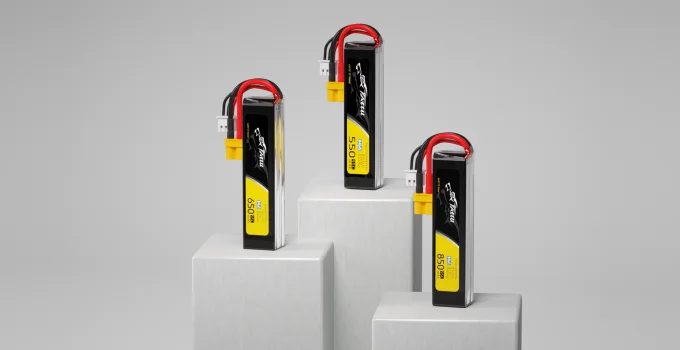
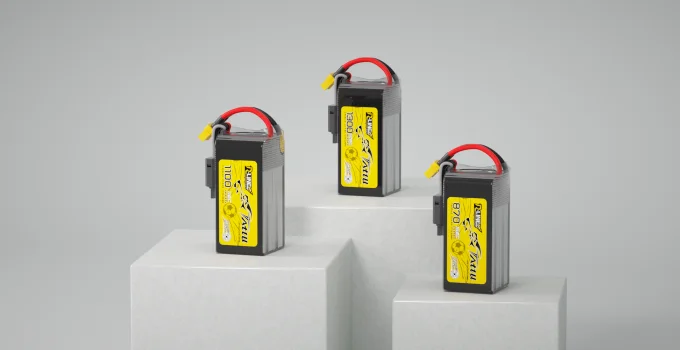
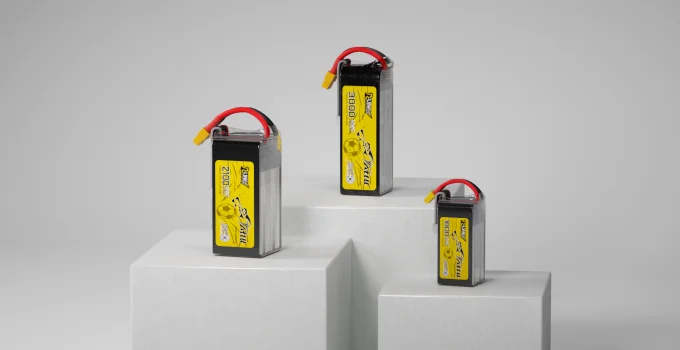
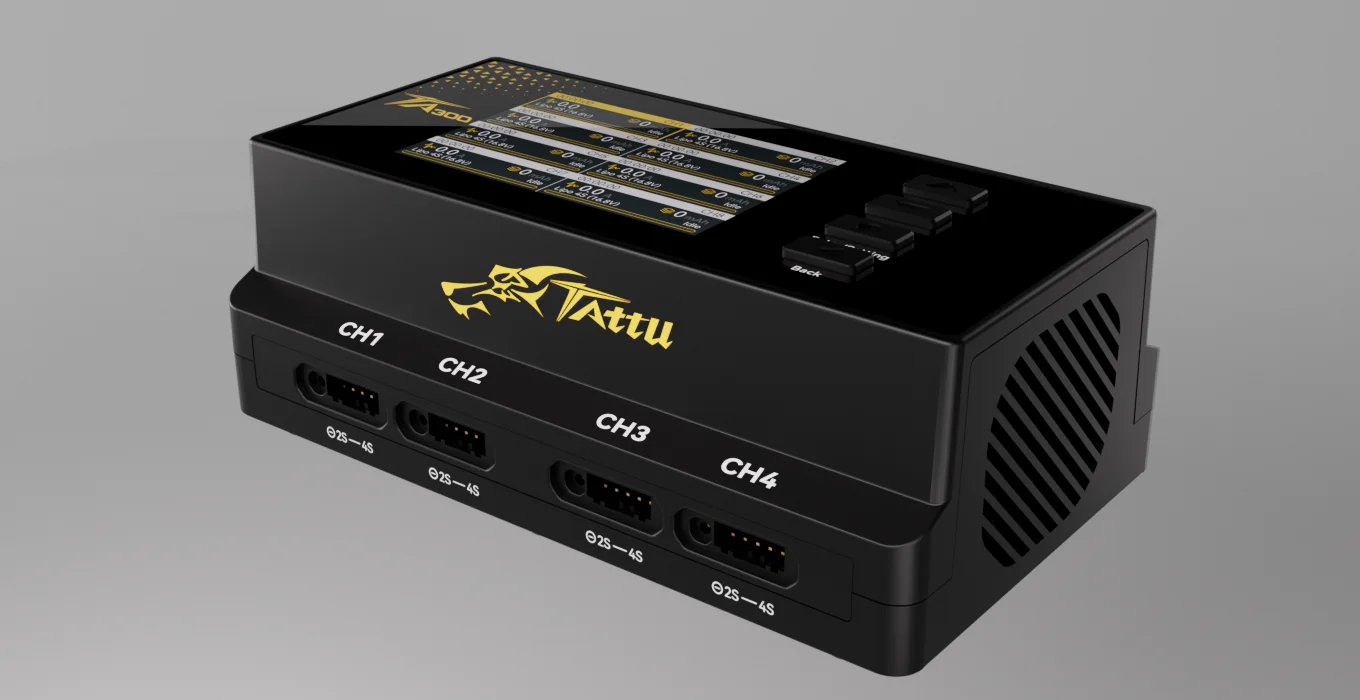
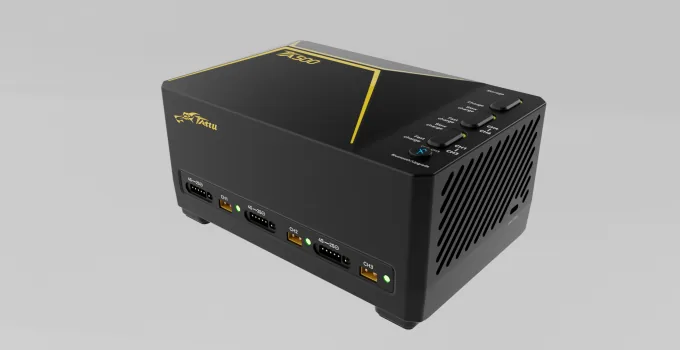
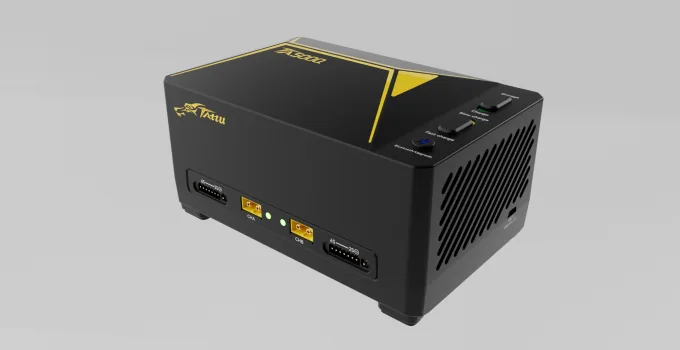
As a world-leading drone battery manufacturer, Tattu provides comprehensive power solutions tailored for both agricultural spray drones and cleaning spray drones. From high-power uav batteries engineered for heavy payloads to semi-solid-state batteries built for extended flight endurance, Tattu delivers exceptional performance designed to excel in demanding real-world operational conditions.For more information or assistance, please contact us at [email protected].




 Blog
Blog
 Blog
Blog
 Blog
Blog


