A drone’s battery percentage may look like a simple number, but producing a
trustworthy estimate is difficult. During takeoff, climbing, hovering,
accelerating and fighting wind, a drone can place rapidly changing loads on its
battery. Temperature, payload, battery age and flight style also affect how much
usable energy remains.
This is where the battery management system, or BMS, becomes essential.
Modern drone BMSs monitor and protect the battery while estimating whether the
aircraft has enough energy to complete its mission safely. Artificial
intelligence is increasingly being added to improve these estimates, identify
degradation and predict failures.The integration of AI into Drone BMS is rapidly
transforming how the industry handles flight endurance, safety, and fleet
maintenance.
What Is a Battery Management System?
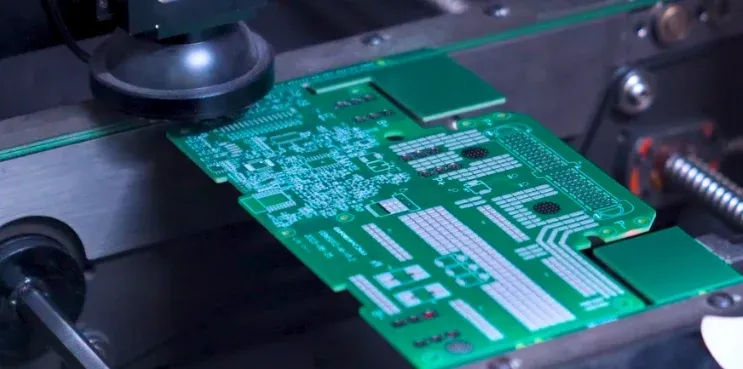
A Battery Management System is the electronic “brain” inside a drone’s
battery pack that monitors cell voltages, currents, temperatures, and
state-of-charge, then enforces safe operating limits and balances cells to
prevent overcharge, over-discharge, and thermal runaway. At a foundational
level, a traditional BMS prevents catastrophic failures such as thermal runaway,
overcharging, and deep discharging by acting as a strict gatekeeper between the
battery cells and the device they power. In UAVs, the BMS is typically
integrated with the flight controller and telemetry stack so operators see
real-time health metrics and receive warnings before critical failures
occur.
What Is the Main Function of Drone Battery Management Systems?
In unmanned aerial vehicles, the BMS must solve problems that simply do not
exist in other domains. Weight is the enemy of flight time; every gram of
protection circuitry subtracts from payload capacity or endurance. Space is
constrained within airframes optimized for aerodynamics. And the consequences of
failure are measured not in inconvenience, but in aircraft loss, property
damage, or injury.
Consequently, a drone BMS performs three functions that extend well beyond
basic protection. First, it must deliver accurate State of Charge (SoC)
estimation under volatile conditions. A pilot relying on a simple voltage-based
percentage gauge during aggressive flight maneuvers may receive readings that
swing wildly, masking the true remaining capacity. Second, it must assess State
of Health (SoH)—the gradual degradation of maximum capacity and increased
internal resistance that occurs with every charge cycle. Without this insight,
operators unknowingly plan missions around a battery's original specifications
rather than its current capabilities. Third, it must manage cell balancing
across multiple series-connected cells, ensuring that no single cell becomes a
weak point that compromises the entire pack. Other core functions include:
•Thermal and power management: Regulating discharge rates and managing
heat to avoid degradation or fire.
•Telemetry and diagnostics: Streaming battery data to ground stations and
logging cycles for maintenance planning.
Is AI Used in Drone Battery Management Systems?
AI is used in drone battery management systems, particularly for
battery-state estimation, predictive maintenance, anomaly detection and
mission-aware energy forecasting. Its adoption is already visible in academic
research, experimental UAV platforms and some advanced commercial
battery-management ecosystems.
AI is not, however, present in every drone BMS. Traditional BMSs may use
coulomb counting, voltage lookup tables, equivalent-circuit models, compensated
end-of-discharge calculations or Kalman-filter-based estimators. These
techniques can be advanced and adaptive without necessarily being artificial
intelligence. A system can reasonably be described as AI-enabled when it uses
methods such as neural networks, support vector machines, ensemble learning,
transfer learning or other data-driven models trained on battery or flight
data.
Historically, a BMS was entirely reactive; it relied on hardcoded
thresholds, tripping safety switches only when voltage dropped too low or
temperatures spiked too high. Today, AI transitions the BMS from a simple
defensive component into a proactive, intelligent data asset. Commercial
adoption is more difficult to quantify because manufacturers rarely disclose
their complete estimation algorithms, training datasets or model architectures.
In fact,AI is genuinely being used in this field, but conventional battery
algorithms still perform much of the essential work in most systems.
How Is AI Applied in Drone Battery Management Systems?
More Accurate State-of-Charge Estimation
Simple state-of-charge methods can struggle when a drone experiences large
current spikes, changing temperatures and voltage sag under load. A voltage
reading that suggests sufficient energy while hovering may fall sharply when the
aircraft climbs or accelerates.
Machine-learning models can learn the nonlinear relationship between sensor
readings and actual battery charge. Depending on the system, inputs may include
cell voltage, current, temperature, throttle position, recent power demand and
historical discharge behavior. Instead of interpreting each measurement
independently, the model recognizes patterns across time. This can improve
estimates during dynamic flight and reduce the gap between the displayed battery
percentage and the energy the aircraft can actually use.
State-of-Health and Remaining-Life Prediction
Battery degradation is not determined by cycle count alone. Two packs with
the same number of recorded cycles may have very different health because of
differences in discharge rate, storage temperature, depth of discharge, charging
behavior and mechanical stress.
AI can examine historical operating data to detect the patterns associated
with capacity loss or increasing internal resistance. The resulting SoH or RUL
estimate can help a fleet operator replace a battery based on its measured
condition rather than an arbitrary calendar date.
Mission-Aware Energy Forecasting
A basic battery gauge estimates current charge. A more capable system
predicts whether that charge is sufficient for the planned mission.
Mission-aware models can combine battery condition with the expected route,
payload, altitude changes, speed, wind and reserve requirements. The output may
be an end-of-flight voltage prediction, a probability of completing the route or
an updated return-to-home threshold.
Fault and Anomaly Detection
Some battery problems develop gradually and may not immediately cross a
fixed protection threshold. A weakening cell, abnormal voltage drop or unusual
temperature rise may still be detectable because its behavior differs from the
pack’s established operating pattern.
AI-based anomaly detection can compare live measurements with expected
behavior and assign a risk score before a conventional alarm is triggered. The
system might flag unusual cell imbalance, excessive voltage sag, abnormal
self-discharge or a thermal response that does not match the current load.
The purpose is not to replace hardware protection. Overcurrent,
overtemperature and short-circuit protection must remain deterministic and
capable of operating even when an AI model, flight computer or communication
link fails. AI is most valuable as an additional diagnostic and forecasting
layer.
Embedded and Fleet-Level Intelligence
AI processing can be deployed in several places. A small model may run
inside the battery pack’s microcontroller. A larger model may operate on the
flight controller or companion computer, where it can access throttle,
navigation and payload data. Fleet-level analytics may run in the cloud, using
information from many batteries and missions to improve maintenance
predictions.
Embedded deployment is becoming increasingly practical. One TinyML study
reported a quantized UAV battery model with approximately 2 ms inference latency
and very small memory requirements, demonstrating that useful battery-health
inference can run on constrained hardware rather than depending entirely on
cloud connectivity.
Is the Use of AI in Drone Battery Management Systems a Trend?
The use of AI in drone battery management is a clear technical trend,
although deployment is progressing at different speeds across consumer,
industrial and research platforms.
Several forces are driving it. Commercial drones are becoming more
autonomous, missions are becoming longer and more valuable, and operators
increasingly manage fleets rather than individual aircraft. At the same time,
embedded processors can run more capable models without imposing the computing
and energy costs that once made onboard AI impractical.
Nevertheless, several barriers will prevent an immediate transition to
fully AI-controlled BMSs. Battery datasets are often small and specific to one
cell chemistry, pack design or test procedure. A model trained in a laboratory
may encounter unfamiliar conditions when exposed to vibration, wind, payload
changes, extreme temperatures or aged sensors. Model drift, software updates,
cybersecurity and explainability also matter when predictions affect flight
safety.
FAQ
1. Which drone use cases gain the most from AI battery management?
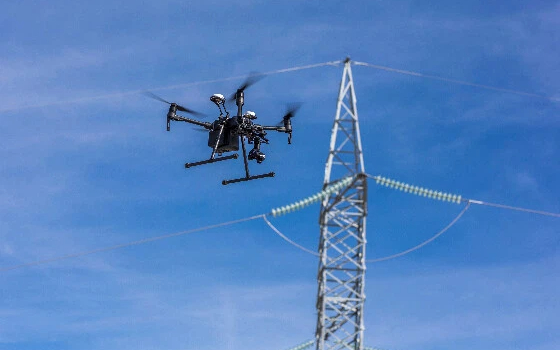
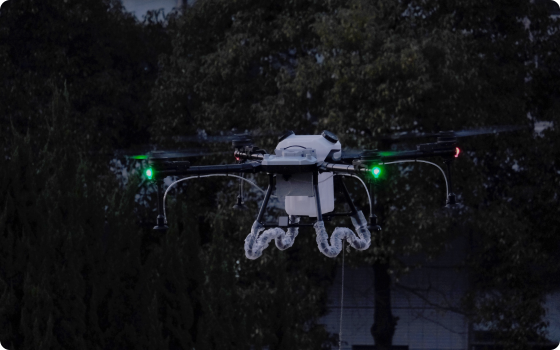
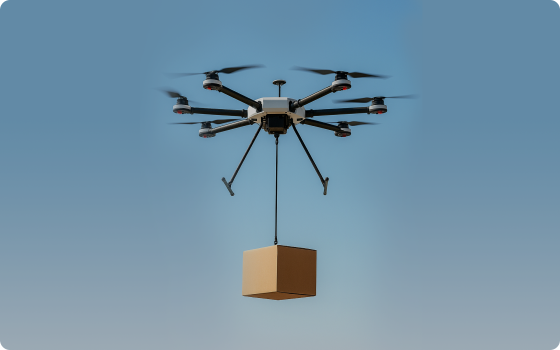
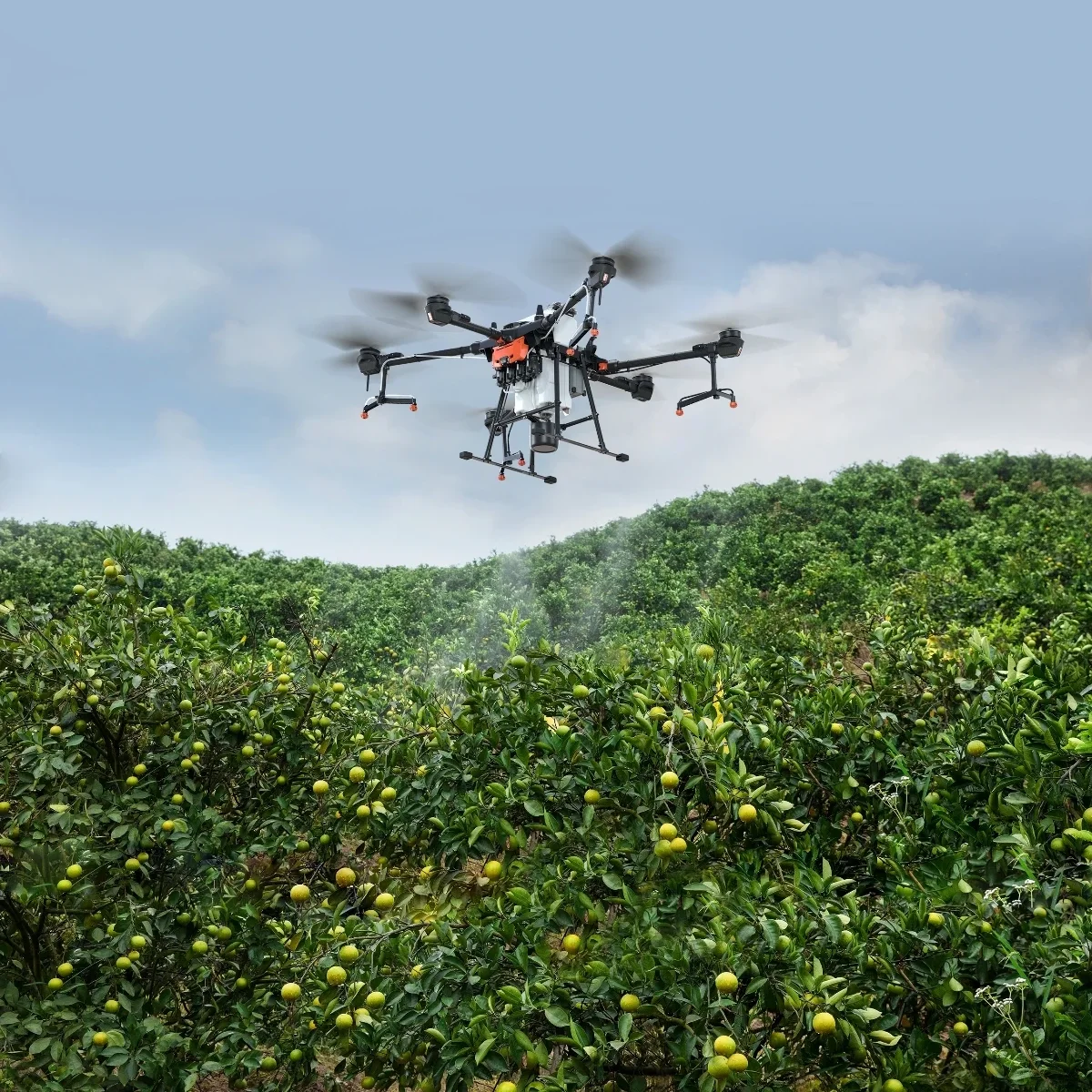
AI-powered BMS shines in last-mile delivery, infrastructure inspection,
heavy-lift logistics, agricultural spraying, and medical supply missions—where
extra range, uptime, or payload directly affect revenue.
2. How does AI in drone BMS cut fleet operating costs?
By predicting failures early, optimizing charge/discharge cycles, and
adapting flight profiles to save energy, AI reduces unplanned downtime and
extends pack lifespan—lowering total cost of ownership.
3. What should buyers check when sourcing AI-enabled drone batteries?
Look for real-time telemetry + cloud dashboards, documented AI features
(SoH prediction, adaptive charging), UN38.3/UN3480 compliance, and
voltage/current ratings matched to your airframe’s burst and hover needs.
4. Does AI in BMS improve BVLOS and urban flight safety?
Yes—AI detects early cell anomalies and thermal issues, triggering
pre-emptive warnings or automated return-to-home before catastrophic failure,
supporting safer BVLOS and urban operations.
5. How does AI battery management scale drone logistics networks?
AI aligns battery health with routing and charging: it predicts which packs
can complete routes, optimizes charging windows, and enables energy-aware
routing that can cut battery use by up to 30%.
Conclusion
The question is no longer whether AI belongs in drone battery management
systems, but how quickly operators and manufacturers can adopt it. Traditional
BMS technology has reached its performance ceiling; fixed thresholds and
simplified models cannot deliver the accuracy, safety, and operational
efficiency that modern drone applications demand.
Artificial intelligence transforms battery management from a reactive
safety mechanism into a predictive, mission-integrated intelligence layer. For
modern UAV operators, an AI-enhanced BMS is no longer just a hardware upgrade;
it is the definitive edge in a highly demanding airspace. Recognized globally as
a premier drone battery manufacturer, Tattu continually pioneers innovations in
BMS technology. Our mission is to engineer smarter, more intuitive drone
batteries that guarantee uncompromising flight safety and peak efficiency for
advanced commercial operations, including heavy-payload and BVLOS missions. For
more information, please feel free to contact us at [email protected].














 Blog
Blog
 Blog
Blog


