When a drone flies beyond your line of sight, the margin for error drops to
zero. You aren't just managing aerodynamics and communication links; you are
managing a strict, unyielding energy budget. The battery is the lifeblood of any
BVLOS operation—it dictates your payload capacity, your mission radius, and most
importantly, the safety of the airspace. In this guide, we break down what BVLOS
entails, the unique power demands of long-range flights, and how to evaluate,
select, and manage the right power system for your fleet.
What Is BVLOS?
BVLOS stands for Beyond Visual Line of Sight. The FAA defines BVLOS as
operating an unmanned aircraft beyond the visual capability of the flight crew,
including the remote pilot and any visual observer, using unaided vision other
than corrective lenses. In practical terms, the pilot can no longer rely on
directly seeing the aircraft to determine its position, attitude, proximity to
hazards, or surrounding air traffic.
This is different from VLOS, or visual line of sight, where the remote
pilot maintains continuous visual contact with the aircraft and can use direct
observation to help avoid collisions.

BVLOS does not necessarily mean autonomous flight. A BVLOS drone may still
be actively supervised or controlled by a remote pilot through a
command-and-control link. Conversely, an autonomous aircraft may operate within
visual range. BVLOS describes the relationship between the aircraft and the
flight crew’s ability to see it, not the aircraft’s level of automation.
Because the remote pilot cannot directly observe the aircraft, BVLOS
operations normally require additional controls such as reliable
command-and-control communications, navigation integrity, airspace awareness,
detect-and-avoid measures, contingency procedures, and operational
authorization. Requirements vary by jurisdiction.
What Is a BVLOS Drone?
A BVLOS drone is an unmanned aircraft system designed, equipped, and
operated for missions in which the aircraft travels beyond the direct visual
range of its flight crew.A BVLOS Drone is purpose-built for these extended
missions. Unlike standard consumer quadcopters, BVLOS drones are typically
fixed-wing, VTOL (Vertical Take-Off and Landing) hybrids, or highly efficient
heavy-lift multi-rotors. Because the pilot cannot see the drone, these aircraft
require redundant communication links (like SATCOM or LTE), onboard
sense-and-avoid technologies, and high-endurance power systems.
What are the main use cases for BVLOS drone?
The ability to fly autonomously over vast distances removes the bottleneck
of the pilot's physical location, unlocking industrial scalability. Primary use
cases include:
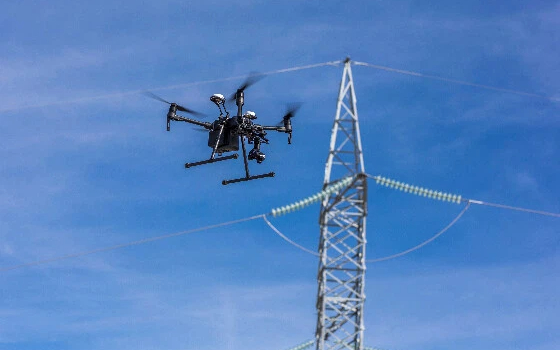
•Linear Infrastructure Inspection: Surveying hundreds of miles of
pipelines, railways, and power grids in a single, uninterrupted flight.

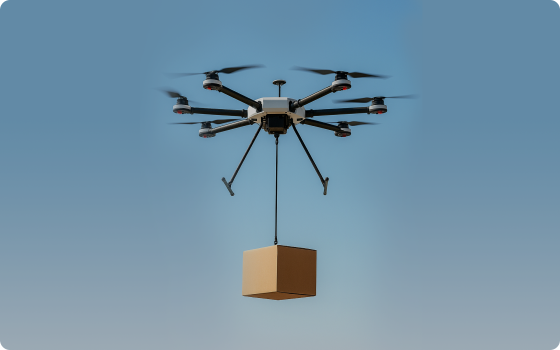
•Autonomous logistics and delivery: Time-critical transport of medical
supplies or small parcels across distances beyond VLOS.
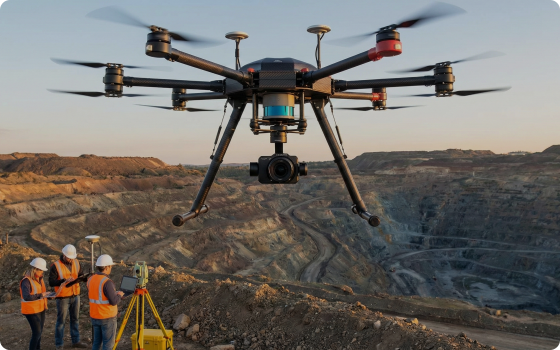
•Mapping and Surveying: High-resolution photogrammetry or LiDAR scanning
of massive agricultural plots, forestry, or mining sites.
•Search and Rescue (SAR) & Security: Rapid deployment over large
search grids using
The Unique Battery Challenges of BVLOS Flight
BVLOS operations place higher demands on batteries than typical VLOS
flights:
•Extended endurance: Missions often require 30 minutes to several hours of
continuous operation, depending on drone size and payload.
•High energy density: To maximize flight time without excessive weight,
energy density (Wh/kg) is critical. Some advanced cells now reach 300–350 Wh/kg,
enabling hundreds of kilometers of range.
•Stable voltage under load: Corridor and inspection missions need steady
voltage deep into the mission to avoid performance drops near the end.
•Variable Discharge Rates (C-Rate): VTOL BVLOS drones require massive
bursts of energy (high current) for vertical takeoff and landing, but require a
much lower, steady current for forward cruising.
•Environmental Volatility: BVLOS drones fly through changing
microclimates. Batteries must maintain stable voltage across drastic temperature
drops at higher altitudes or over long distances.
•Thermal and cycle reliability: Long flights and frequent sorties increase
thermal stress and cycle wear, so consistent performance over many cycles
matters.
How to Choose a Battery for BVLOS Drones?
Rather than chasing specs in isolation, start from your mission profile and
work backward.
1) Define Mission Blocks, Not Just “Max Capacity”
For each mission type, define:
Payload weight and power draw (camera, LiDAR, comms module).
Route length and expected average speed.
Environmental window (typical wind, temperature).
Required landing reserve (time or energy to return safely).
This tells you the usable mission time and energy you actually need, which
is more useful than a brochure’s “max flight time.”
2) Calculate Energy Requirement and Add Reserve
A simple approach:
Estimate propulsion power:
For fixed-wing, approximate drag × cruise speed gives propulsion power.
For multirotors, use thrust-to-weight and typical W/kg figures for your
class.
Add payload and avionics power.
Multiply by target flight time to get total energy (Wh).
Add a 30% margin for reserves and uncertainties.
Then pick a battery whose usable energy (capacity × nominal voltage ×
usable depth-of-discharge) meets this requirement.
3) Match Voltage (Cell Count) to Your Powertrain
Check your motor/ESC specs:
Confirm the supported cell count (e.g., 6S, 12S, 18S) and voltage
range.
Choose the highest voltage your system supports without exceeding motor/ESC
limits; higher voltage can improve efficiency for long-range flights.
For BVLOS, common configurations include 6S to 18S depending on aircraft
size, with high-capacity packs (e.g., 20,000–70,000 mAh) at 300+ Wh/kg for
long-endurance UAVs.
4) Evaluate Energy Density and Weight Trade-offs
Battery mass directly affects endurance. Prioritize:
•High energy density (Wh/kg): Critical for long-range missions.
Semi-solid-state and advanced Li-ion chemistries now offer ~300–350 Wh/kg.
•Packaging and integration: Ensure the battery fits the airframe and doesn’t
shift the center of gravity unfavorably.
•A bigger capacity number alone is not enough if it makes the drone too
heavy or unbalanced.
5) Check Discharge Capability (C-Rating) and Current Headroom
Ensure the battery’s C-rating supports your peak current (takeoff, climb,
wind gusts) without excessive voltage sag.
Verify that the battery’s maximum continuous current exceeds your expected
draw with margin.
For long-range cruising, you may not need extreme C-ratings, but you still
need reliable current delivery late in the mission.
6) Plan for Power Reserves and Contingencies
BVLOS requires disciplined reserve management:
•Reserve target: Keep at least 30% of capacity unused for contingencies.
•Voltage monitoring: Use telemetry to track cell voltage and avoid deep
discharge.
•Return logic: Program automatic return or loiter when battery reaches a
predefined threshold, accounting for wind and distance to home/landing site.
•Think in terms of “usable mission time” rather than “advertised flight
time.”
7) Consider Chemistry and Lifecycle
•LiPo/Li-ion: Common, good power-to-weight, but watch cycle life and storage
practices.
•Advanced Li-ion / semi-solid-state: Higher energy density for
long-endurance BVLOS, but may be costlier or less widely available.
Plan for battery rotation and retirement based on cycle count, age, and
performance degradation.
How Do You Manage Power Reserves for Long-Range BVLOS Drones?
Choosing the battery is only half the battle; managing its depletion during
a mission is where operations succeed or fail.
•Dynamic Return-to-Home (RTH) Calculations: Traditional drones trigger RTH
at a static battery percentage (e.g., 30%). For BVLOS, this is dangerous. Your
flight software must calculate dynamic RTH using real-time variables: distance
to the home point, current headwind/tailwind speeds, and remaining payload
weight.
•Regulatory Reserves: Aviation authorities (like the FAA or EASA) often
mandate strict power reserves to grant BVLOS waivers. You typically must plan
your mission to land with at least 20% to 30% battery capacity remaining to
account for unexpected holding patterns, airspace incursions, or emergency
diversions.
•Temperature Pre-Conditioning: Cold batteries suffer severe voltage sag. For
cold-weather BVLOS flights, utilize batteries with self-heating elements that
bring the cells up to an optimal operating temperature (usually above 15°C)
before the drone ever leaves the ground.
•Cell-Level Telemetry: Ensure your Ground Control Station (GCS) displays not
just the overall battery percentage, but the total voltage, live amp draw, and
lowest cell voltage. If a single cell's voltage drops significantly faster than
the others, it is an early warning of pack failure, and the operator must abort
the mission immediately.
FAQs
1. What matters most when choosing a BVLOS drone battery?
The most important factors are energy density, discharge stability, battery
weight, voltage compatibility, and safety reserve. For BVLOS missions, the right
battery should support long flight endurance while maintaining stable power
throughout the route.
2. Is battery capacity the same as flight endurance?
No. Capacity is only one factor. Actual endurance also depends on voltage,
drone weight, payload, motor efficiency, wind conditions, and usable energy. For
BVLOS drones, watt-hours and Wh/kg are often more useful than mAh alone.
3. Why is voltage stability important in BVLOS flight?
Stable voltage helps prevent sudden power drops, early low-battery
warnings, and loss of thrust. Since BVLOS drones fly beyond visual line of
sight, voltage sag can create serious safety risks, especially during
return-to-home or landing.
4. How much battery reserve should a BVLOS drone keep?
A BVLOS drone should keep enough reserve for return flight, wind changes,
emergency landing, and unexpected route adjustments. Many operators use 20%–30%
as a general reserve, but longer or more complex missions may require more.
5. How does payload affect battery selection?
Payload increases weight and may also consume extra power. Cameras, LiDAR
sensors, communication modules, and delivery cargo can all reduce flight time.
Battery selection should always be based on the full mission payload, not an
empty-drone test.
6. What battery data should be monitored during BVLOS operations?
Operators should monitor total voltage, cell voltage, current draw,
consumed capacity, battery temperature, and remaining flight time. Cell
imbalance or unusual temperature rise may indicate battery risk even if the
remaining percentage looks normal.
Conclusion
Choosing a battery for a BVLOS drone requires a system-level engineering
process. The best BVLOS battery is not necessarily the pack with the highest
capacity, lowest weight, or largest C-rating. It is the battery system that can
repeatedly deliver the required energy and power, preserve a defensible landing
reserve, communicate its condition accurately, and fail safely throughout the
aircraft’s operational envelope. If you share your drone type (fixed-wing vs
multirotor), payload, and typical mission distance, we can outline a more
specific sizing example (voltage, capacity, and chemistry options) tailored to
your setup.
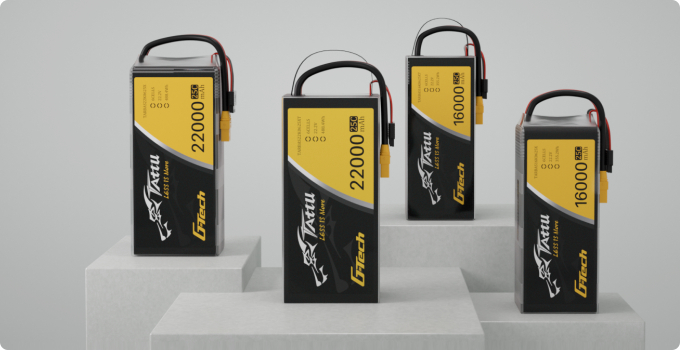
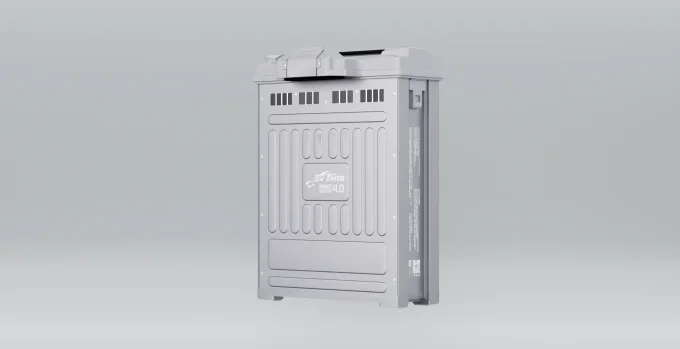
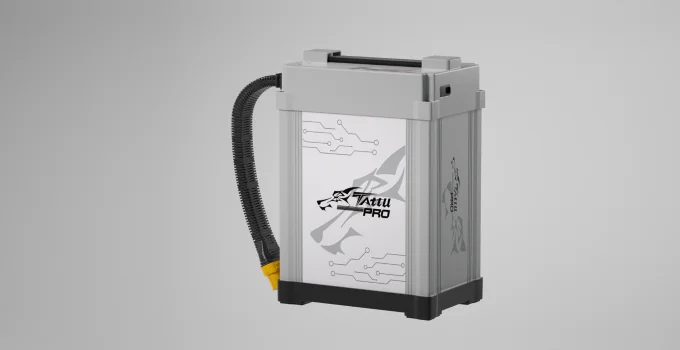
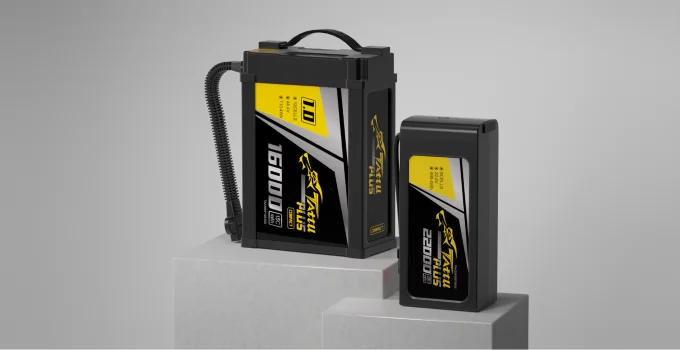
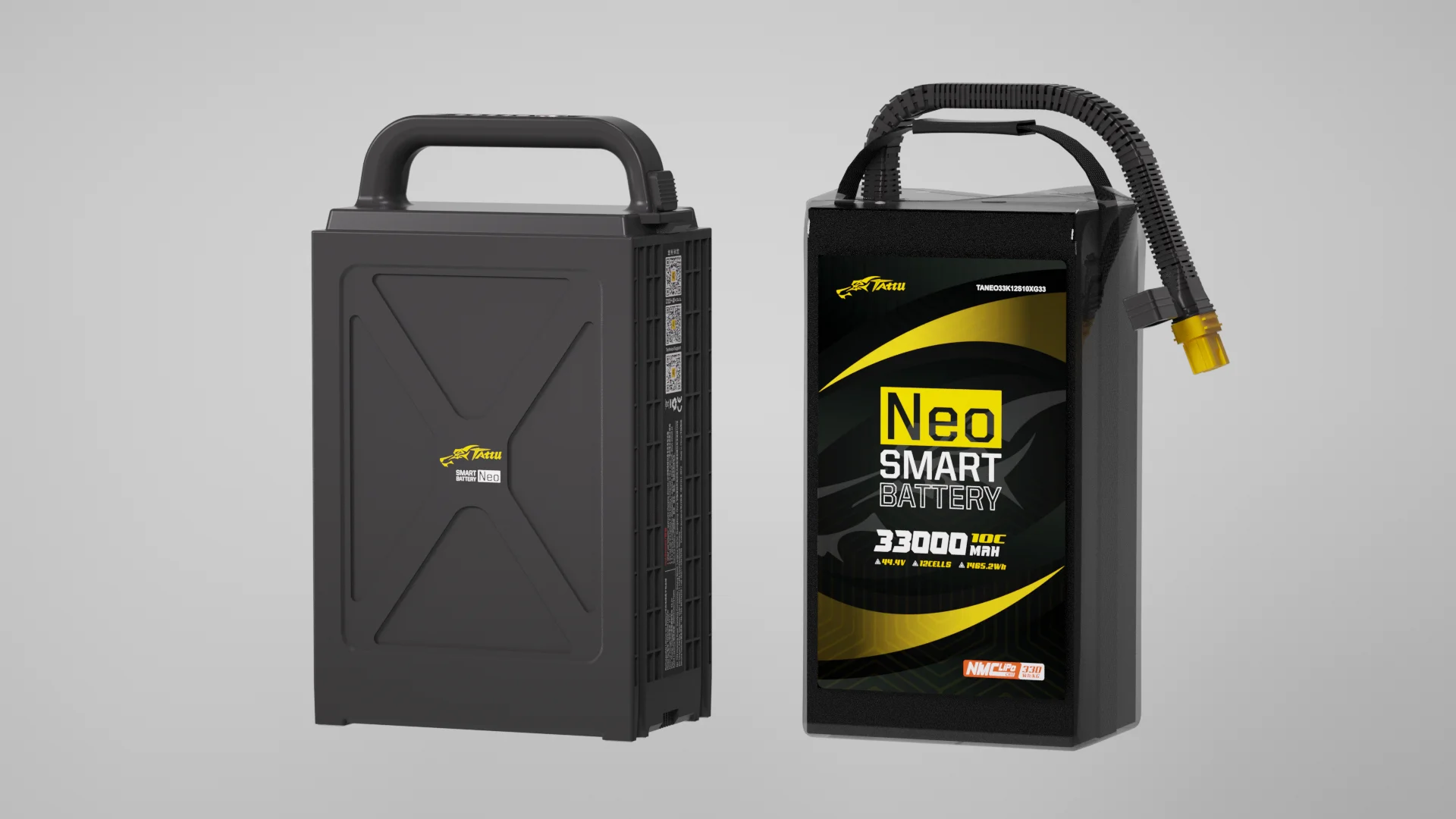
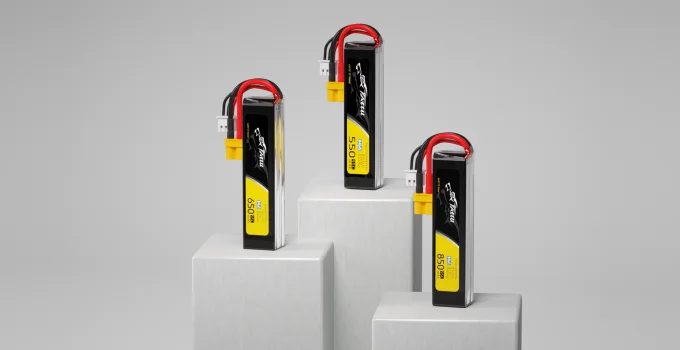
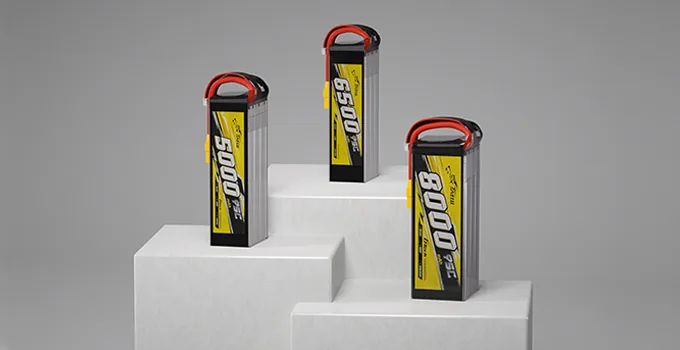
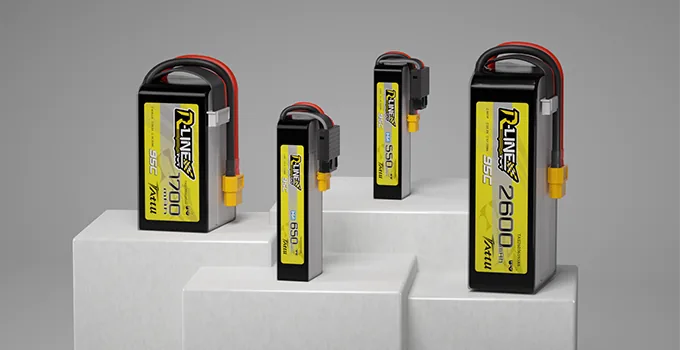
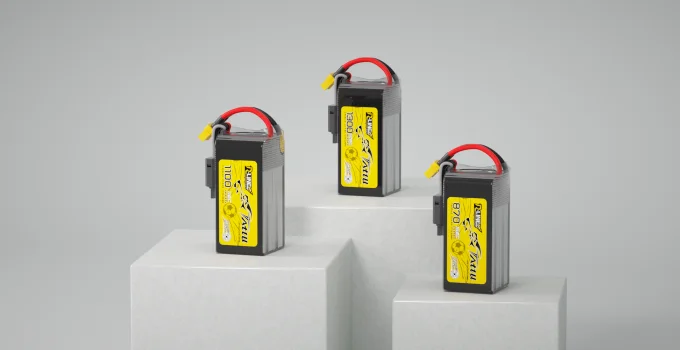
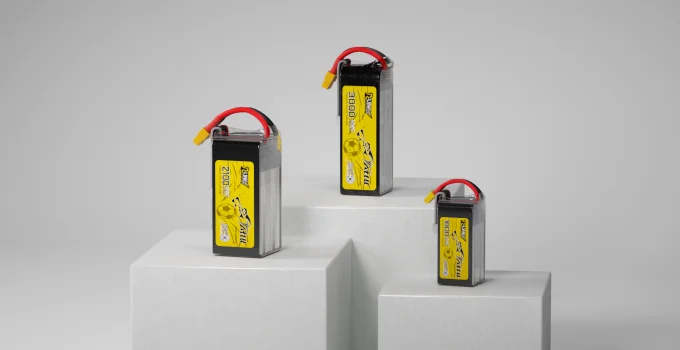
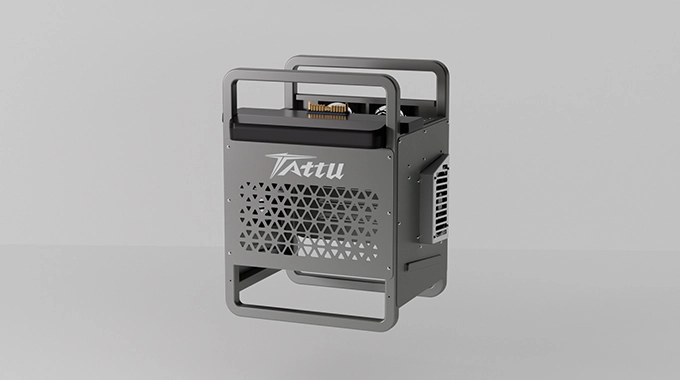
As the world's premier drone battery manufacturer, Tattu powers the future
of autonomous flight. We deliver industry-leading energy densities semi-solid state battery up to 500
Wh/kg to maximize endurance for long-range VTOL BVLOS missions, and robust 35C
continuous discharge rates high power uav battery to provide the massive power required for heavy-lift
BVLOS operations. For more information, please feel free to contact us at
[email protected].









 Blog
Blog
 Blog
Blog
 Blog
Blog


