If you've ever watched a drone seamlessly weave through the legs of a
dining room chair, dive down a stairwell, and bounce harmlessly off a wall,
you've likely witnessed a Tiny Whoop in action. These palm-sized micro drones
have completely revolutionized First-Person View (FPV) flying, turning living
rooms and backyards into high-speed race tracks.
The name “Tiny Whoop” started with Jesse Perkins’ Tiny Whoop project in
2015, and the term has since become widely used for small ducted FPV micro
drones. Whether you are a curious beginner looking for your first drone or an
experienced pilot wanting to fly indoors during the winter, this guide breaks
down everything you need to know about the Tiny Whoop ecosystem.
What is a tinywhoop drone?
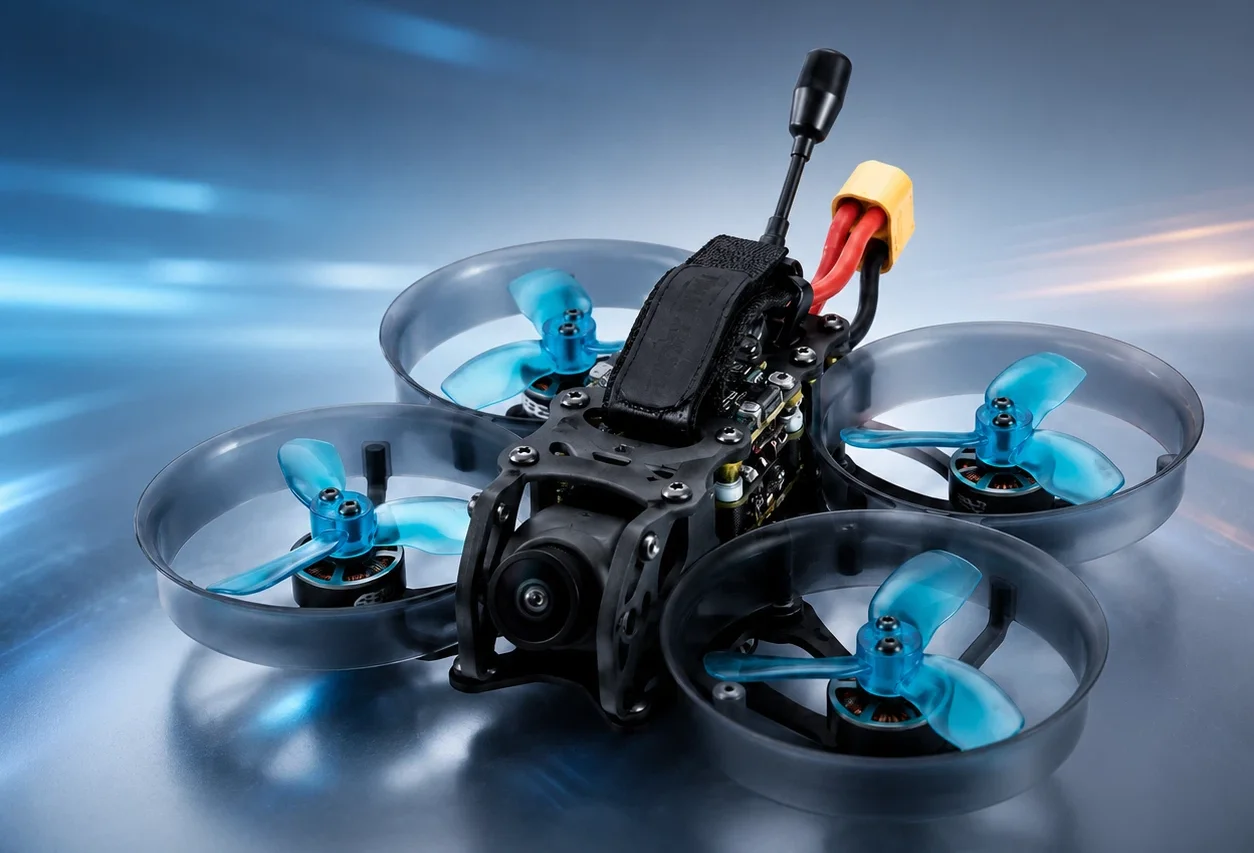
A Tiny Whoop is a specific class of micro FPV drone characterized by its
small size (typically a 65mm or 75mm wheelbase), ultra-lightweight build (often
under 30 grams), and—most importantly—ducted propeller guards. These plastic
rings around the propellers protect the drone from crashes and protect your
walls and fingers from the spinning blades, making them perfectly safe to fly
indoors. Tiny Whoops are beloved for their ability to zip through tight indoor
spaces—hallways, living rooms, and even obstacle courses made of household
objects—while being safe enough to crash into walls, furniture, and people with
minimal risk.
Why is it called a tiny whoop?
The name didn't come from a manufacturer; it came from the community. Years
ago, a pilot named Jesse Perkins from "Team Big Whoop" modified a brushed-motor
toy drone (the Blade Inductrix) by adding a tiny FPV camera and upgrading the
motors. He called his creation the "Tiny Whoop," and over time, “whoop” became
community shorthand for a tiny ducted FPV quadcopter. The "Whoop" part is
onomatopoeic—suggesting the zippy, buzzing sound these little drones make as
they dart around. The word does not describe a formal aviation category; it is a
hobby term. It also evokes a sense of fun and playfulness, which perfectly
captures the spirit of indoor FPV flying.
The Micro Drone Family Tree
To understand where Tiny Whoops fit, it helps to compare them to other
common FPV drone styles:
Tiny Whoop Drone vs. Micro Drone
A micro drone is a broad category that includes everything from toy-grade
drones to serious 3-inch cinematic rigs. A Tiny Whoop is a specific subcategory
of micro drone with ducted props, designed for aggressive indoor FPV flying
where crashes are expected and safety is paramount. All Tiny Whoops are micro
drones, but not all micro drones are Tiny Whoops.
Tiny Whoop vs toothpick drone
A toothpick drone is a very light, open-prop micro FPV drone. It usually
has no ducts, making it lighter, faster, and more efficient than a whoop of
similar size. The tradeoff is that open propellers are less forgiving indoors
and less furniture-friendly.
Choose a Tiny Whoop if you want to fly indoors, practice acro in your
living room, or race in tight spaces. Choose a Toothpick if you want a
lightweight outdoor freestyle drone that can handle light wind and open spaces
but still slips under the 250g registration threshold in many jurisdictions.
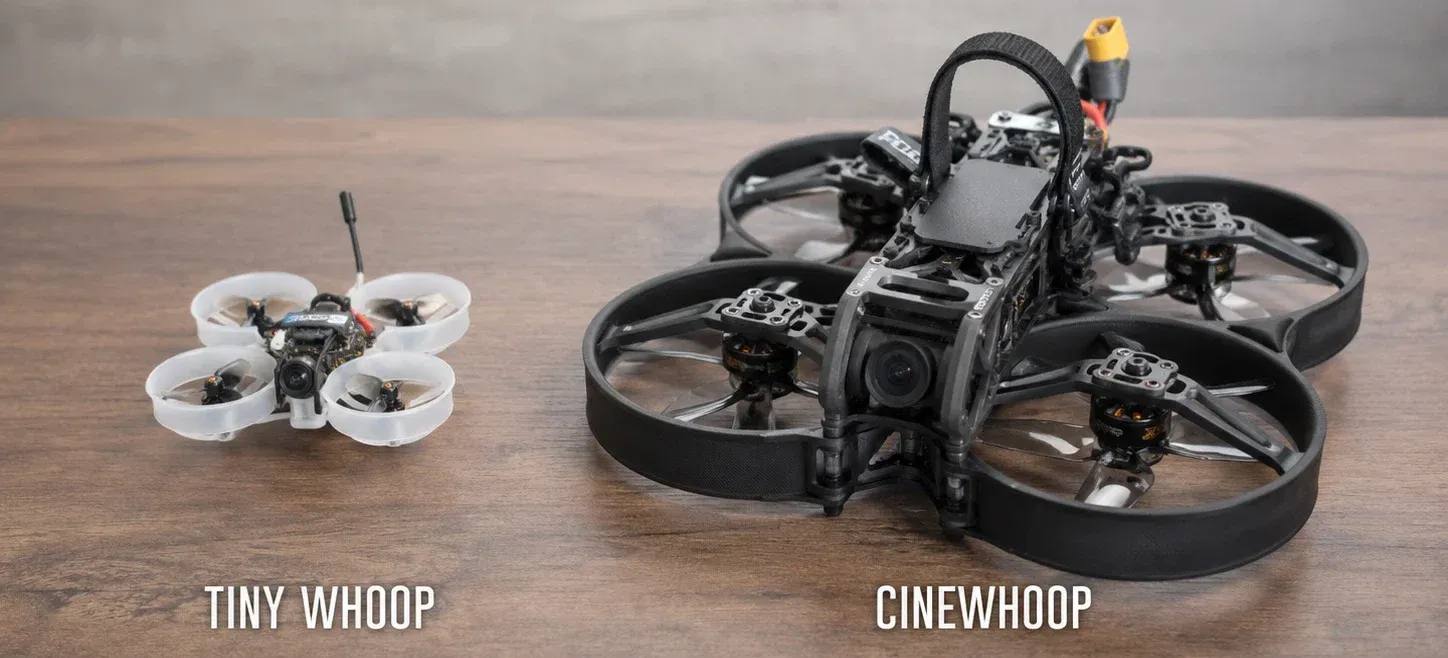
Tinywhoop Drone vs. Cinewhoop
While both have ducts, Cinewhoops are much larger (usually 2.5 to 3.5-inch
propellers) and significantly heavier. They are designed specifically to carry
heavy high-definition action cameras (like a full-sized GoPro) for professional
real estate or cinematic videography. A Tiny Whoop is more about practice,
indoor fun, and low-cost FPV flying than professional-looking video. If you're
learning FPV, start with a Tiny Whoop. Once you've mastered the basics, a
Cinewhoop opens up professional-grade cinematic possibilities.
Tiny Whoop vs 5-inch vs 3-inch FPV drones
A Tiny Whoop is not a smaller version of a 5-inch freestyle drone. It is a
different tool. A 5-inch FPV drone is powerful, fast, loud, and best for open
outdoor spaces. It can carry an action camera, handle wind, and perform big
freestyle moves. It is not suitable for indoor practice. A 3-inch drone sits in
the middle. It is more portable than a 5-inch, more powerful than a whoop, and
often useful for parks, small fields, or light cinematic builds. Tiny Whoops are the safest and most indoor-friendly of the three, but they
are the least capable in wind and high-speed outdoor flying. A Tiny Whoop is the
best option for indoor practice and micro racing.
Choosing Your Whoop: Size and Power
What is the smallest whoop?
For most pilots, the smallest practical whoop is the 65 mm class. There are
specialty builds smaller than that, but 65 mm is where parts, frames, batteries,
flight controllers, and community support become easy to find. Current examples show how small modern whoops have become. The Happymodel
Mobula6 2024 is listed as a 65 mm 1S whoop weighing 17.7 g without battery,
while the BETAFPV Air65 II lists versions from 16.6 g to 17.8 g without
battery.
65mm vs 75mm: Which is better?
Wheelbase size defines the flying experience. The two most common sizes are
65mm and 75mm (measured diagonally from motor to motor).
•65mm (The Indoor King): Equipped with 31mm propellers, these are the ultimate indoor flyers. They are agile, can fit through the tightest gaps, and don't carry enough momentum to damage themselves in a crash. If your goal is flying around your house, 65mm is the answer.
•75mm (The Hybrid): Equipped with 40mm propellers, 75mm whoops carry a bit more weight and push more air. They feel slightly "floaty" indoors but can handle light winds outdoors, making them perfect for backyard flying and playgrounds.
Tiny Whoop 1S vs 2S
Tiny Whoops are powered by lithium-polymer (LiPo) batteries, measured in
cells (S).
•1S (3.7V - 4.35V): A single-cell battery. The modern standard for almost
all 65mm and many 75mm whoops. Thanks to high-voltage (LiHV) chemistry and
better solid-pin connectors (like BT2.0 or A30, which combat voltage sag far
better than the old PH2.0 plugs), 1S provides incredible punch for indoor
racing.
•2S (7.4V - 8.7V): Two cells wired in series. This doubles the voltage,
providing immense power. 2S is generally reserved for 75mm and 85mm whoops
intended for aggressive outdoor freestyle. It is usually too powerful and heavy
for a 65mm indoor setup.
How long does the battery last on a Tiny Whoop?
Because they are so small and the motors spin at upwards of 30,000 RPM,
flight times are short. Most Tiny Whoop flights last 2 to 7 minutes, depending
on size, weight, battery, motor KV, tune, video system, and how aggressively you
fly. A lightweight 65 mm racing whoop may fly only 2–4 minutes. A more efficient
75 mm 1S whoop can fly longer. Most pilots buy 6 to 10 batteries and use a
parallel charger to keep them constantly topped up during a flight session.
Tiny Whoop Navigating Video Systems: Analog vs. Digital
The biggest equipment decision is video system. Your video system
determines what goggles you need, how much the drone costs, how heavy it is, how
good the image looks, and how the link behaves when the signal gets weak.
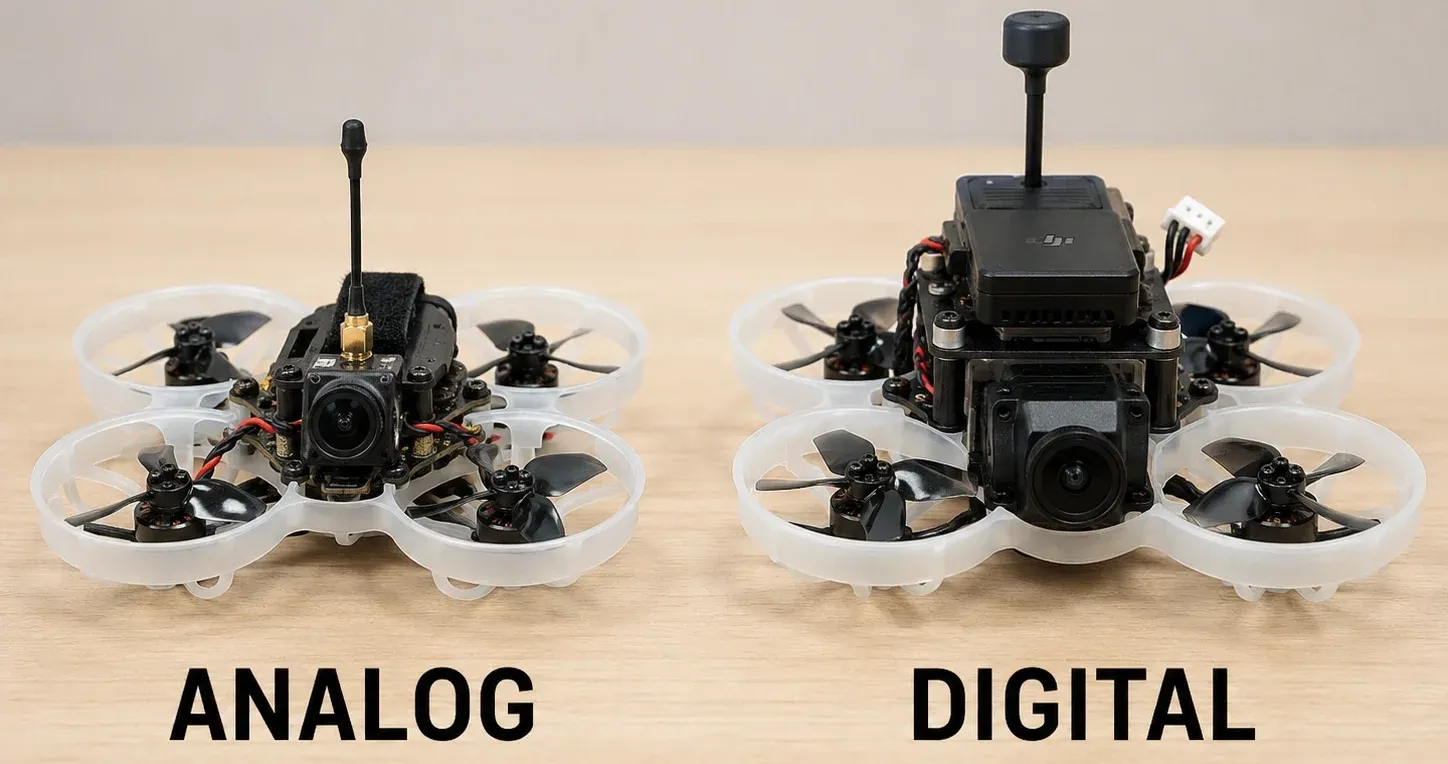
•Analog FPV is the older and simpler video system used in FPV drones. The
camera sends a live video signal through a 5.8 GHz video transmitter, and your
goggles receive that signal. Analog video does not look as sharp as digital. It
often has static, breakup, color noise, and lower resolution. Choose analog if
you want the lowest cost, lightest builds, easiest repairs, and the widest
compatibility.
•Digital FPV converts the camera feed into a digital video stream before
sending it to your goggles. The result is usually a much cleaner and sharper
image than analog. The tradeoff is that digital systems usually add more weight,
cost more, and may use more power.
Which Digital video system should I choose: HDZero, Walksnail, or DJI?
•HDZero: An open-source digital system built for racing. It offers 720p HD
clarity with fixed, ultra-low latency (under 4ms). It's the premium choice for
serious indoor whoop racers who want clarity without sacrificing reaction
time.
•Walksnail Avatar: A fantastic middle-ground digital system offering
beautiful 1080p video with manageable latency (~25ms). Walksnail offers
incredibly light 1S VTX boards, making it the best choice for cinematic indoor
flying.
•DJI (O3 / O4): The undisputed king of image quality and penetration.
However, DJI's onboard equipment is heavy and power-hungry. It is generally
unviable for a 65mm whoop and is better suited for 85mm builds or larger
cinewhoops.
Choose HDZero for low-latency racing, Walksnail for the best overall
balance of image quality, weight, and cost, and DJI for the best image quality
on larger whoops. For most Tiny Whoop pilots, Walksnail is the best all-around
choice, while HDZero is best for racing.
Equipment, Cost, and Regulations
What equipment do I need to fly a Tiny Whoop?
To get into the air, you need a complete FPV ecosystem:
•The Drone: A Bind-and-Fly (BNF) Tiny Whoop.
•Radio Controller: The transmitter you hold in your hands. Ensure it uses
the ExpressLRS (ELRS) protocol, which is the modern industry standard for
control links.
•FPV Goggles: Must match your drone's video system (Analog, HDZero,
Walksnail, or DJI).
•Batteries & Charger: 1S LiHV batteries (e.g., 300mAh for 65mm, 450mAh
for 75mm) and a specialized 1S charger.
How much does a tiny whoop drone cost?
A standalone bind-and-fly analog Tiny Whoop commonly costs around
$100–$160. HD digital whoops are often closer to $200–$300+, depending on the
video system. A complete ready-to-fly kit with drone, goggles, and controller
can range widely from around $150 to $450+.
For current examples, Tiny Whoop’s BNF aircraft listings show analog Air65
II and Air75 II models starting around $115–$120, while HDZero and DJI O4 whoops
are listed closer to $200–$286. BETAFPV’s Cetus FPV Kit lists around $149.99,
while EMAX’s Tinyhawk III RTF kit lists around $468.30.
Do I need a license to fly a tiny whoop?
It depends on where you live, where you fly, what the drone weighs, whether
it has a camera, and whether you fly recreationally or commercially. In the
United States (and most of the world), no. Because Tiny Whoops weigh
significantly less than 250 grams (the FAA registration threshold), they are
exempt from standard drone registration if flown recreationally. Furthermore,
the FAA does not regulate indoor airspace. You can fly in your house with
absolutely zero legal red tape. If you fly outdoors, standard sub-250g
recreational rules apply.
Troubleshooting
Why will my Tiny Whoop not bind, arm, or take off?
If you are grounded, run through this micro-checklist:
•Won't Bind: Ensure your radio and drone are on the same ELRS firmware major
version (e.g., both on ELRS V3.x). Also, double-check that you haven't set a
binding phrase on the radio that doesn't match the drone.
•Won't Arm: FPV drones have safety mechanisms to prevent accidental prop
spin. Ensure your throttle stick is at absolute zero. Check your goggles'
On-Screen Display (OSD)—it will usually flash a warning (like THROTTLE or RX
LOSS) telling you exactly why it refuses to arm.
•Won't Take Off (Flips Immediately): If your drone aggressively flips over
the second you give it throttle, your propellers are likely installed backward
or on the wrong motors. Drones have two clockwise (CW) and two counter-clockwise
(CCW) motors; the props must match the spin direction.
Conclusion
A Tiny Whoop drone is one of the most accessible and rewarding ways to get
into FPV flying. Its small size, ducted design, and forgiving flight
characteristics make it ideal for beginners, while still offering enough depth
for experienced pilots to race, freestyle, and refine their skills. The best
choice for most beginners is a 65 mm or 75 mm 1S whoop with analog video, since
it keeps cost and complexity low while still delivering plenty of fun. Once you
understand how your setup feels in the air, you can decide whether to stay with
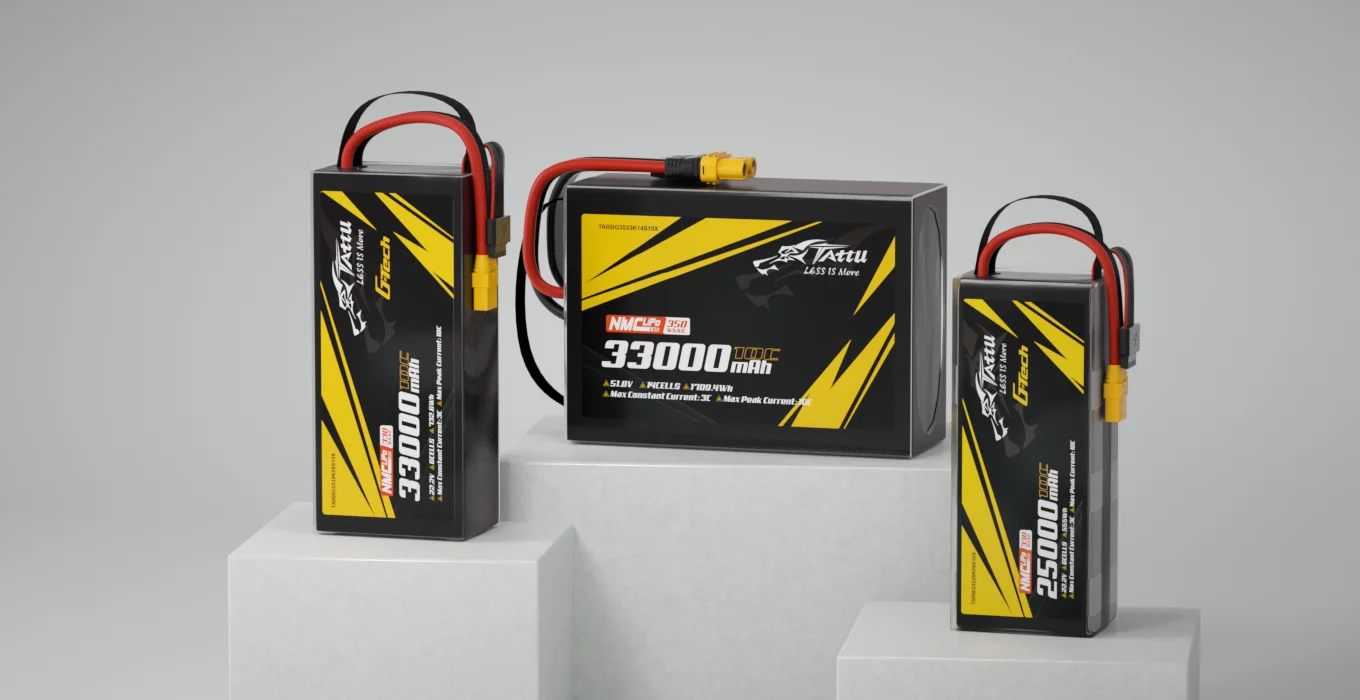
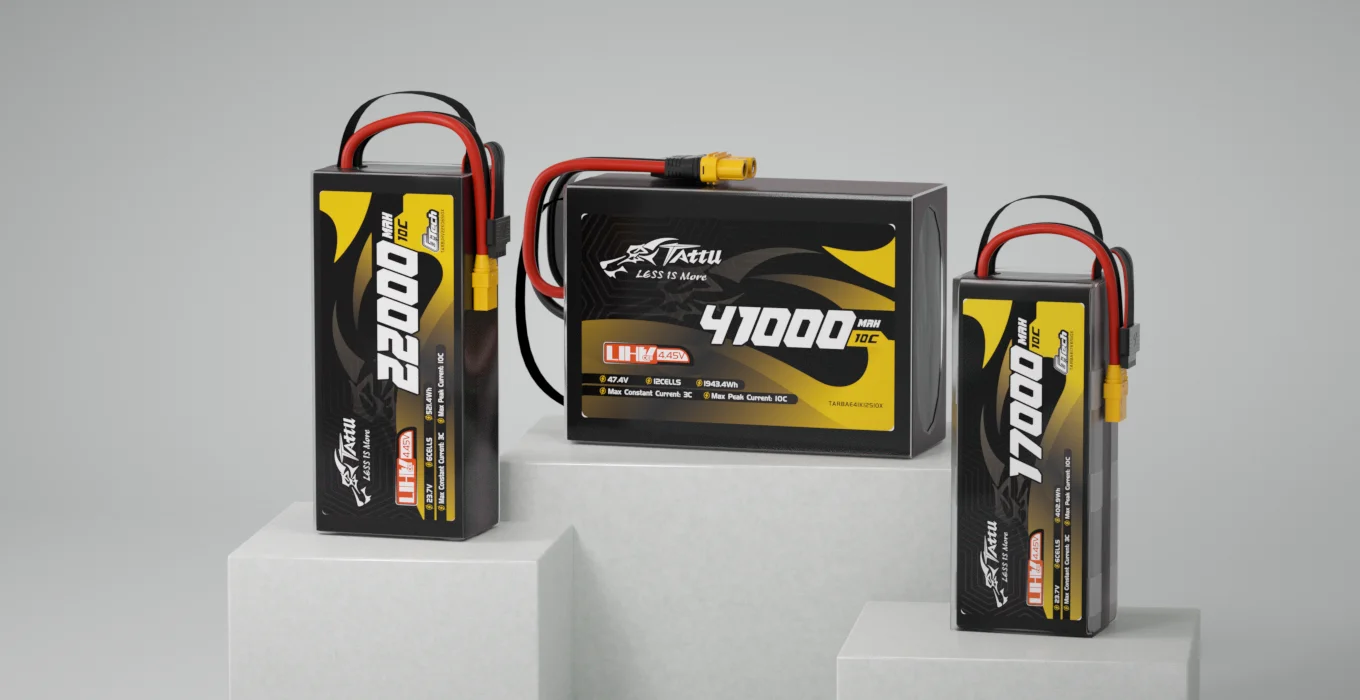
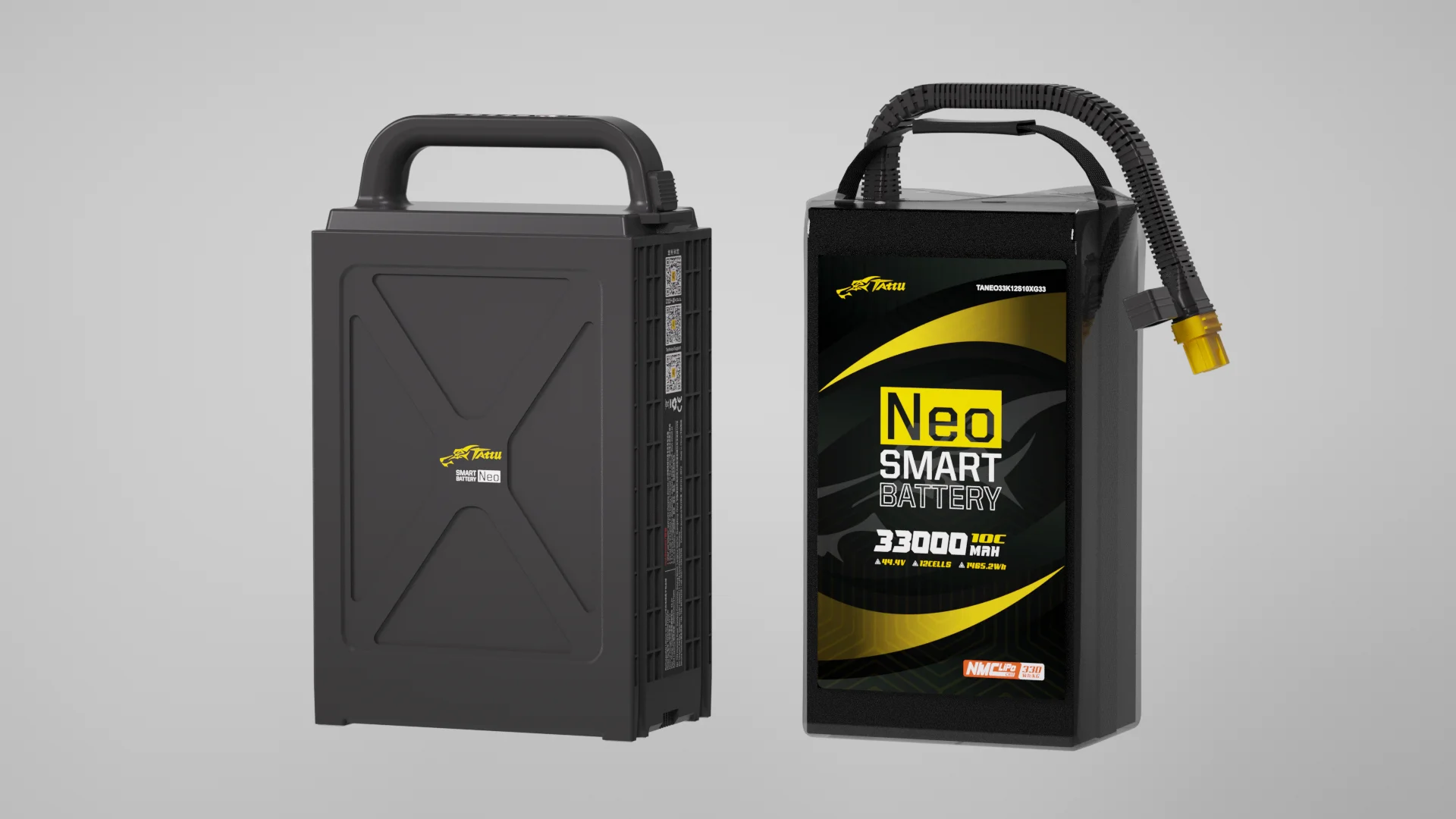
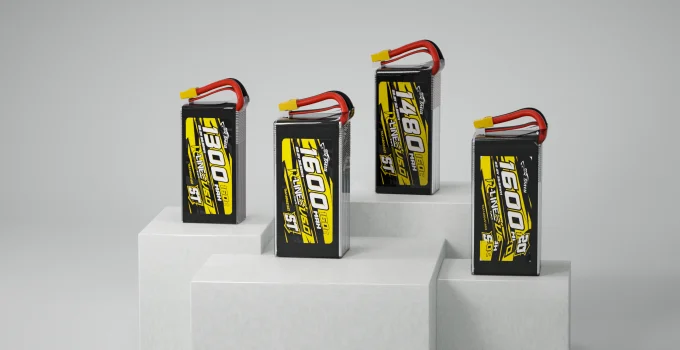
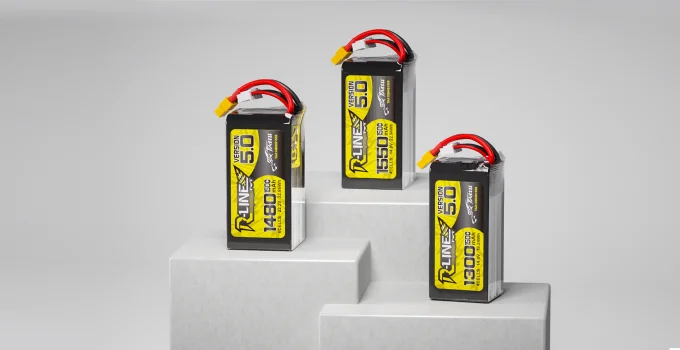
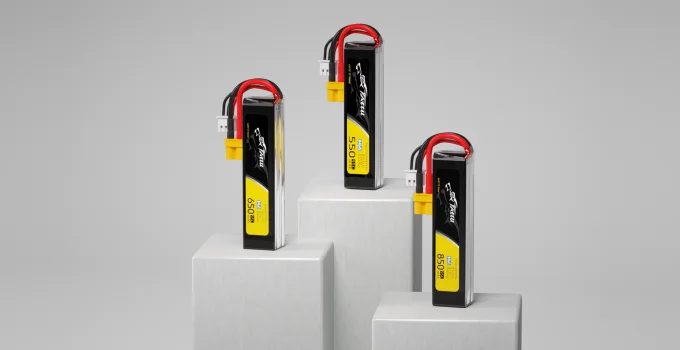
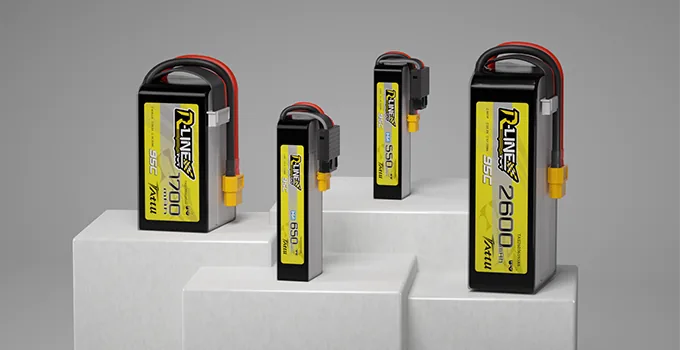
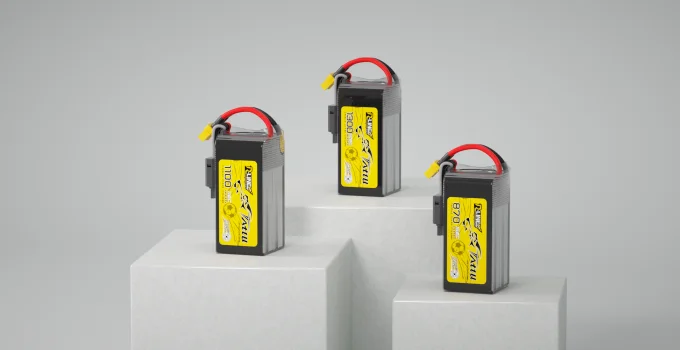
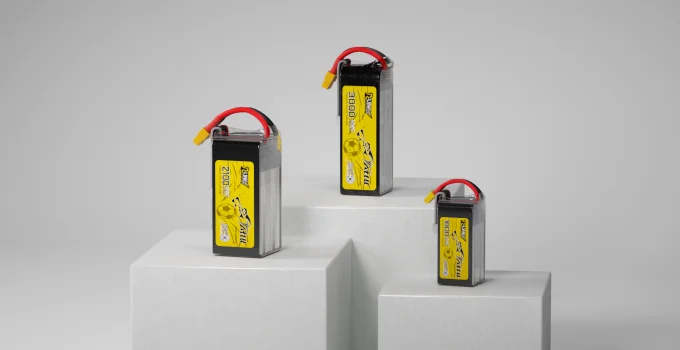
a simple whoop or move up to a faster, heavier, or more advanced build. As a leading global manufacturer of FPV battery, Tattu offers
high-performance 1S–2S LiPo batteries designed to power Tiny Whoops across a
wide range of configurations and flying styles. For more information, please feel free to contact us at [email protected].







 Blog
Blog
 Blog
Blog
 Blog
Blog


